
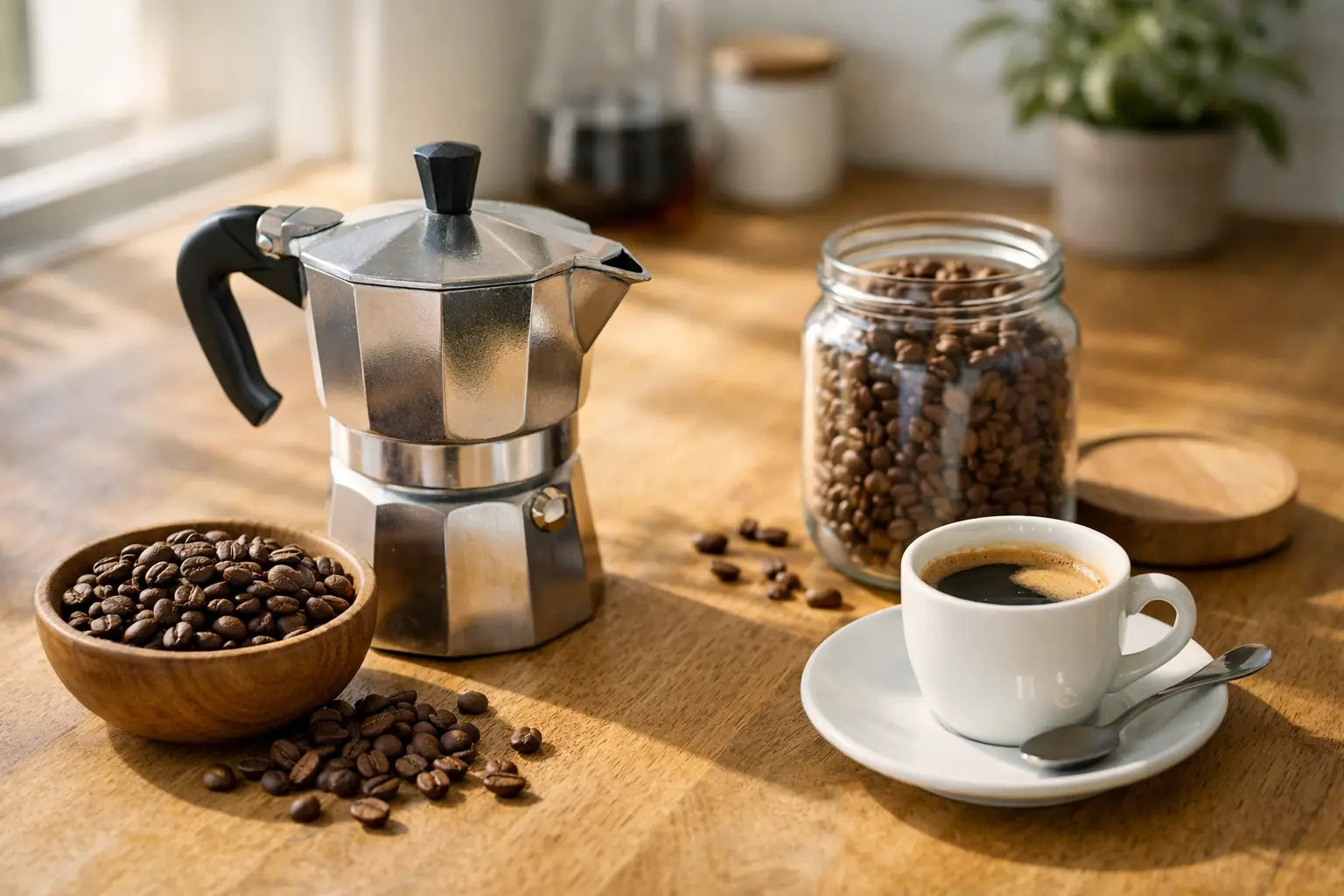
A moka pot makes coffee with a distinct character. Full, fragrant and hearty enough for a busy morning or a long day of working from home. The best coffee beans for moka are therefore not necessarily the darkest or strongest beans. It's about balance: enough body for that recognizable moka flavor, but also enough sweetness and clarity so that your cup doesn't become bitter or sharp.
With fresh beans, the right grind and gentle preparation, you get a surprising amount out of this simple coffee pot. You don't have to be a barista for this. It does help to know what you pay attention to when choosing.
What does a moka pot require from coffee beans?
A moka pot - also called a percolator or Italian coffee pot - forces hot water through ground coffee with steam pressure. That is different from espresso from a machine. The pressure is lower, but the extraction is still intense. As a result, body, chocolatey notes and any bitterness quickly emerge.
Beans for moka can therefore have character. At the same time, a very dark roast is not always the best choice. It can quickly taste dry, smoky or too bitter in a moka pot, especially when the pot is on high heat. A medium to medium-dark roast is a reliable starting point for most enthusiasts. This usually produces a full-bodied coffee with sweeter notes, without the nuance completely disappearing.
The freshness of the bean also weighs heavily. Coffee quickly loses aroma after grinding. Therefore, buy whole beans and grind just before brewing. Freshly roasted beans give your moka pot more aroma, a rounder mouthfeel and a cleaner aftertaste.
Best coffee beans for moka: what to look for?
The right bean partly depends on how you drink your coffee. Do you drink the moka neat, diluted with hot water or as a base for milk? Then what is tasty also changes.
Choose body and sweetness
Moka coffee itself has a strong mouthfeel. Beans with flavors reminiscent of chocolate, nuts, caramel or brown sugar often complement this nicely. They remain recognizable in an intense preparation and give a pleasant, sweet impression. This is a nice choice if you drink coffee black, but also if you add a dash of milk.
Do you want a little more freshness in your cup? Then choose a coffee with riper fruit, for example a subtle impression of red fruit or stone fruit, but prefer to keep the roast medium. A very lightly roasted, distinctly fruity coffee can be surprisingly tasty in a moka pot, but requires more attention to the grind and temperature. The chance of a sharp taste is then greater.
Single origin or blend?
A single origin coffee comes from one country, region or sometimes even one producer. This way you can often taste the coffee's own flavor profile more clearly. That's interesting if you like variety and want to consciously discover what you like.
A blend combines different coffees to create a certain taste balance. This is often a practical choice for a moka pot: a good blend can bring together body, sweetness and a mild freshness. There is no one-size-fits-all winner. Anyone who wants the same familiar cup every morning often likes to choose a balanced blend. Anyone who is curious about taste differences will enjoy single origins.
Arabica, robusta or a combination
Many specialty coffees consist entirely of arabica. These beans can have a wide range of flavors, from chocolatey and nutty to fruity and floral. For moka, an arabica with sufficient body and a medium roast is often a safe, tasty choice.
Some coffee drinkers appreciate a blend in which robusta is also present. This can give extra body and a sturdy, classic Italian impression. That is mainly a matter of personal preference. Don't just look at the type of bean on the label, but especially at the flavor notes and roast described.
The grind determines more than you think
You can buy perfect beans and still make a disappointing moka pot if the grind is not right. For moka you grind finer than for filter coffee, but coarser than for espresso. Think fine sand, not powder.
If the grind is too fine, it will be difficult for the water to flow through the coffee. The taste may become bitter, dry or burning. If the grind is too coarse, the water will flow through too quickly and the coffee will become thin or sour. Start with a grind specifically designed for moka pot, or set your grinder between filter and espresso. Then adjust in small steps.
Anyone who has beans ground by Eddy's Coffee would do well to opt for a moka pot or percolator. Even better is grinding yourself just before use. This takes little extra time and makes a noticeable difference in aroma on busy mornings.
This way you get the best out of your moka pot
The bean and the preparation belong together. A few small steps prevent a fine coffee from becoming unnecessarily bitter.
Fill the lower reservoir with hot water to just below the safety valve. By starting with hot water, the pot spends less time on the heat. Fill the filter basket loosely with coffee and wipe it off. Do not press the coffee as you would with espresso.
Place the moka pot over low to medium heat and keep it close. Once the coffee flows evenly to the top and the color becomes lighter, remove the pot from the heat source. The loud simmering at the end is not a sign that you should wait, but rather a signal that the extraction is ready. If necessary, cool the bottom briefly with a cloth or a little cold water to stop the process.
Stir the coffee in the top reservoir before pouring. The first and last coffee that comes out differ in strength. Stirring gives each cup the same balance.
Common choices that get in the way of the taste
A moka pot does not forgive haste. Too high heat is the most common cause of a bitter cup: the water is pushed through the coffee too quickly and the metal pot becomes too hot. Brewing it slowly gives more sweetness and control.
Storing for too long is also not good for beans. Store them in a dark, cool and airtight place, preferably in a tightly closed storage container. Do not normally leave beans in the refrigerator. Moisture and odors can make the taste less appealing. It is better to buy a quantity that you can drink within a reasonable period of time and always close the packaging properly.
Clean the moka pot with warm water after use and dry all parts thoroughly. Only use dishwashing liquid if the manufacturer recommends it. Coffee residue and old oils can make a fresh coffee flat, no matter how good your beans are.
Find your regular moca coffee
You will ultimately discover the best choice in your own kitchen. Start with a fresh medium or medium-dark coffee with notes of chocolate, nuts or caramel. Write down what you taste once and then change only one part at a time: the grind, the amount of coffee or the heat source. This way you really know why your next cup will taste better.
Have you found a bean that comes out of your moka pot pleasantly full and sweet? Store it well, grind fresh and give yourself a few quiet minutes when brewing. This is precisely where the daily pleasure of moka coffee lies.
Share:
Choosing the Best Coffee Beans for Remote Workers
Coffee Imports to Antwerp: How the Coffee Supply Chain Works