
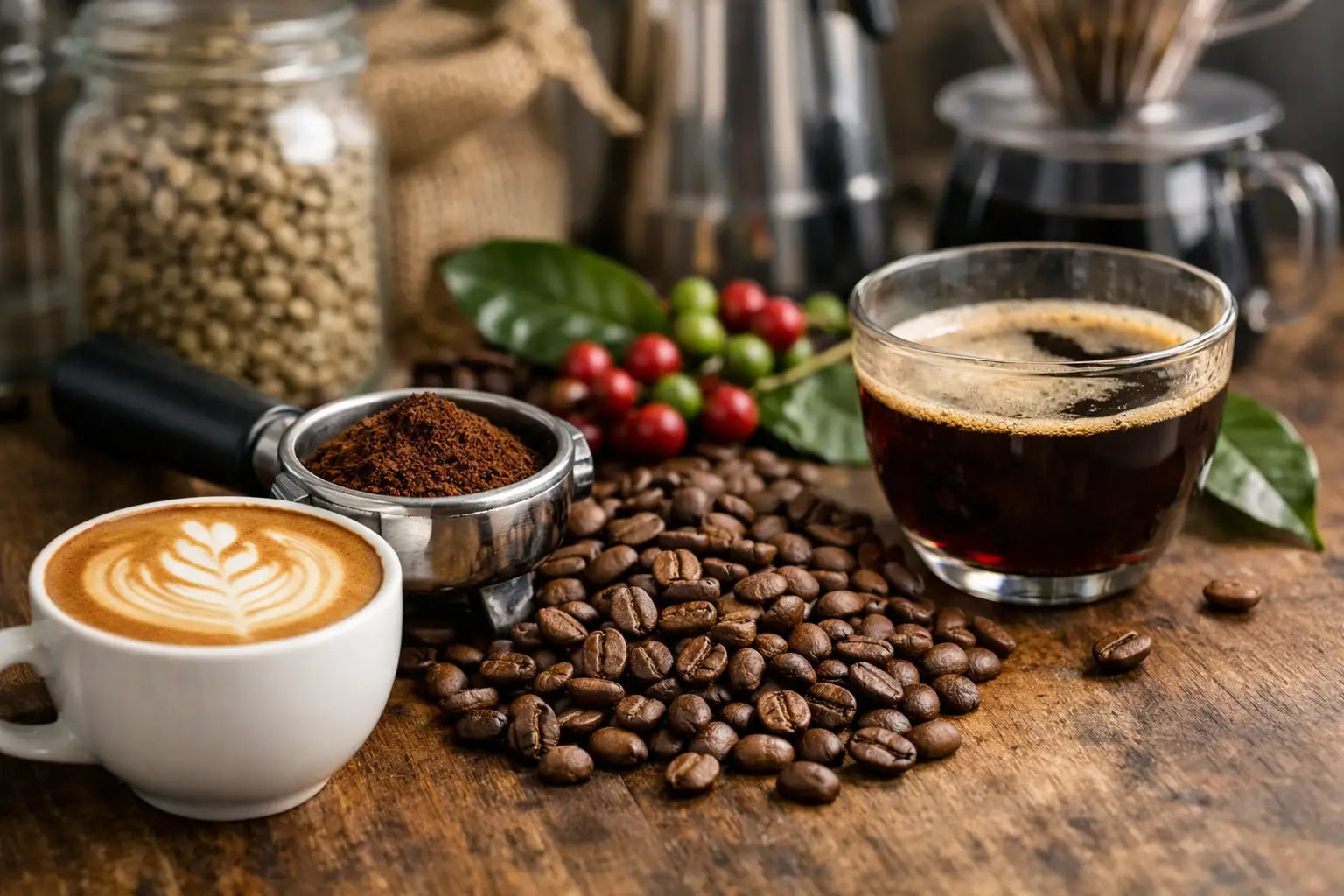
A coffee bag can look beautiful, but that does not tell you everything about what is inside. What exactly is specialty coffee? Put simply, it is coffee that is treated better from plant to cup. Better beans, picked more carefully, assessed professionally and roasted fresh. You notice the result not only as strong or mild coffee, but above all as clear flavour with character.
Specialty coffee is not a fancy label used to justify a high price. It is a quality standard. At the same time, it is not a guarantee that every specialty coffee will be your personal favourite. Do you enjoy a full, classic chocolate flavour? Then a fresh, fruity coffee from Ethiopia may take some getting used to. Quality and taste preference are two different things.
What exactly is specialty coffee according to the quality standard?
Specialty coffee starts with green coffee beans assessed by a certified coffee taster. The assessment uses a scale of 100 points. Coffee with a score of 80 points or higher may be called specialty coffee. Aroma, flavour, sweetness, acidity, balance, body and finish are among the factors considered.
Defects also matter greatly. Think of beans that are damaged, mouldy, underripe or fermented. In ordinary commodity coffee, such deviations are more often accepted or blended away. There is much less room for them in specialty coffee. A small defect in the bean can taste surprisingly significant in the cup.
The score is an important starting point, but not the final destination. An 85-point bean that is roasted too dark or left in a warehouse for months will not automatically make a great espresso. Specialty coffee requires care at every stage: cultivation, processing, transport, roasting, packaging, storage and brewing.
The difference from supermarket coffee
The biggest difference is not one secret step. It is the sum of many choices. Commodity coffee, which is traded mainly as a bulk product, generally focuses on volume, predictable flavour and low cost. Beans from different harvests, areas and sometimes even countries are blended to create roughly the same profile every time.
That does not necessarily taste bad. It can work perfectly well for a quick, dark brew. But you often miss nuance. The coffee tastes flatter, more bitter or mainly roasted. The origin of the bean fades into the background.
With specialty coffee, that origin is given room. A coffee from Colombia can be rounded and sweet with notes of caramel and red fruit. Brazilian coffee often has more nuts, chocolate and body. Coffees from Kenya or Ethiopia can taste livelier and fruitier. These are not hard rules, but they are recognisable directions. You taste that coffee is an agricultural product, not an anonymous raw material.
It is not only arabica that can be specialty
Specialty coffee usually consists of arabica because this species has a great deal of flavour potential. However, 100% arabica on a package does not automatically mean that you are buying specialty coffee. Even within arabica, quality, grading and freshness vary enormously.
There is also growing interest in high-quality robusta. When carefully grown and processed, it can taste surprisingly clean, creamy and complex. Specialty robusta is still less common for now, but the principle is the same: it is about demonstrable quality in the bean and in the cup.
Why the farmer and processing make such a difference
A good coffee plant alone is not enough. Coffee cherries need to be picked at the right moment. Ripe cherries contain more sugars and therefore deliver more sweetness and balance. Selective hand-picking takes time, but prevents green, overripe and perfect cherries from ending up together.
After harvest, the beans are removed from the cherry and dried. The chosen processing method strongly influences flavour. With washed coffee, most of the fruit is removed before the bean dries. This often produces a clear, clean cup. With natural coffee, the cherry dries around the bean, which can create more fruitiness and a fuller mouthfeel.
There is also honey processing, in which some of the fruit remains on the bean. It often creates a pleasing middle ground: sweet and juicy, with enough clarity. No method is automatically better. A well-executed washed coffee is fantastic, while a carelessly processed natural coffee can taste messy or wine-like.
Traceability is therefore especially valuable in specialty coffee. When you know which country, region or cooperative a coffee comes from, you gain more context for its flavour. Transparency also makes it easier to choose coffee that suits you instead of relying blindly on attractive packaging.
Fresh roasting makes the difference at home
Green coffee barely smells like the coffee you know. Hundreds of aromatic compounds are created during roasting. That requires considerable skill. With time and temperature, the roaster determines which qualities of the bean come forward.
A lighter roast often shows more origin character: fruit, floral notes, citrus or tea-like freshness. A medium roast generally gives more balance between origin and sweetness. A darker roast brings more chocolate, caramel and powerful bitterness. This can be delicious for espresso, but roasting extremely dark can also mask differences between beans.
Freshness is therefore not a marketing detail, but a matter of flavour. Gases are released after roasting and aromas slowly begin to fade. Coffee usually needs a short rest before it brews at its best, but sitting on a shelf for months helps no one. That is why exceptionally fresh beans roasted to order are so appealing to home drinkers: you start with much more aroma, flavour and liveliness in your grinder.
Afterwards, store the beans airtight, in the dark and at room temperature. A good coffee storage canister helps. Avoid the fridge: moisture and smells can cause problems there. It is better to buy an amount you can drink within a few weeks than a huge supply that slowly loses its best flavour.
Brewing specialty coffee without unnecessary complexity
You do not need a laboratory on your counter to brew specialty coffee well. Fresh beans and a decent grinder are the biggest improvements. Ground coffee loses aroma quickly, so grind just before brewing whenever possible. Then choose a grind size that suits your method: finer for espresso, coarser for cafetière and somewhere in between for filter coffee.
Water matters too. Water with a strong chlorine taste can make a beautiful coffee taste harsh and flat. Use filtered water if you do not enjoy drinking your tap water. Also pay attention to your ratio. For filter coffee, about 60 grams of coffee per litre of water is a useful starting point. Adjust from there to taste.
Does your coffee taste sour and thin? Try grinding finer, using slightly hotter water or extending the brew time. Does it taste bitter and dry? Grind a little coarser, shorten the brew time or use slightly cooler water. Change one element at a time. This quickly shows what your coffee needs, without guesswork.
Espresso, filter or automatic machine?
Specialty coffee works with all these brewing methods, but the choice changes what you taste. Espresso is concentrated, creamy and intense. Filter coffee shows more detail and clarity. You can get excellent results from an automatic machine too, provided you choose beans that are not extremely oily or very dark roasted and set the grind size correctly.
If you mainly drink cappuccino or latte, you do not automatically need the darkest bean. A medium-roasted coffee with chocolate and nut notes often remains beautifully present in milk while retaining more sweetness than a harsh, dark roast.
How to choose specialty coffee that suits you
Do not begin by asking which coffee is the best. Ask yourself how you drink it. Black filter coffee often calls for a different bean than espresso with oat milk. Then look for flavour descriptions that appeal to you. Chocolate, caramel and hazelnut are usually safe choices for lovers of a classic, full cup. Citrus, berries and flowers suit anyone curious about fresh and distinctive flavours.
Decaf can be specialty coffee too. Good decaffeinated coffee retains sweetness, body and recognisable flavours without caffeine taking centre stage. Ideal if you want to enjoy a serious cup of coffee after dinner without staring at the ceiling all night.
Give yourself room to compare as well. One coffee may taste like exactly what you need on Monday morning, while on a quiet Saturday you may want a lighter filter coffee. Specialty coffee does not have to be complicated or elitist. It is simply coffee in which people have tried at every stage to bring out the best in the bean. Brew it fresh, taste attentively and choose the coffee that makes you happy to switch on your grinder again tomorrow.
Share:
When Are Coffee Beans Fresh? Everything You Need to Know
Coffee Origin Explained: How Country, Region and Altitude Affect Flavour