
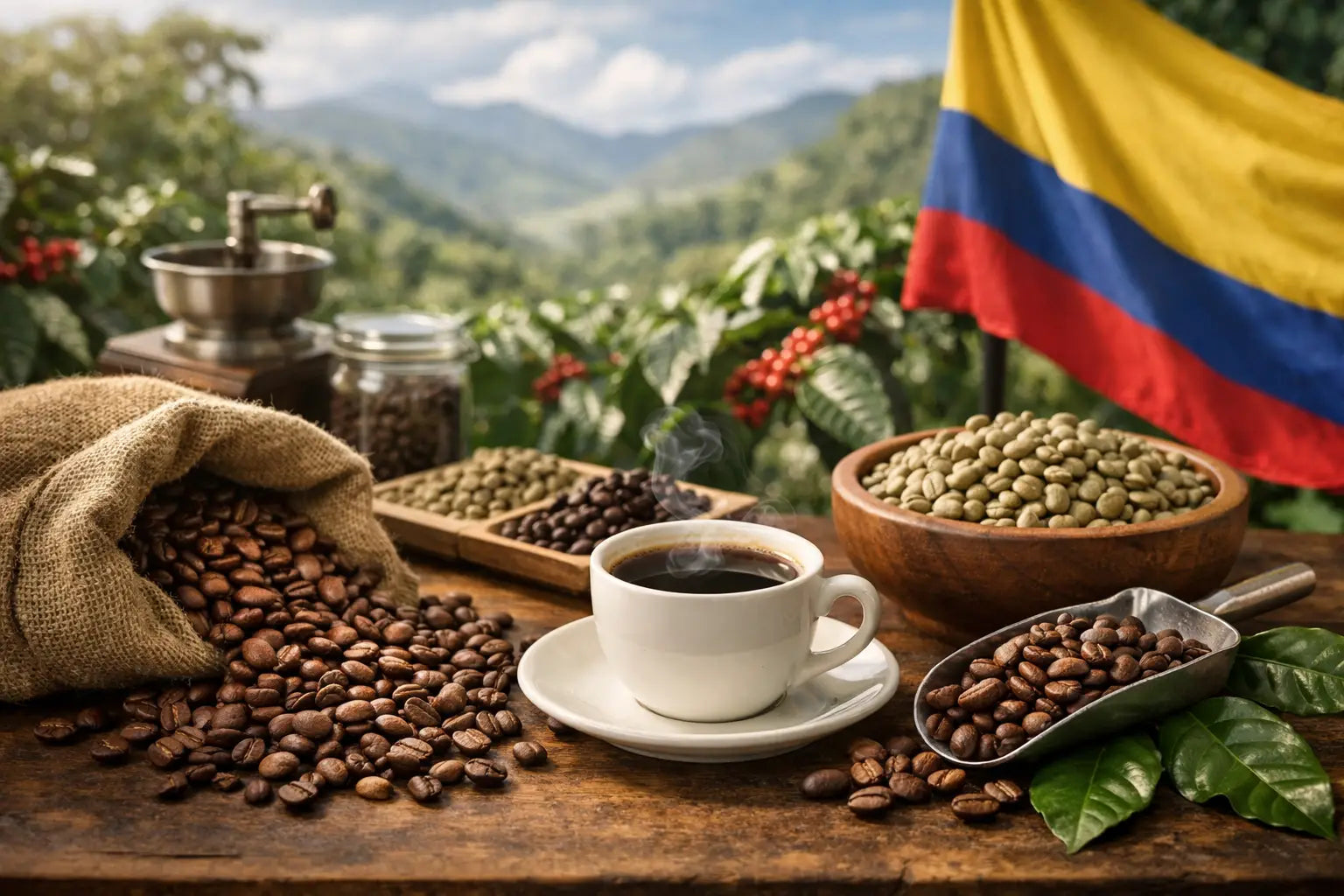
You brew fresh coffee in the morning, but the flavour remains flat, bitter or predictable. Buying coffee from Colombia can be an excellent next step — as long as you look beyond the country on the bag. Colombian coffee can be sweet and creamy, clear and fruity, or full of cacao and nut notes. The difference lies in the bean, region, processing and especially how freshly it was roasted.
Colombia is a mainstay of specialty coffee for good reason. The country has many small coffee farmers, mountainous regions and a climate in which cherries ripen at different altitudes. This creates huge variety. For you as a home barista, that is good news: there is almost always a Colombian coffee to suit your machine, taste and coffee moment.
Why Colombian coffee is so popular
Colombia lies near the equator, but coffee often grows high in the mountains. At altitude, cherries ripen more slowly. This gives the beans more time to develop complex sugars and aromas. After roasting, you taste this as a coffee that is often remarkably clean, sweet and balanced.
Many Colombian coffees have an approachable base of chocolate, caramel, nuts or brown sugar. Depending on region and processing, red fruit, citrus, stone fruit or floral notes may join in. Colombia is therefore a strong choice when moving from supermarket beans to specialty coffee without immediately choosing something extremely sour or distinctive.
There is no single typical Colombian flavour. Coffee from Huila can taste juicy and fruity, while Antioquia often gives rounder, more chocolatey profiles. Coffee from high-altitude Nariño can have lively freshness. Region gives you a clue, but not the full answer. Also check roast date, flavour profile and the roaster’s brewing advice.
Buying coffee from Colombia: what to look for
The best choice starts not with an attractive bag, but with clear information. A good specialty roaster says where the coffee comes from, how it tastes and when it was roasted. Without that information, you are mainly buying on hope.
Choose a flavour profile that suits your method
Do you drink espresso, cappuccino or flat white? A Colombian coffee with chocolate, caramel, hazelnut or dark-fruit notes is often a safe and delicious choice. Natural sweetness remains present in milk and a fuller roast gives espresso more body.
Do you brew filter coffee, V60, Chemex or AeroPress? Choose a lighter Colombian bean with fruity or floral notes. Filter reveals the coffee’s clarity more strongly. Think red fruit, mandarin, peach or a soft tea-like finish.
There is no fixed rule that espresso must be dark and filter light. A modern medium roast can work well both ways. The lighter the roast, the more attention you need to give grind, water temperature and brew time. If you want reliable daily coffee without much experimentation, choose a balanced profile rather than the most exotic description.
Look at the roast date, not only the best-before date
Freshness is not a marketing detail. After roasting, beans contain aromas and carbon dioxide. They need a few days to rest. The coffee then usually develops its best flavour. Over time, lively aromas disappear and the cup loses sweetness and energy.
A best-before date mainly tells you how long the product can be sold. The roast date tells you when it was actually roasted. That is the date that matters. For most beans, roughly one to six weeks after roasting is a useful starting point. Espresso may benefit from extra rest for a more stable extraction.
Do not buy a huge supply if you drink only one or two cups a day. A bag you open and finish within a few weeks usually tastes better than a cheap kilo bag stored in a cupboard for months. Ordering freshly roasted beans is often smarter than stocking up.
Understand what processing does to flavour
Product pages use terms such as washed, natural and honey. These describe how the coffee cherry is processed after harvest. They are not a quality ranking, but they do indicate the character of the cup.
Washed Colombian coffee is washed after the fruit has been removed. These coffees often taste clear, clean and precise. You can more easily recognise citrus, apple, caramel or fresh sweetness. This profile is popular with filter drinkers and espresso lovers who enjoy a lively, neat shot.
With natural processing, the cherry dries largely around the bean. This can create more fruit, a wine-like impression and heavier body. It is delicious if you enjoy berry fruit and expressive cups, but less suitable if you want a classic chocolate-led cappuccino.
Honey processing often sits between the two. Some fruit remains around the bean during drying, which can add sweetness without making the coffee overly funky. The exact taste depends on producer and roast, but processing helps you choose more deliberately.
Whole, ground or decaf?
If you have a grinder at home, buy whole beans. Grinding just before brewing preserves volatile aromas and lets you adjust the grind when espresso runs too fast or filter coffee tastes harsh.
If you do not have a grinder, pre-ground coffee can still be a good option when ground for your method. Say whether you use an espresso machine, automatic machine, moka pot, filter brewer, French press or percolator. There is no universal grind. Too fine becomes bitter and harsh; too coarse becomes thin and sour.
Decaf does not have to be a compromise either. Good Colombian decaf retains much of the original bean’s sweetness and character. Expect perhaps a softer body or less pronounced freshness, but not a tasteless evening coffee. Judge decaf by freshness and tasting notes just as critically as regular beans.
How to store Colombian beans properly
The fridge sounds logical, but is usually a bad idea. Coffee absorbs odours and moisture, and temperature changes encourage condensation. Store beans dark, dry and at room temperature instead.
The original bag with a good zip and one-way valve works well for many people. To keep the coffee fresher after opening, use an airtight storage container. A CoffeeVac canister is practical because it removes air without complicated steps. Do not fill it for months; store an amount you will use reasonably quickly.
Freeze only when you deliberately want to store coffee for much later. Divide the beans into small, fully sealed portions. Let a portion reach room temperature while still closed before opening. Repeatedly freezing and thawing the same bag is not a good plan.
When is Colombian coffee less suitable?
Colombia is versatile, but not automatically right for every preference. If you want a very heavy, spicy and smoky espresso, a darker blend may fit better. If you want an extremely floral coffee with jasmine and bergamot, Ethiopia may be the faster route.
For most drinkers, Colombia is strong precisely because it balances recognisable and interesting. You get enough sweetness and body for a comfortable daily cup, with enough detail to remain engaging. That is why it works for a quick coffee between meetings and a relaxed filter brew at the weekend.
Start with a freshly roasted Colombian coffee whose profile matches your favourite method. Taste it a few times, change only one variable at a time and give the beans a good storage place. Then you discover what a genuinely fresh bean can do, and every future purchase becomes more deliberate.
Share:
How to Adjust Grind Size for Each Brewing Method
Best Coffee for French Press: How to Choose Well