
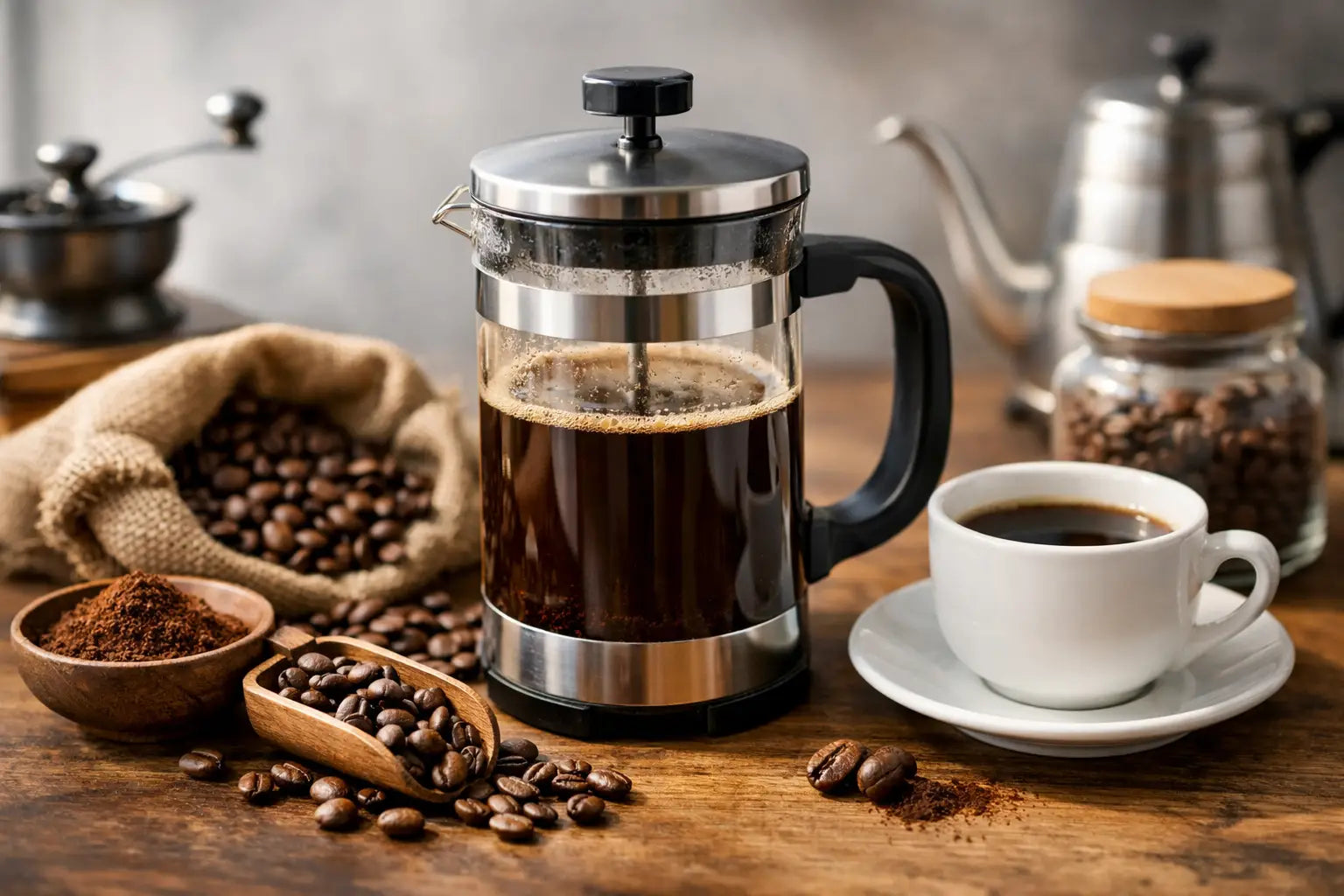
A French press is not very forgiving. If your coffee is old, ground too fine or roasted too dark, you taste it immediately: a flat, bitter or gritty cup. The best coffee for French press therefore starts not with a complicated recipe, but with genuinely fresh beans that suit this pure brewing method.
A French press uses no paper filter. All the flavourful oils remain in your cup, but flaws in the bean, grind and extraction also stand out. That is exactly why it can produce such a rewarding cup: full body, a soft texture and clear flavours of chocolate, nuts, fruit or caramel.
What is the best coffee for French press?
For most drinkers, fresh specialty coffee with a medium to medium-dark roast is the best choice. It retains enough origin character while providing the round, sweet foundation that suits full-immersion brewing.
Think milk chocolate, hazelnut, caramel, red fruit or ripe stone fruit. These flavours remain present while the coffee sits in water for four minutes. An extremely light roast can be fresh and exciting in a French press, but needs more control. It can quickly taste sour or underdeveloped when the water is not hot enough or the grind is wrong.
A very dark roast is not automatically the safe choice either. It gives power and heavy body, but smoke, ash and harsh bitterness can overwhelm the bean. If you like a powerful cup with milk, it may suit you. If you drink black, medium roast usually offers more balance and flavour.
Choose by taste, not only origin
Origin tells you something, but not everything. Processing, variety and roast influence flavour just as much. Still, origin can give you a useful starting direction.
Beans from Brazil, Colombia or Guatemala often suit people who enjoy chocolate, nuts and a creamy finish. They produce an approachable, full French press. Ethiopian or Kenyan coffees can bring floral, fruity and lively notes. They are delicious if you want something more distinctive, but choose a roast intended for filter or all-round brewing.
If you do not want to guess, start with notes that match what you already enjoy. If you love dark chocolate and nuts, do not blindly choose jasmine and lemon. Specialty coffee does not have to be complicated. Good choosing mainly means buying what you want to taste.
Fresh beans make the real difference
A French press extracts a lot from coffee, including less pleasant, stale and bitter flavours. Beans roasted months ago may smell fine when the bag is opened but often lack sweetness and liveliness in the cup.
Choose coffee with a clear roast date and buy an amount you can finish within a few weeks. Freshly roasted does not mean brewing on the same day. Coffee needs time to release carbon dioxide. With a French press, opening the beans about a week after roasting and using them fairly quickly often works well.
Store them airtight and dark at room temperature. The original valve bag is fine, but a good storage canister or CoffeeVac helps with larger supplies. Avoid the fridge: condensation and odours do not help coffee. Freeze only portions you will not use soon, and let them reach room temperature while sealed before opening.
Whole beans or pre-ground coffee?
Whole beans almost always win. Once ground, the surface area grows enormously and aromas disappear faster. With your own grinder, you can grind coarse enough immediately before brewing. You taste the difference directly.
If you do not have a grinder, order coffee specifically ground coarse for French press and use it quickly. It is still better than random supermarket coffee that has been sitting in a packet. Do not choose espresso or filter grind; they are usually too fine for a French press.
The right grind for French press
Grind size is the fastest way to adjust flavour. Use a coarse, even grind, roughly like coarse sea salt. Fine particles pass through the metal filter, creating sediment, dryness and bitterness.
Grinding too coarse creates the opposite problem: water cannot extract enough flavour. The cup becomes thin, sour or empty. A good grinder with consistent burrs makes more difference than many people expect, because even particles extract evenly.
If the coffee tastes harsh, astringent or bitter, grind a little coarser or shorten contact time. If it tastes weak and sour, grind finer or use a slightly higher dose. Change only one variable or you will not know what improved the next pot.
How to brew coffee that does your beans justice
You do not need a competition recipe, but you do need a stable base. Use 60 grams of coffee per litre of water. For one generous mug, 18 grams of coffee per 300 ml is a good starting point. For a lighter cup, use 16 grams. For more intensity, try 20 grams before choosing a darker bean.
Preheat the French press with hot water and discard it. Add the coarse grounds. Use water at around 92 to 96°C — just off the boil for most kettles. Pour calmly so all the coffee gets wet, stir briefly once and place the lid without pressing.
Wait four minutes. Carefully break the crust with a spoon, skim foam if desired and wait another four to five minutes. Press down slowly. This extra waiting allows fine particles to settle, giving you a clearer, softer cup.
Pour immediately. Do not leave coffee in the French press while you consider a second cup. Extraction continues, so the last cup often tastes drier and more bitter than the first.
Common mistakes that make good coffee worse
The most common mistake is a grind that is too fine. If the plunger is difficult to press, do not push harder. Pull it up slightly and continue slowly. Grind coarser next time.
Water quality matters too. Coffee is mostly water, so heavily chlorinated or very hard tap water affects flavour. Fresh tap water is fine in many places. If your drinking water tastes unpleasant, use filtered water.
Finally, do not choose a bean because the package promises “extra strong”. Strength mainly comes from ratio and extraction. A carefully roasted, fresh medium roast can taste fuller and more powerful in a French press than an old, very dark bean.
When should you choose decaf for French press?
Caffeine-free coffee can be excellent in a French press too. The method’s full body gives decaf more presence. Choose freshly roasted specialty decaf with a flavour profile you enjoy, not an anonymous option that is merely caffeine-free.
A medium roast with chocolate and caramel notes is a good choice for many decaf drinkers. Use the same coarse grind and ratio as regular coffee. If the intensity feels low, increase the dose slightly before changing anything else. This preserves balance without making the coffee unnecessarily bitter.
The best French press rarely happens by accident. Give yourself fresh beans, grind them coarsely, brew attentively and change one detail at a time. A simple glass pot can then become the moment when your coffee at home genuinely improves.
Share:
How to Buy and Choose Coffee from Colombia
Guide to Coffee Beans from Top Coffee-Producing Countries