
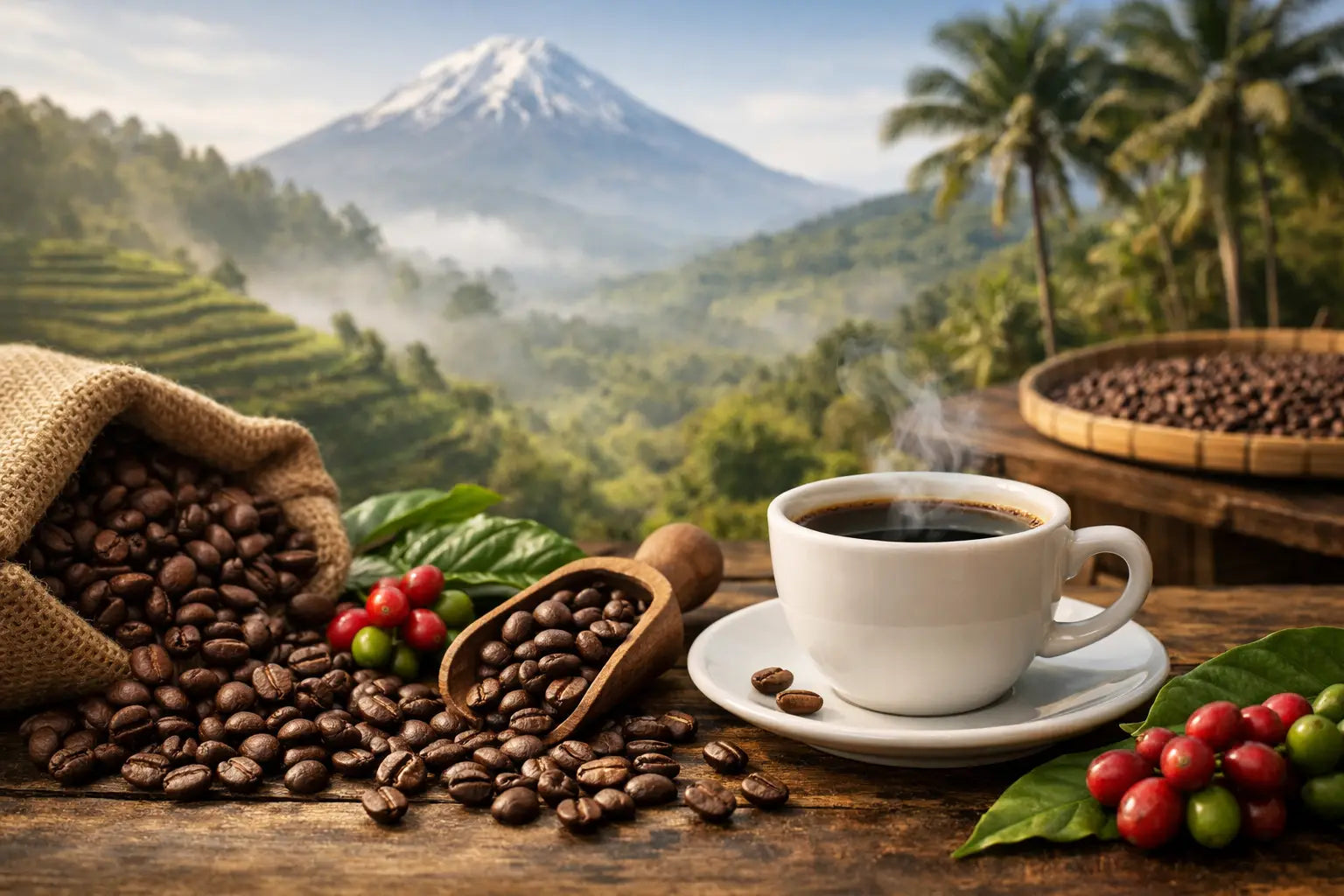
A coffee bean tells you a lot before you open the bag. From Brazil, you can often expect chocolate and nuts. From Ethiopia, your cup may smell of jasmine, citrus or ripe peach. This guide to coffee beans from top coffee-producing countries helps you understand where flavours come from and, more importantly, choose beans that taste genuinely good at home.
Origin is a useful starting point, not a flavour guarantee. Altitude, variety, processing, roasting and your brewing method matter just as much. Still, origin is a smart first filter when you are done with flat supermarket beans and want coffee with character.
Why origin changes the flavour of coffee
Coffee grows around the equator, often in places with altitude, fertile soil and distinct seasons. These conditions determine how slowly the cherry ripens and which sugars and acids develop. A high-altitude bean that ripens slowly often has more layers than coffee that grows quickly in a warmer, lower region.
Processing then determines how the seed is removed from the cherry. With washed coffee, the fruit is removed quickly, producing a clear, fresh cup. Natural coffee dries with the fruit, often creating sweetness, fruitiness and sometimes a wine-like character. Honey processing sits between the two: round, sweet and still clear.
That is why two bags labelled “Colombia” can taste completely different. Origin gives you the direction; producer, harvest, processing and roast complete the journey.
Guide to coffee beans from top coffee-producing countries
Brazil: familiar, full and chocolatey
Brazil is a reliable choice if you like full, approachable coffee. Expect milk chocolate, cacao, hazelnut and sometimes caramel. The body is often creamy and acidity is usually modest. That makes Brazilian coffee a strong choice for espresso, automatic machines and cappuccino.
Brazil is hard to beat in milk drinks. The coffee holds up rather than disappearing. If you want reliable espresso every morning without sharp edges, it is often a good fit. If you want strong floral or citrus notes, look elsewhere.
Colombia: the versatile all-rounder
Colombian coffee can go in many directions. You may taste red fruit, caramel, chocolate or soft citrus freshness, with a balance between sweetness and acidity. Differences in altitude and microclimate create both classic and complex coffees.
Colombia works well as filter coffee, espresso and in blends. If you want to move from dark, bitter coffee to specialty without choosing an extreme profile, start with a medium-roasted Colombian coffee. You get more nuance while the cup remains comfortably recognisable.
Ethiopia: florals, tea and juicy fruit
For many coffee lovers, Ethiopia is where coffee becomes exciting. Coffees from areas such as Yirgacheffe and Sidamo can smell of flowers and taste of bergamot, lemon, blueberry or peach. The body is often lighter and the mouthfeel can be tea-like.
This is a beautiful choice for filter, V60, Chemex or a carefully brewed AeroPress. In espresso, Ethiopia can be spectacular but more challenging: a grind that is too coarse or water that is too cool quickly makes it thin or sour. If you like clear, fresh and aromatic coffee, keep Ethiopian beans in your rotation.
Guatemala: structure with a lively twist
Guatemala often combines chocolate, brown sugar and nuts with fresh apple, orange or stone-fruit notes. Coffee frequently grows high in volcanic soil, creating clear structure and a pleasant, lively finish.
Guatemala is ideal if you want more excitement than a classic Brazilian coffee without moving straight to intense florals or fermentation. In espresso it gives solid body with freshness; in filter it stays sweet and clear. A true middle ground without becoming boring.
Kenya: fresh, powerful and distinctive
Kenyan coffee is often recognised by lively acidity and flavours reminiscent of blackcurrant, grapefruit, tomato or rhubarb. That may sound unusual, but in a well-brewed cup it is mainly juicy and intense. Kenya is rarely the safest choice, but it is one of the most memorable.
Use these beans preferably as filter coffee and avoid water that is too hot. If you expect a dark, heavy espresso, the style may seem too sharp. For lovers of fruity specialty coffee, Kenya shows how much energy coffee can have.
Indonesia: spicy, deep and low in acidity
Indonesian coffees, such as those from Sumatra or Java, often have heavier body and earthy, spicy notes. Think dark chocolate, cedar, tobacco or spice. Acidity is generally low and the mouthfeel thicker than in many African coffees.
This profile suits people who enjoy powerful espresso and black coffee without pronounced freshness. Indonesia is not for everyone because its earthy style is clear. That is exactly why it makes a good change if you normally choose nutty and chocolatey coffee.
Do not choose only by country — choose for your cup
The best bean is not the one with the most exotic label. It is the one that suits how you brew and drink. For cappuccino, latte and automatic machines, chocolatey beans from Brazil, Colombia or Guatemala often work very well. For black filter coffee, look for more clarity from Ethiopia, Kenya or washed Colombia.
Roast matters too. Light roast usually preserves more origin character: fruit, flowers and fresh acidity. Medium roast balances those qualities with roast sweetness. Dark roast brings more bitterness, roast notes and body. This can be delicious, but makes origins less distinct.
Espresso also needs precision. A fruity Ethiopian that shines in a V60 may need a small grind adjustment in your espresso machine. If it tastes sharp and thin, grind finer. If it is dry, bitter and heavy, grind coarser. Change one thing at a time.
Freshness keeps the character intact
Origin and quality quickly lose value when beans are old. Aromas are released after roasting, but eventually disappear. Choose freshly roasted coffee rather than a large supply with no clear roast date. Fresh beans give you the best chance of tasting Brazilian chocolate or Ethiopian florals.
Store beans dark, dry and airtight. A good storage canister helps when ordering several bags. Do not refrigerate coffee: condensation and odours are not friends of beans. Buy an amount you can finish in a few weeks and grind just before brewing. You taste that difference immediately in aroma, crema and clarity.
At Eddy’s Coffee, beans are roasted fresh, so you do not have to guess how long they have been in transit. Give a very fresh bag a few days to rest after delivery, especially for espresso. Extraction usually becomes calmer and more predictable.
Be willing to switch deliberately
Once you find a favourite country, do not stay on autopilot for months. Switch intelligently. If you normally drink Brazilian espresso, try Guatemala for more freshness. If you love Ethiopian filter coffee, compare a washed Colombian with a natural Ethiopian to taste what processing does.
Note not only the country, but what you actually taste and how you brewed it. This builds your own flavour compass faster than trusting words such as strong or premium. Start with a profile you enjoy, choose freshly roasted beans and let the next bag be one step more adventurous.
Share:
Best Coffee for French Press: How to Choose Well
Choosing Espresso Beans for Real Flavour at Home