
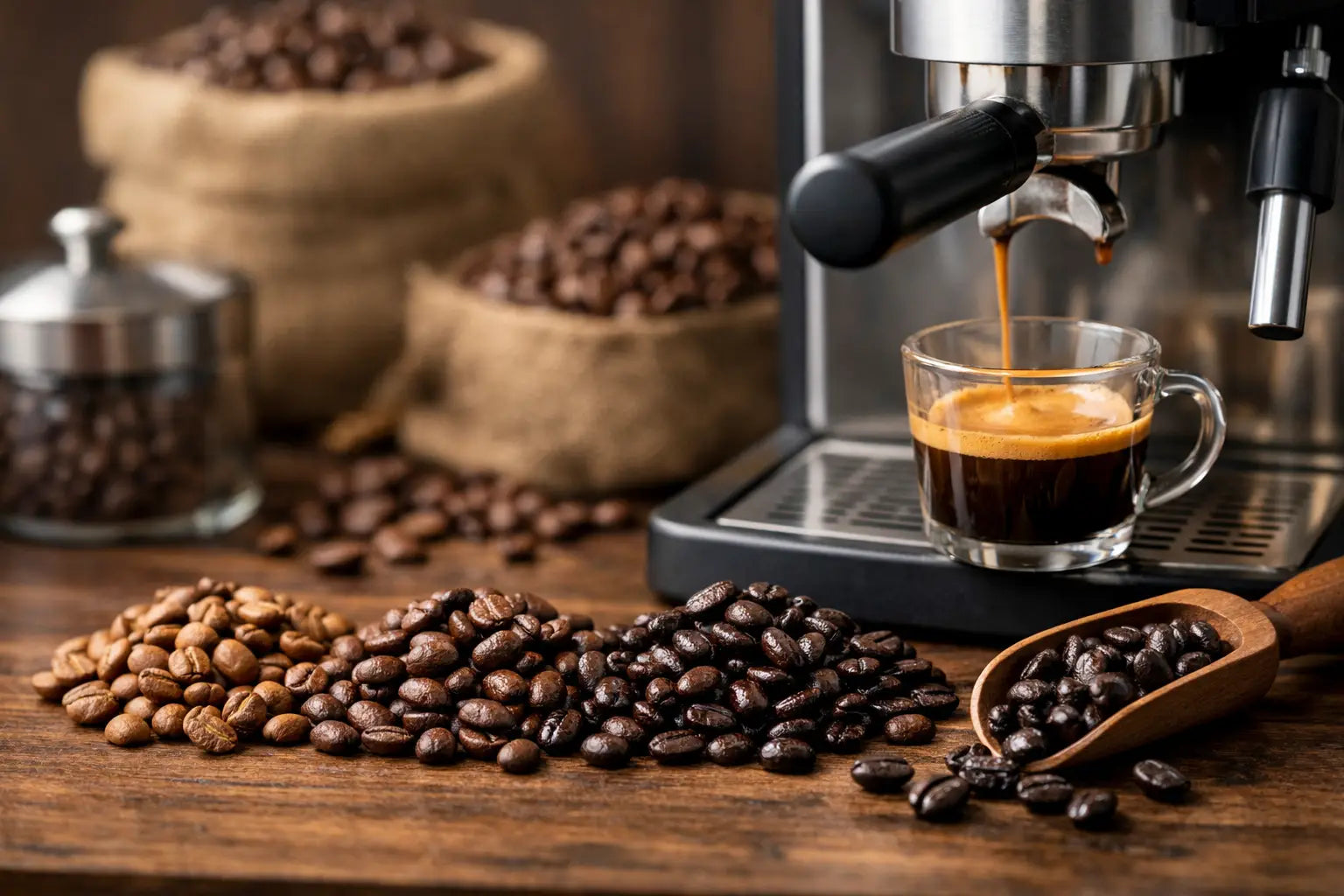
Espresso that tastes flat, sharp or bitter is surprisingly often not a machine problem. The issue started earlier, with the choice of espresso beans. Good beans give you full body, natural sweetness and a long finish. Old or poorly roasted beans make things unnecessarily difficult, no matter how expensive your equipment is.
You do not need barista training to brew better coffee at home. You mainly need to know what to look for, how to keep beans fresh and what to adjust when the shot does not taste right. It is less complicated than it sounds, and you can taste the difference immediately.
What makes espresso beans different?
Espresso beans are not a separate type of coffee. They are beans roasted with espresso brewing in mind. They are often roasted medium to medium-dark so they have enough body and dissolve well under the high pressure of an espresso machine.
That does not mean espresso must taste dark, heavy and smoky. A well-roasted espresso can have chocolate, nut, caramel, red-fruit or stone-fruit notes. The goal is balance: enough power for milk drinks, but enough sweetness and clarity for straight espresso.
A light roast can be beautiful, but often demands more from your machine, grinder and settings. Very dark roasting is more forgiving during brewing, but can quickly taste bitter and dry. For most home baristas, a carefully roasted medium or medium-dark bean is a strong choice.
Freshness is the foundation
Coffee beans contain aromas and carbon dioxide that are released slowly after roasting. This process is normal and necessary: immediately after roasting, beans can be too unsettled for a beautiful espresso. After a few days, they improve. Then flavour gradually declines, especially when oxygen, heat and light get access.
With espresso, lack of freshness is quickly apparent. Crema becomes thinner, aroma less expressive and the flavour flat or cardboard-like. You can keep adjusting the grind, but an old bean will not become lively again.
Look not only at a best-before date, but at the roast date. Freshly roasted beans give you the best starting point. At Eddy’s Coffee, beans are roasted to order, so you do not have to guess how long they have been sitting on a shelf. That is not a luxury detail, but a practical condition for better espresso at home.
When are beans at their best?
Espresso beans often taste best from around five to fourteen days after roasting. By then excess gas has usually reduced while aromas remain present. Some beans stay excellent for longer, depending on roast and packaging.
Buy an amount you can finish within four to six weeks rather than a supply for months. A household making two double espressos daily may sensibly buy a kilo. If you drink less, smaller bags are smarter. Freshness almost always beats a small volume discount.
Choose flavour, not just intensity
Packages often use words such as intense, powerful or dark. These can be useful first clues, but they do not tell the whole story. Intensity mainly describes the impression of body and roast, not quality or personal preference.
Ask what you want in the cup. Do you like a classic Italian style with body, cacao and roasted nuts? Choose a blend or single origin with a fuller profile. Do you prefer fruit, freshness and a lighter finish? A medium roast with red fruit, citrus or caramel may suit you better.
For cappuccino and flat white, chocolatey and nutty espresso is a safe choice. Milk makes subtle floral notes less visible, while caramel and cacao remain present. If you drink black coffee, you can experiment more with origin and fruity flavours.
Blend or single origin is not a right-or-wrong question. Blends are created for balance and consistency, which is useful when you want the same trusted espresso every morning. Single origin reveals one country or region and can be more exciting, but sometimes more sensitive to adjustment.
Your grinder determines whether beans reach their potential
You can buy excellent espresso beans, but an unsuitable grind will prevent you from getting much from them. Espresso needs a very fine and above all even grind. A good grinder is often a larger improvement than a more expensive machine.
Grind just before brewing. Pre-ground coffee loses aroma and flavour quickly because its surface area in contact with oxygen increases enormously. Whole beans also let you adjust the grind for coffee age, humidity and personal taste.
As a starting point, use around 18 grams in and 36 grams out for a double espresso in 25 to 30 seconds. This is not a law, but a reliable starting point. Weigh dose and yield with a simple scale so improvement becomes measurable rather than guesswork.
Too sour, bitter or fast? How to adjust
If your espresso tastes sour, watery or thin and runs much too quickly, grind a little finer. Water will have more contact with the coffee and extract more flavour.
If it tastes harsh, dry and bitter or takes too long, grind a little coarser. Also check that you are not overfilling the basket. Small changes work better than big jumps: one setting finer or coarser may be enough.
Change one variable at a time. Do not adjust grind, dose, temperature and yield simultaneously. You will not know what made the difference. Brewing becomes enjoyable when you learn to taste the effect of a small change.
Store coffee beans without losing flavour
Coffee’s main enemies are oxygen, heat, light and moisture. An attractive storage jar on the counter is therefore not always the best place, especially if it is transparent or beside the oven. Store beans dark, dry and at room temperature.
Keep an unopened bag sealed until needed. Once opened, close it carefully or use an airtight storage container such as a CoffeeVac. This limits oxygen without requiring complicated daily rituals.
The fridge is usually a bad idea because beans can absorb odours and moisture. The freezer can work for larger supplies used much later, provided beans are divided into small, well-sealed portions and not repeatedly thawed. For your daily supply, a cool cupboard is simply better.
Give yourself room to taste
The best espresso is not necessarily the one with the most technical description. It is the espresso you look forward to making in the morning. That might be a creamy dark blend with chocolate and almond, or a clear, fruity coffee you drink without milk.
Start with fresh beans that suit the way you drink coffee. Dial in your grinder calmly, store the supply well and give a bag a few shots before judging it. Once you make that first full, sweet espresso, you will not want to return to beans with an unknown roast date.
Share:
Guide to Coffee Beans from Top Coffee-Producing Countries
Single-Origin Coffee Beans: What Does One Origin Mean?