
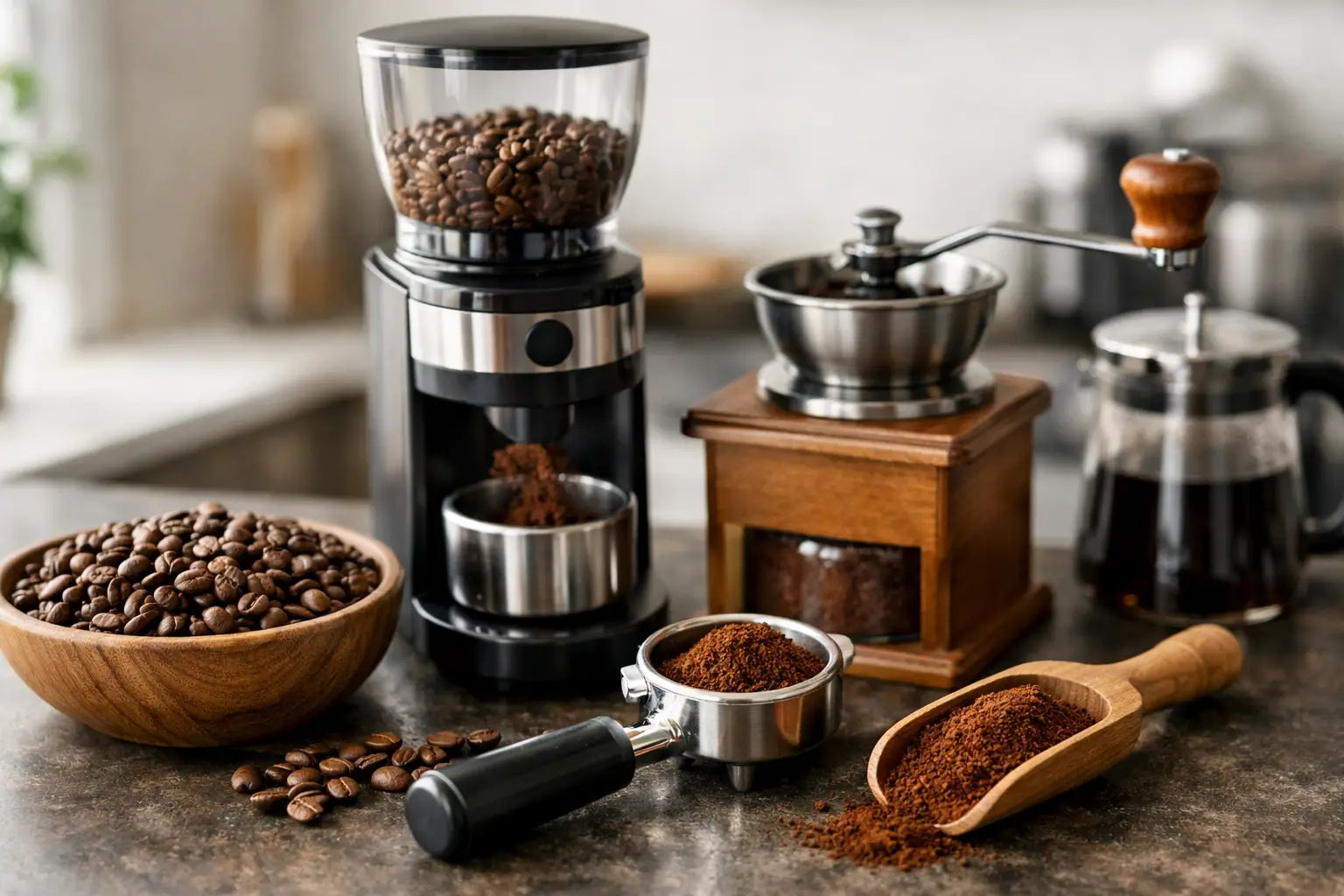
A good bag of specialty beans can taste surprisingly flat when the grind is wrong. Are you wondering how to grind coffee at home so your cup finally tastes as intended? Start not with a complicated recipe, but with two things: a decent grinder and a grind size that suits your brewing method. You can taste the difference immediately.
Pre-ground coffee is convenient, but loses aroma and flavour quickly after opening. Whole beans retain aroma much better. Grind just before brewing and the sweet, fresh and full notes that make genuinely fresh coffee special remain much more intact.
Why grinding coffee yourself makes such a difference
Coffee beans contain aromatic oils and volatile flavour compounds. Once you grind the bean, much more coffee surface touches oxygen. That is necessary to extract flavour, but it also means aroma disappears quickly.
Grinding your own coffee is therefore not snobbery. It is a simple way to get more from beans that have been handled with care. With specialty coffee especially, you taste origin and roast more clearly: chocolate and nuts, ripe fruit, caramel or fresh floral notes.
The second reason is just as important: grind size determines how quickly water extracts flavour. Too coarse and the water takes too little. Too fine and the water has too much time and surface area to release bitterness. The right grind balances sweetness, body and freshness.
Choose the right grinder first
Not every grinder produces the same result. A blade grinder cuts beans into different-sized pieces, creating a mix of large chunks and fine dust. During brewing, these particles extract unevenly: the fine particles become bitter while the coarse ones remain sour or watery.
A burr grinder is a better choice. It produces more consistent particles and therefore more even extraction. You have two broad options: flat and conical burrs. Both work well at home as long as the grinder is stable and lets you adjust the grind properly.
A hand grinder with ceramic or steel burrs is an affordable, strong starting point for filter coffee, French press and AeroPress. If you drink espresso every day, an electric grinder with fine, precise settings is often more convenient. Espresso is less forgiving: a small grind adjustment can significantly change brew time and flavour.
Do not focus only on the number of settings. What matters is whether the steps are small enough for your method. A French press gives you plenty of room; espresso needs subtle adjustments per click.
How to grind coffee at home for each method
Think of grind size as a starting point, not a fixed law. Bean, roast, dose, water temperature and taste all matter. This guide will help you start in the right area.
French press and cold brew: coarse
For French press, use a coarse grind, similar to coarse sea salt. The coffee stays in direct contact with water for several minutes. Grind too fine and you get a lot of sediment and astringency.
For cold brew, go a little coarser still. Coffee steeps for hours in cold water, so extraction should be gentle. A grind that is too fine makes cold brew cloudy and dry more quickly.
Filter coffee and V60: medium-fine
For a filter machine, V60, Kalita or another pour-over, use a grind that resembles fine sand. The water passes through the coffee bed in a few minutes. If it runs through much too quickly, grind finer. If it drips endlessly and tastes bitter, grinding coarser is usually the right move.
Pouring technique matters with manual filter brewing too. Aggressive pouring or water that is too hot can produce a harsh cup even with a good grind. Stay calm, use fresh water and change only one variable at a time.
AeroPress: medium-fine to fine
The AeroPress is flexible. With a short brew and paper filter, a medium-fine grind often works well. If you steep longer, use a metal filter or press hard, a slightly coarser grind may be better.
Because the AeroPress makes experimentation easy, it is a great way to learn your taste. Note the coffee, water and time for a few brews. You will quickly understand which direction to adjust.
Espresso machine: fine, but not powdery
Espresso needs a fine grind, somewhere between icing sugar and fine sand. Water is under high pressure and moves quickly through a compact coffee bed. If the grind is too coarse, the shot runs too fast and tastes thin, sour or empty. If it is too fine, the shot runs slowly or barely at all and tastes bitter and dry.
A useful rule: adjust the grind when the brew time changes clearly. Grind finer if the shot runs too quickly and coarser if it chokes. Make small changes. Large jumps make it difficult to understand what is happening.
Recognise too coarse and too fine by taste
You do not need a barista course to taste whether the grind is right. Sour coffee is not always bad — some light roasts intentionally have fresh, fruity acidity. But if it tastes sharp, thin and unripe, extraction is often too low. Grind finer or give the water more contact time.
If coffee tastes bitter, dry, smoky or unpleasantly heavy, too much has probably been extracted. Grind coarser, shorten the brew time or check that the water is not boiling hot.
A balanced cup usually has clear sweetness, enough body and a clean finish. Not everyone will choose the same setting. Someone who likes powerful dark flavours may grind a little finer than someone brewing a light, clear filter coffee.
Dial in your grind step by step
Start with a standard setting for your method and use a fixed coffee-to-water ratio. For filter, 60 grams per litre is a useful starting point. For espresso, 18 grams in and roughly twice that out is common, depending on your basket and preferences.
Brew, taste deliberately and then change only the grind. Do not adjust dose, temperature, brew time and grind simultaneously or you will not know which change helped.
Use scales if possible. It may sound overly precise, but it actually saves coffee. A scoop is rarely filled the same way twice. With a fixed dose, you can grind, taste and adjust deliberately rather than guessing every morning.
Grind only what you need
Ideally, grind exactly what you are about to brew. For one cup, weigh your beans, grind them and brew immediately. The rest of your supply stays protected from air and moisture.
Store beans dark, dry and airtight. Do not keep them in the fridge, where they can absorb moisture and odours. A well-sealed coffee container is more practical than repeatedly folding the bag open and closed, especially when you have several coffees at home.
Your grinder also deserves attention. Coffee residue and oil collect around the burrs and can create stale or bitter notes over time. Brush away loose residue regularly and clean the grinder according to the manufacturer’s instructions. Do not use water in the burr chamber unless explicitly allowed.
Fresh beans give your grinder something to work with
A perfect grind cannot rescue old, flat coffee. Freshly roasted and well-stored beans behave more predictably in the grinder and give more aroma in the cup. You notice this especially with espresso, where freshness affects brew time, crema and balance.
Give yourself a small routine: weigh the beans, grind just before brewing, taste calmly and remember the setting. After a few days this is no extra work; it is the point where your morning coffee moves from fine to genuinely good.
Share:
Premium Coffee Beans in the Netherlands: How to Choose Well
How to Adjust Grind Size for Each Brewing Method