
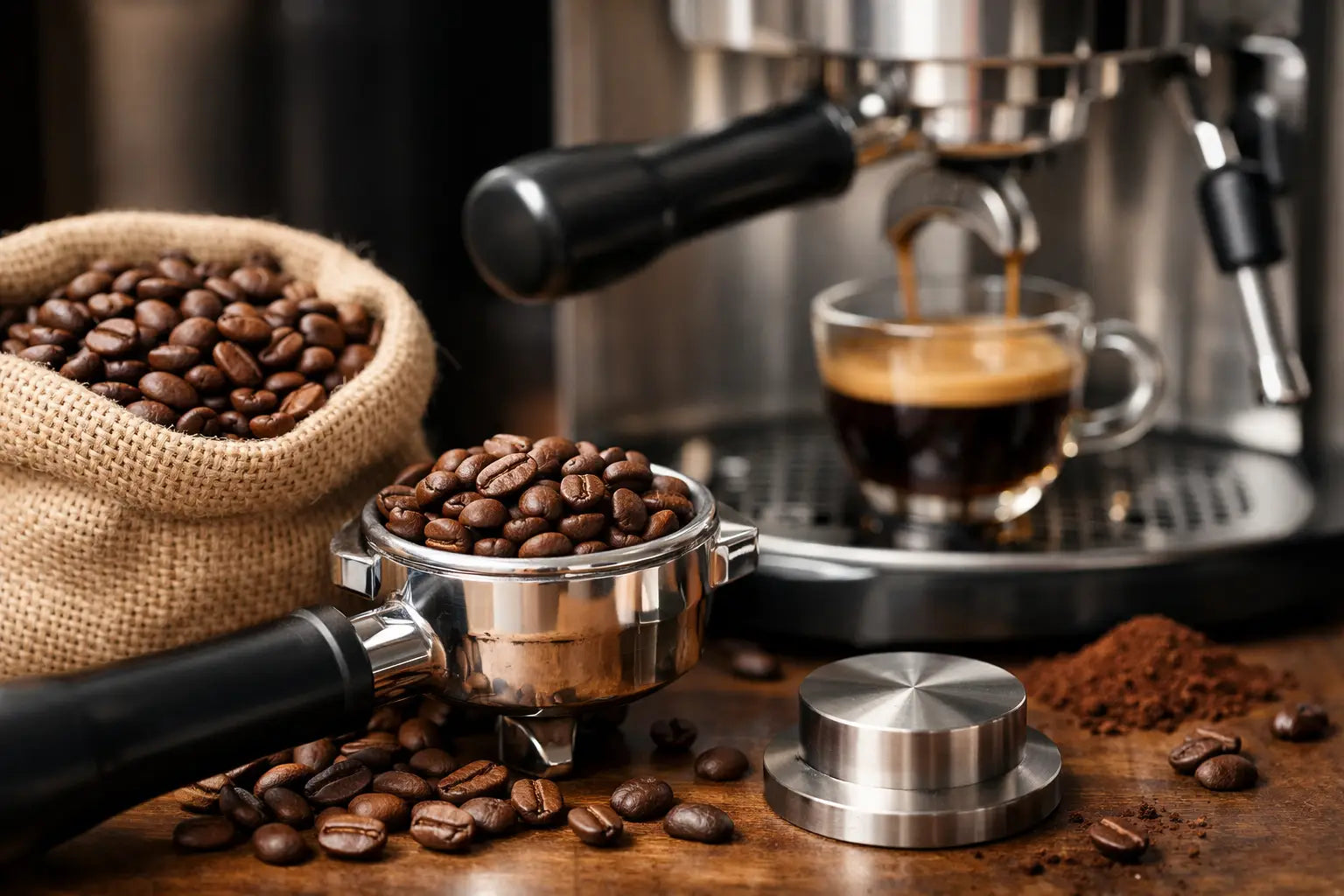
An espresso machine is not very forgiving. That is exactly why good espresso at home can taste so good, but also why the wrong beans put you at a disadvantage immediately. If you really want to make better coffee, you need to look beyond “espresso beans” on the packaging. Good coffee beans for an espresso machine are fresh, suit your taste and work with your settings — not against them.
Why not every bean suits an espresso machine
An automatic coffee machine sometimes masks a few things. An espresso machine does not. You see exactly what is happening: does the espresso run too quickly, is the crema thin, does the shot taste sharp or flat? That is not only about your technique; it is often about the bean too.
For espresso under pressure, you need beans that extract predictably. That does not mean there is only one good type. It does mean that roast level, freshness and origin matter much more than they do for filter coffee. A bean that tastes beautifully floral and light in a V60 can suddenly taste sour and unsettled in an espresso machine — especially when your grinder or machine is not perfectly dialled in.
That is why many home baristas eventually stop looking for the “best” bean and look for the bean that best suits their setup and taste. That distinction matters.
What good coffee beans for an espresso machine have in common
The first factor is freshness. Not “long shelf life”, but genuinely freshly roasted. Espresso is strongly affected by carbon dioxide in the bean. Too fresh and you get unstable extraction and excessive crema without balance. Too old and the coffee becomes lifeless, dry and flat. The sweet spot is usually somewhere from a few days after roasting to a few weeks later, depending on the bean and roast.
The second factor is roast level. For an espresso machine, a medium to medium-dark roast is often the most forgiving. It gives you more body, sweetness and a rounder espresso. Very light specialty coffee can be fantastic, but usually requires a better grinder, more precision and a little more experience. If you simply want a full, rich espresso with consistent results, a slightly more developed roast is usually the better choice.
The third factor is bean quality. Specialty coffee really makes a difference here. Not because it sounds luxurious, but because you get more uniformity. Beans of consistent quality behave better in your grinder and portafilter. That directly helps extraction time, flavour balance and repeatability.
Flavour profile: what do you want from your espresso?
Many people start with the technical details — grind size, grams in and seconds out — while the first question is simpler: what do you want to taste? Are you looking for chocolate, nuts and a thick body, or fruit, citrus and a lighter finish?
For classic espresso and cappuccino, Brazilian or Central American profiles are often excellent. Think notes of chocolate, caramel, nuts and sometimes gentle spice. These flavours also hold their own in milk. If you mainly drink flat whites, cappuccinos or lattes, these are often the safest and most satisfying choices.
If you prefer straight espresso, you can also explore fruitier beans from Ethiopia, Kenya or Colombia. They can be lively, sweet and layered, but in an espresso machine they show their sharper edges more quickly when the grind or temperature is not right. That does not make them worse — only less forgiving.
Single origin or blend?
For an espresso machine, a blend is often the smartest place to start. Not because single origin is inferior, but because blends are usually designed for balance. They may combine body from Brazil with sweetness from Colombia or extra liveliness from Ethiopia. The result is an espresso that tastes more consistent and is easier to dial in.
Single origins are more interesting when you specifically want to taste one origin. They can be very distinctive and exciting, but they leave less room for mistakes. If you have just bought an espresso machine or mainly want a strong, tasty espresso every morning without hassle, a good espresso blend is often the better choice.
The role of oil on the bean
Many people think shiny beans are automatically better for espresso. That is not true. An oily surface usually points to a dark roast or age. In some cases, it gives you that classic, powerful Italian style. But very dark beans also lose nuance more quickly and can become bitter or smoky.
For home use, a bean with a dry to lightly satin-like surface is often more pleasant. It stays cleaner in your grinder and usually gives you more control in the cup. Especially when you are looking for specialty quality, you do not need to chase the darkest, shiniest bean.
Do not forget your grinder
You can buy the best coffee beans for an espresso machine, but without a decent grinder you will be trying to fix the unfixable. Espresso needs a fine, precise grind with small adjustments. Pre-ground supermarket coffee is almost never matched to your machine, basket and dose.
Grinding your own beans is therefore not a luxury, but part of the result. It may sound strict, but it makes an enormous difference. Fresh beans lose aroma very quickly after grinding. In addition, only your own grinder lets you correct a shot that runs too quickly or too slowly.
Think of it this way: the bean determines the potential, while the grinder determines how much of that potential reaches your cup.
How fresh is too fresh?
Freshness is a major advantage, but here too, more is not always better. Beans roasted yesterday may still contain too much gas for espresso. You then get a spluttering extraction, a large amount of crema and a flavour that has not settled into balance.
For most espresso beans, a short resting period works better. Five to fourteen days after roasting is often a very good window to start with. You can continue brewing good coffee for weeks afterwards as long as you store the beans properly. Coffee roasted after you order it has a clear advantage over beans that have been sitting on a shelf for months.
How to store espresso beans properly
Air, light, heat and moisture are the four major flavour destroyers. Do not leave beans in an open bag next to the machine. Store them in a well-sealed canister in a cool, dry place. Not in the fridge — condensation and odour transfer are more likely to cause problems than improve quality.
It is also better to buy an amount you can finish within a few weeks. A large stock may seem convenient, but freshness matters greatly for espresso, especially when you are looking for that extra bit of crema, sweetness and body at home.
Common mistakes with coffee beans for an espresso machine
The first mistake is choosing by an intensity score instead of a flavour profile. “Intensity 10” says little about quality and even less about balance. Often, it simply means a darker roast.
The second mistake is confusing old beans with stable beans. An espresso that always tastes the same because all its liveliness has disappeared is not necessarily a good espresso.
The third mistake is blaming the bean too quickly. Sometimes the problem is simply your recipe. If your espresso tastes sour, it may be a light roast, but it may just as easily be a grind that is too coarse or an extraction that is too low. Bitter coffee can be caused by a dark roast, but also by water that is too hot or a shot that runs too long.
So how do you choose the right bean?
Start practically. If you mainly drink milk-based drinks, choose a medium to medium-dark espresso blend with notes of chocolate, nuts or caramel. If you mainly drink straight espresso and enjoy a little excitement in the cup, try a fruitier single origin or a lively blend.
Then look at freshness. Beans that are genuinely freshly roasted and have a clear roast date simply give you a better chance of brewing good coffee. That is exactly why home baristas are becoming more critical about where they buy their beans.
Next, do not test five coffees at once. Give one bean a proper test. Dial in the grind, note your recipe and taste with attention. Only once you know how a bean behaves can you fairly decide whether it suits your espresso machine.
When switching beans makes sense
If you have been adjusting grind and dose for weeks and still get a flat or messy espresso, switching makes sense. Sometimes the bean simply does not suit your machine, taste or routine. That is not a failure; it is a sign that you have started tasting more deliberately.
For many home coffee drinkers, an accessible specialty espresso works best: freshly roasted, clear in flavour and not unnecessarily difficult to dial in. It gives you better-than-supermarket quality without having to struggle every morning for a good shot. That is exactly where a specialist such as Eddy’s Coffee adds value.
An espresso machine rewards attention, but it does not require complicated fuss. Choose beans that suit your taste and routine, give them the freshness and grind they deserve, and you will quickly notice how much difference they make in the cup.
Share:
Specialty Coffee vs Supermarket Coffee: What Can You Taste?
A Specialty Coffee Guide for Home Drinkers