
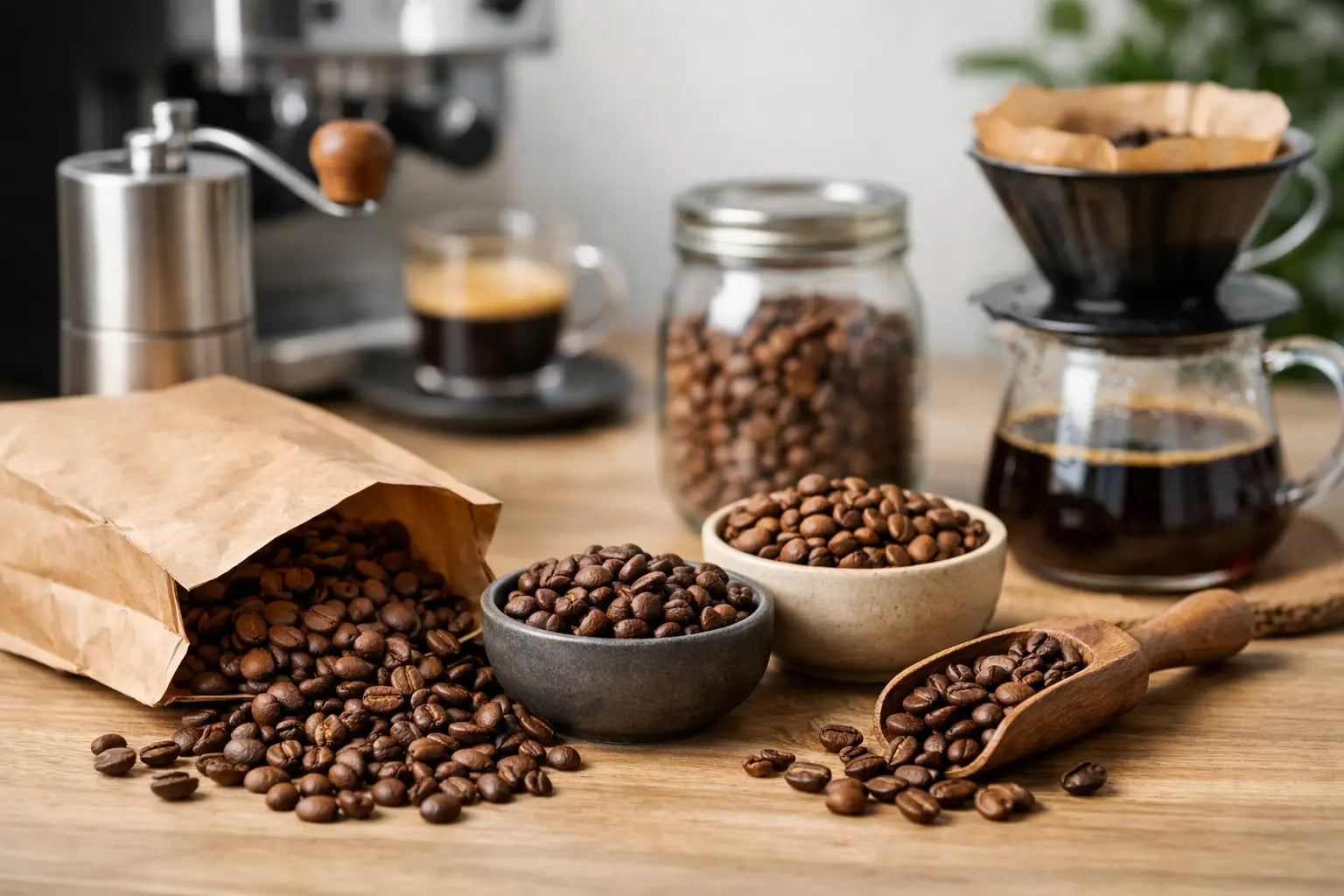
You often notice it as soon as you open the bag. The aroma is flat, the roast date is unclear and the espresso tastes fine on Monday but watery by Thursday. Anyone serious about ordering specialty coffee beans wants to move past that. No more guessing—choose beans that are fresh, well roasted and suited to the way you brew coffee at home.
Buying coffee online is not difficult because there is too much choice, but because there is too much noise. Attractive packaging tells you little. Terms such as premium and artisan tell you even less when nobody explains when the coffee was roasted, where the bean comes from or why it tastes the way it does in your machine or filter setup. That is exactly where the difference lies between a fun purchase and coffee you genuinely look forward to every morning.
Why ordering specialty coffee beans often works better than buying them at the supermarket
The biggest gain is almost never origin or score alone, but freshness. Supermarket beans often sit in stock for weeks or months. That makes them predictable for distribution, but not for flavour. Coffee is not a luxury product that improves by waiting. Especially not when you are looking for lively acidity, clear sweetness and a clean finish.
With specialty coffee, the focus is on control throughout the chain. The bean is selected more carefully, the roast is more precise and the flavour is less flat. That does not automatically mean every specialty coffee has to be light and fruity. It does mean the flavour has been deliberately developed rather than roasted away. You taste more nuance, whether you enjoy chocolate and nuts or citrus and floral notes.
Ordering online also has a practical advantage. You do not have to settle for whatever is left on the shelf. You can choose deliberately based on flavour profile, brewing method and freshness. For busy coffee drinkers, that is not a luxury but convenience that finally works together with quality.
What to look for when ordering specialty coffee beans
The roast date is the first test. Not a vague best-before date, but a real roast date. Fresh coffee needs some time to rest after roasting before it reaches its best, but you should know what you are getting. Without a roast date, you are buying blind.
Then look at transparency. Is there information about country, region, processing method or flavour profile? At least then you have something to work with. An online shop does not have to overwhelm you with jargon, but it should make clear why a coffee tastes the way it does. Otherwise, specialty remains mainly a marketing term.
The roast itself also matters greatly. Roast too dark and much of the nuance disappears behind bitterness and smoky notes. Roast too light and some coffees become difficult to brew, especially in superautomatic machines. The best choice therefore depends on your equipment and taste. This is an important “it depends” moment that many shops skip too quickly.
Packaging is less exciting, but it matters. Good beans deserve a bag with a valve and a reliable seal. If you buy larger quantities, storage suddenly becomes just as important as ordering. Especially if you do not open a new bag every week.
Not every specialty bean suits every brewing method
This is where things often go wrong. A bean can be excellent and still disappoint you at home. Not because the coffee is bad, but because the match is missing. For espresso, you usually want more body, sweetness and solubility. For filter coffee, a fresher, more complex and lighter style often works well.
If you use a superautomatic machine, choose forgiving beans. A very light roast may taste thin or sour. If you work with a portafilter machine and grinder, you can dial the coffee in much more precisely and get more out of complex coffees. With filter coffee, freshness is important again, but you especially notice the difference in clarity and detail.
Ordering specialty coffee beans works best when you consider not only flavour words, but also how you brew. That prevents disappointment and makes your choice much smarter.
How to read flavour profiles without being misled
Flavour descriptions are useful as long as you read them correctly. Milk chocolate, red fruit or caramel do not mean that anything has been added. They refer to what you may recognise in the aroma and finish. Treat them as signposts, not hard promises.
If you enjoy cappuccino or flat white, choose beans with enough body and sweetness. Think of notes such as cocoa, nuts, caramel and ripe stone fruit. These remain noticeable in milk. If you drink coffee black, you can more easily explore greater intensity in the cup, such as citrus, berries or floral notes.
There is also a limit to how exotic you should go at first. If you are used to dark supermarket roasts, an extremely light anaerobic coffee is not always the best first step. An accessible specialty blend or rounded single origin may be a smarter choice. One bag that works immediately is better than an ambitious choice you abandon after three cups.
Blend or single origin?
A blend is often designed for balance and consistency. That makes it strong for espresso and everyday use. A single origin shows its origin more clearly. That can be more exciting, but sometimes also less forgiving.
Neither is automatically better. It depends on what you are looking for. Want the same reliable cup every morning? A good blend may be ideal. Looking for variety and interested in tasting the effect of terroir and processing? Single origin is more interesting.
Freshness is not just a promise, but a window of time
Many people only pay attention to freshness after a bag disappoints them. That is a shame, because it is one of the easiest selection criteria. Coffee is at its best within a particular window. Too fresh can be unsettled, especially for espresso. Too old becomes flat, dry and less aromatic.
That is why fast shipping after roasting is valuable. Not because speed solves everything by itself, but because it shows that an online shop has its process under control. If beans are roasted after ordering, or at least shipped extremely fresh, you know that flavour is taken seriously rather than sacrificed for storage convenience.
For home use, this also has a practical implication. Buy an amount you can finish within a reasonable period. A one-kilo bag may be economical, but only if your consumption matches it. If you drink one or two cups a day, ordering smaller amounts may be smarter unless you store the beans carefully.
Storing your beans after ordering specialty coffee
Good beans can handle a lot, but oxygen, light, heat and moisture remain their enemies. Do not leave coffee in a folded-open bag next to the cooker. Store beans sealed, in the dark and at room temperature.
The fridge is usually not a good idea. Temperature fluctuations and moisture do more harm than good. Freezing can work, but mainly when you package portions airtight and do not repeatedly thaw them. For everyday use, a well-sealing storage canister is often the most practical solution.
Also grind just before brewing whenever possible. Even the best bean loses aroma quickly once it has been ground. If you really want to taste the difference between acceptable and excellent, this is where you can gain surprisingly much.
When ordering online is less smart
To be fair, online is not always the best route. If you have no idea what you like and immediately order five different bags, you are making things unnecessarily difficult. A top coffee can also disappoint if your grind or brewing method is not yet under control.
In that case, start with one or two clear profiles. An approachable espresso bean and a fresh filter coffee, for example, if you drink both. You will learn your preferences faster that way. Good specialty coffee should not feel complicated. It should help you brew consistently good coffee.
That is why an online shop works best when it not only sells attractive beans, but also communicates clearly about flavour, freshness and use. This removes the guesswork. At a company such as Eddy’s Coffee, that is exactly the focus: seriously fresh specialty coffee, clear choices and no vague nonsense about what you are actually buying.
Order specialty coffee beans with less doubt
If you want to buy better coffee online, you do not have to make it more complicated than necessary. Look at freshness first, then brewing method and only then the flavour details. That order will prevent most mistakes. A beautiful tasting note is not much help if the bean is too old or does not suit your machine.
The best purchase is usually not the most exclusive bean, but the coffee that reliably tastes good at home and fits naturally into your routine. That sounds less romantic, but it is more honest. Specialty coffee should not be elitist. It should simply produce noticeably better coffee without hassle or doubt, with enough quality to look forward to tomorrow’s cup.
In the end, ordering specialty coffee beans is not about buying packaging or hype, but about creating a better start to the day. It is perfectly reasonable to be critical about that.
Share:
What Is Specialty Coffee? The Complete Guide to Flavour, Origin and Quality
Buy Freshly Roasted Coffee Beans