
Decaf Coffee Beans
Great decaf coffee beans are for coffee lovers who want a full espresso, a creamy cappuccino or a smooth filter coffee, while drinking less caffeine. At Eddy’s Coffee, you will find freshly roasted decaf coffee beans with distinct flavour profiles. Not a flat second-choice coffee, but specialty coffee that tastes seriously good without the caffeine kick.
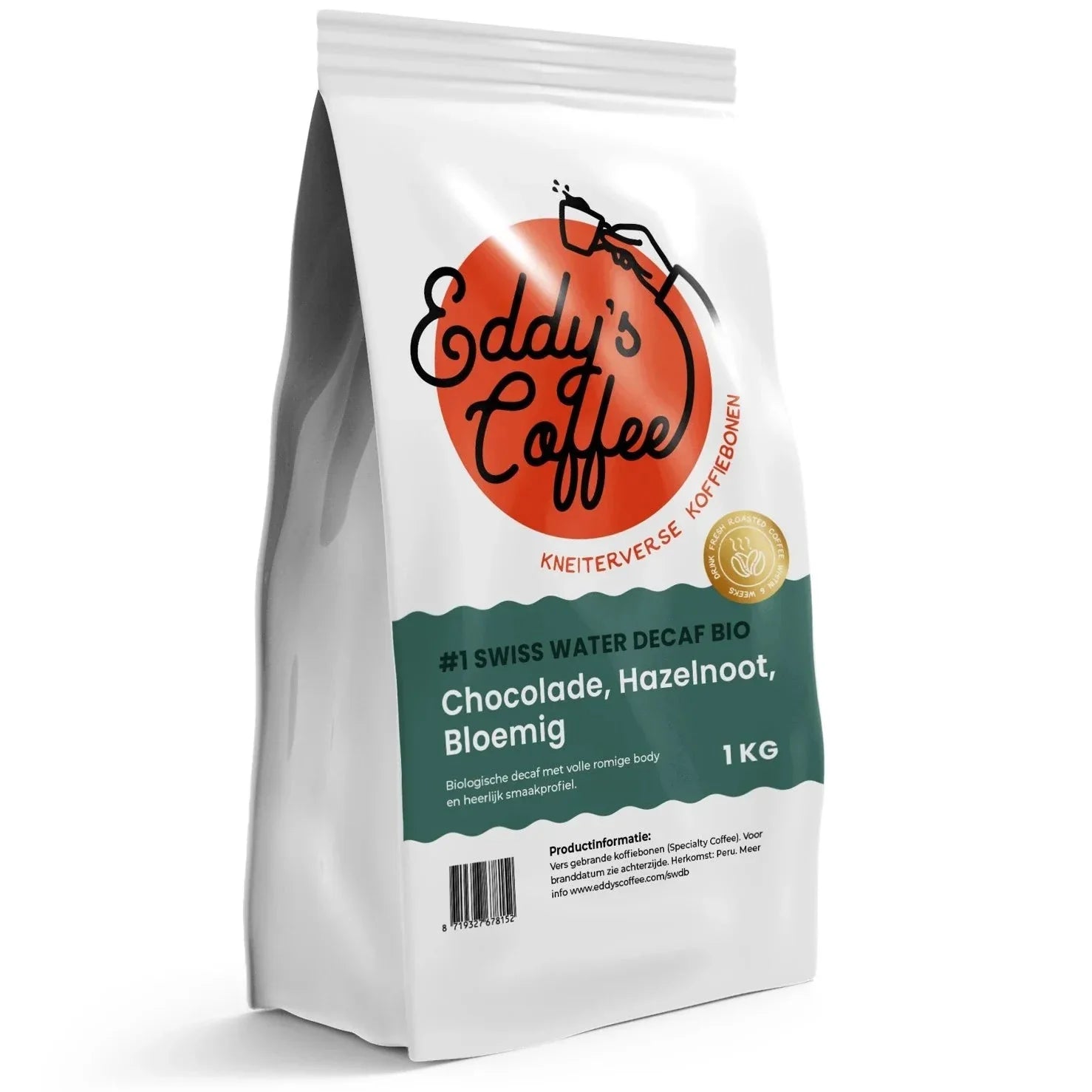
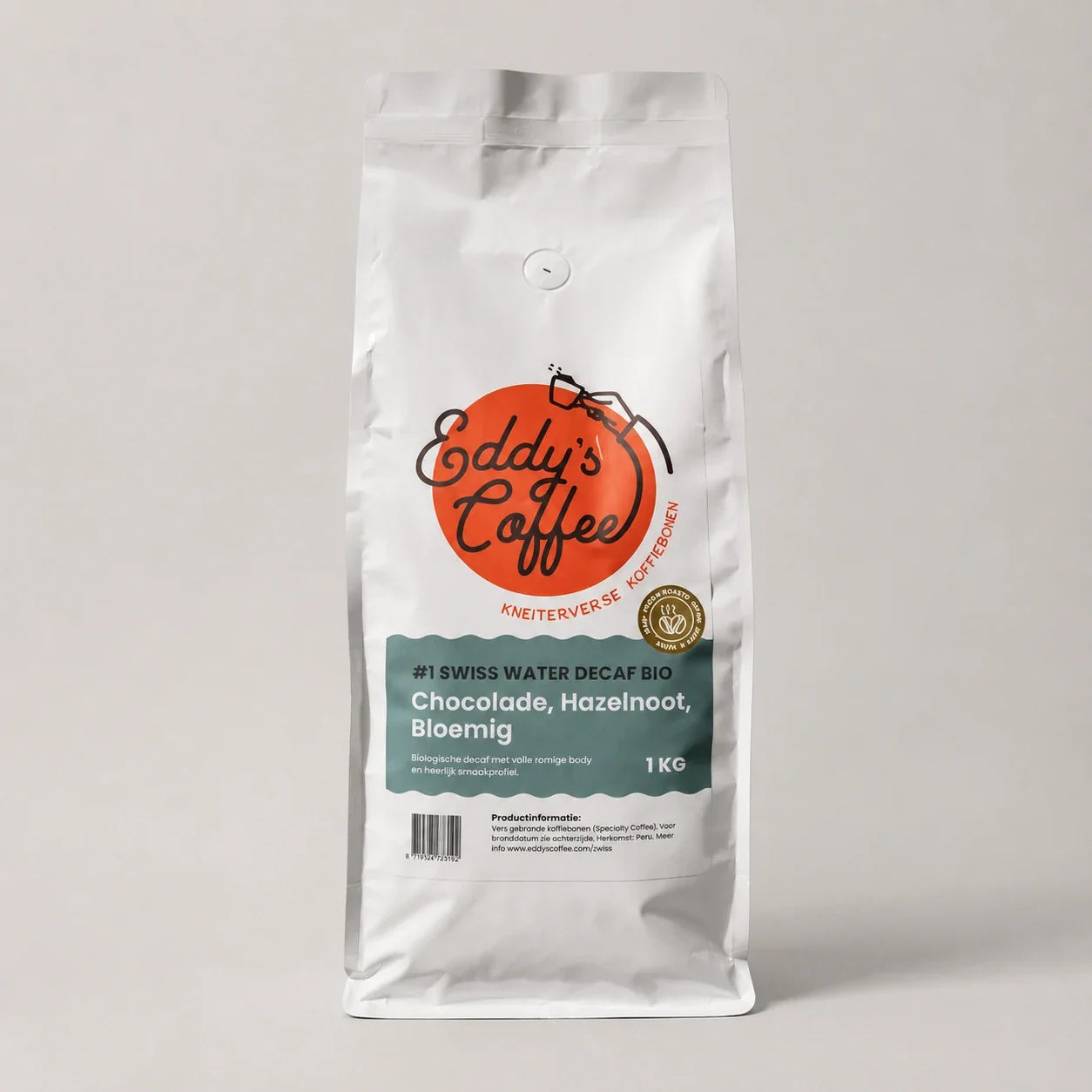
Our selection includes three decaf coffees, each with its own character and method: an organic Peru Swiss Water Decaf, a Colombia Sugarcane Decaf and a Guatemala Swiss Water Decaf as an alternative to the Peru. Choose not only by decaffeination method, but above all by the flavour that suits you and your coffee machine.
Which decaf coffee beans are right for you?
| Coffee | Method | Flavour profile | Suitable for |
|---|---|---|---|
| Peru Swiss Water Decaf Bio | Swiss Water | Chocolate, hazelnut and floral notes | Espresso, lungo, cappuccino and filter coffee |
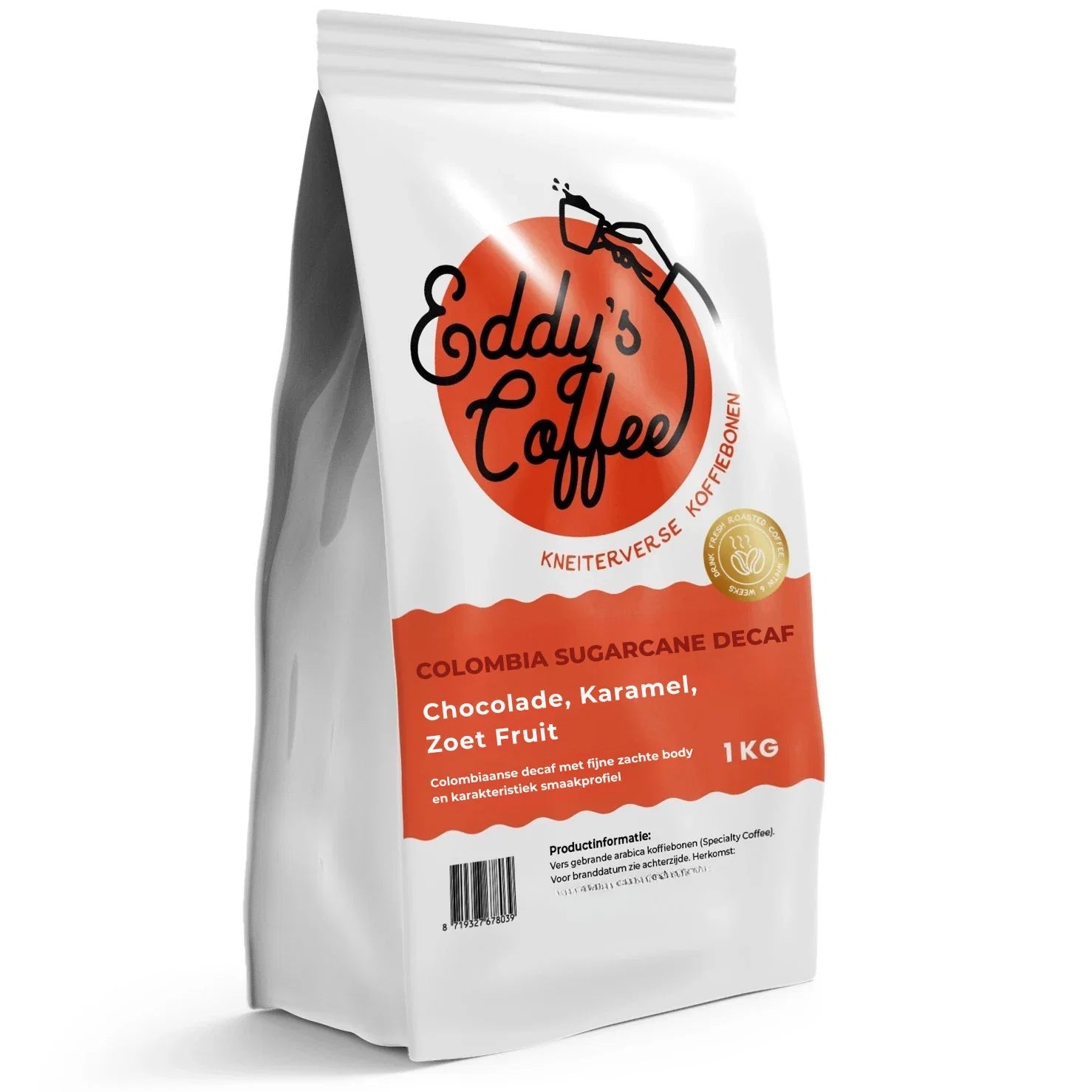
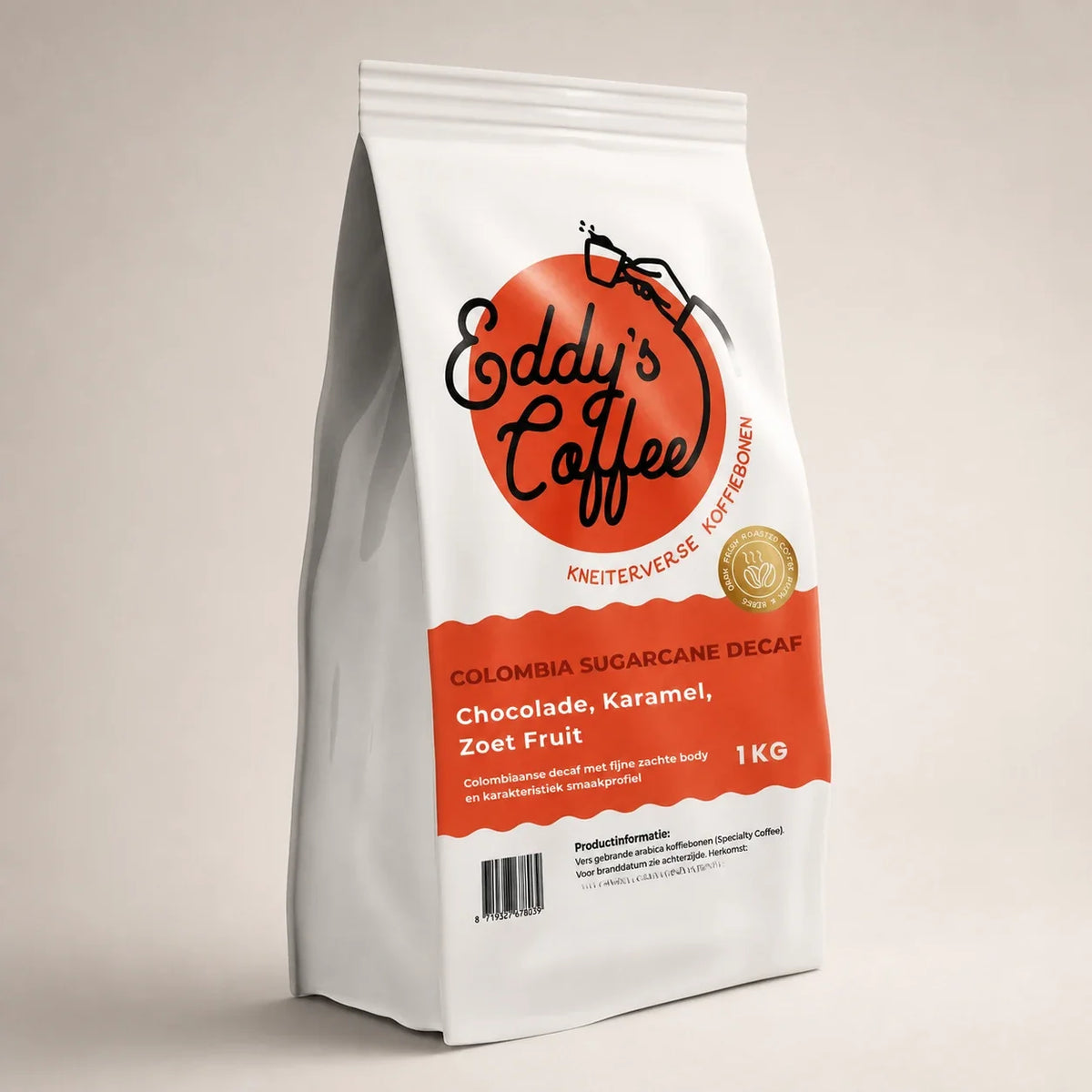
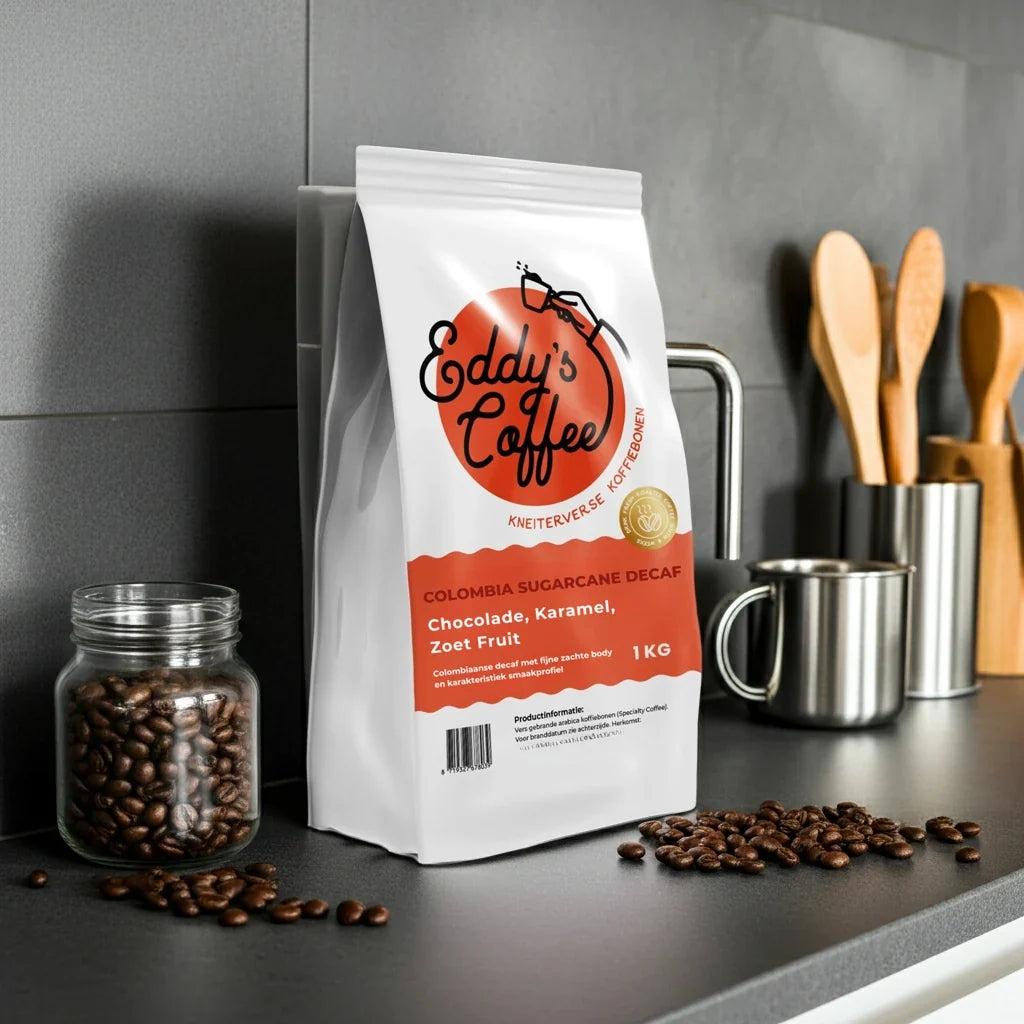
| Colombia Sugarcane Decaf | Sugarcane / EA | Chocolate, caramel and sweet fruit | Espresso, lungo, cappuccino and filter coffee |
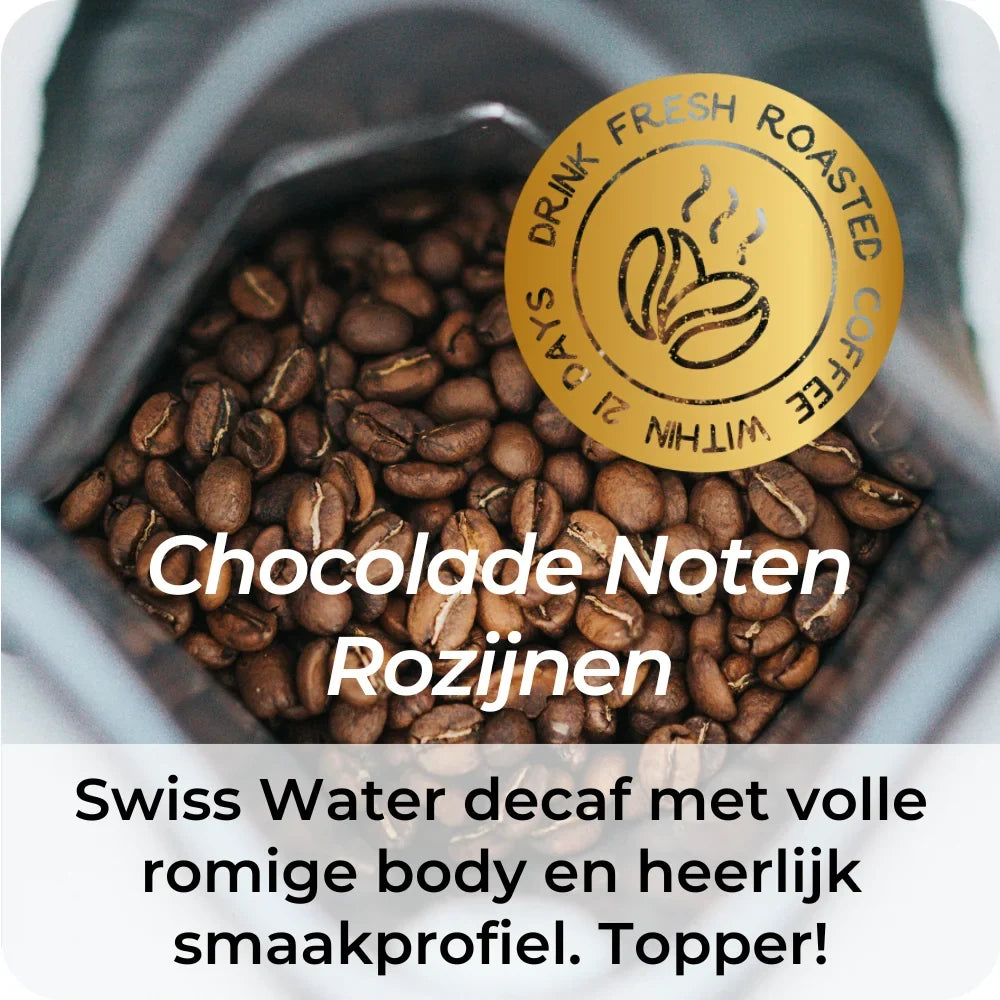
| Guatemala Swiss Water Decaf | Swiss Water | Chocolate, nuts and a gentle raisin-like sweetness | Espresso, lungo, cappuccino and filter coffee |
Looking for a firm, balanced decaf with chocolate and nutty notes? Choose Peru Swiss Water Decaf Bio. For a slightly sweeter and creamier Swiss Water coffee, Guatemala Swiss Water Decaf is a great alternative. Colombia Sugarcane Decaf suits coffee lovers who enjoy a soft body with caramel, chocolate and sweet fruit.
What are decaf coffee beans?
Decaf coffee beans start as regular green coffee beans. Most of the caffeine is removed before the coffee is roasted. The beans are then dried, sent to the roastery and freshly roasted just like our other coffees.
Decaf does not always mean literally zero caffeine. It means that most of the caffeine has been removed from the bean. The process varies by method, and the method can influence the character and flavour experience of the coffee.
At Eddy’s Coffee, we therefore state not only that a coffee is decaf, but also how it was decaffeinated. This lets you make an informed choice between Swiss Water and Sugarcane Decaf.
Swiss Water Decaf: decaffeinated with water
Peru Swiss Water Decaf Bio and Guatemala Swiss Water Decaf are decaffeinated with the Swiss Water Process. This is a water-based method in which green coffee beans are treated with water and a coffee extract that is already saturated with coffee flavour compounds.
The principle is that caffeine dissolves out of the bean while as many flavour compounds as possible are retained. The coffee extract then passes through a specialised carbon filter that captures caffeine. The extract is brought into contact with the beans again, allowing caffeine to be removed without deliberately stripping the coffee’s defining character.
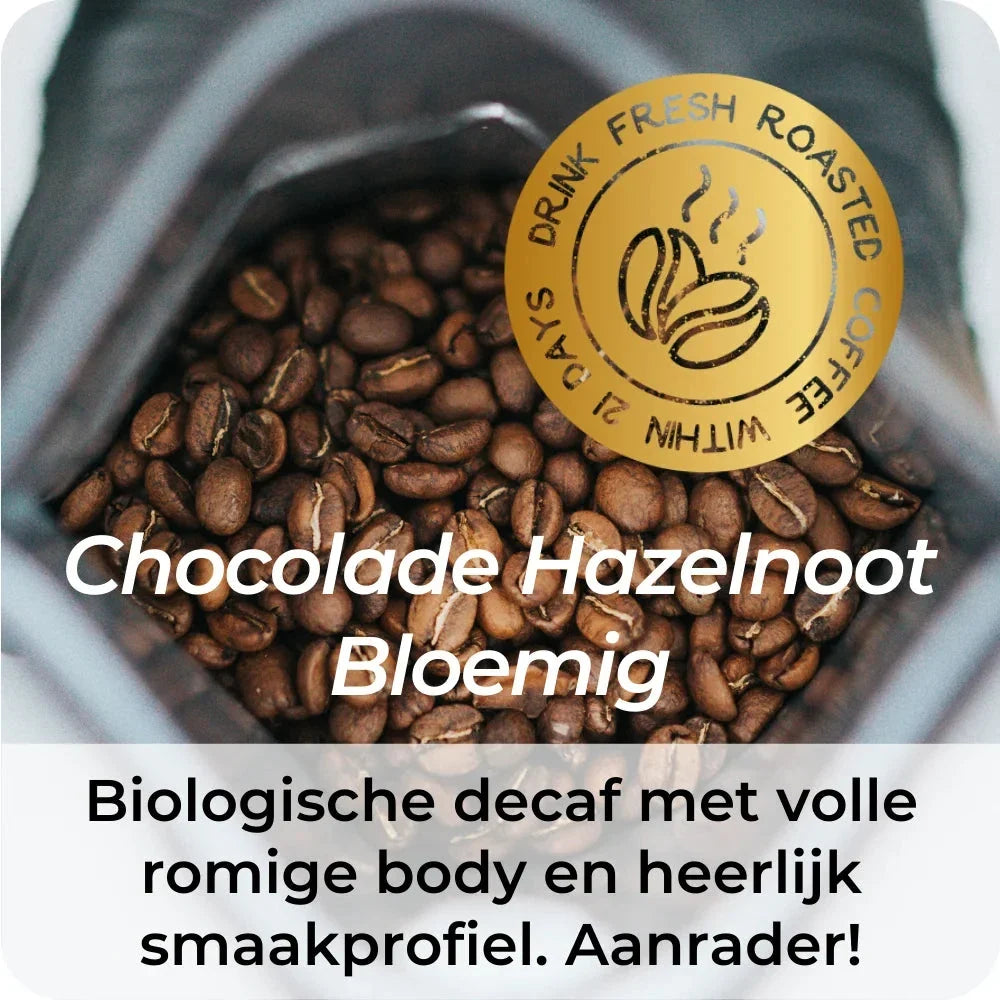
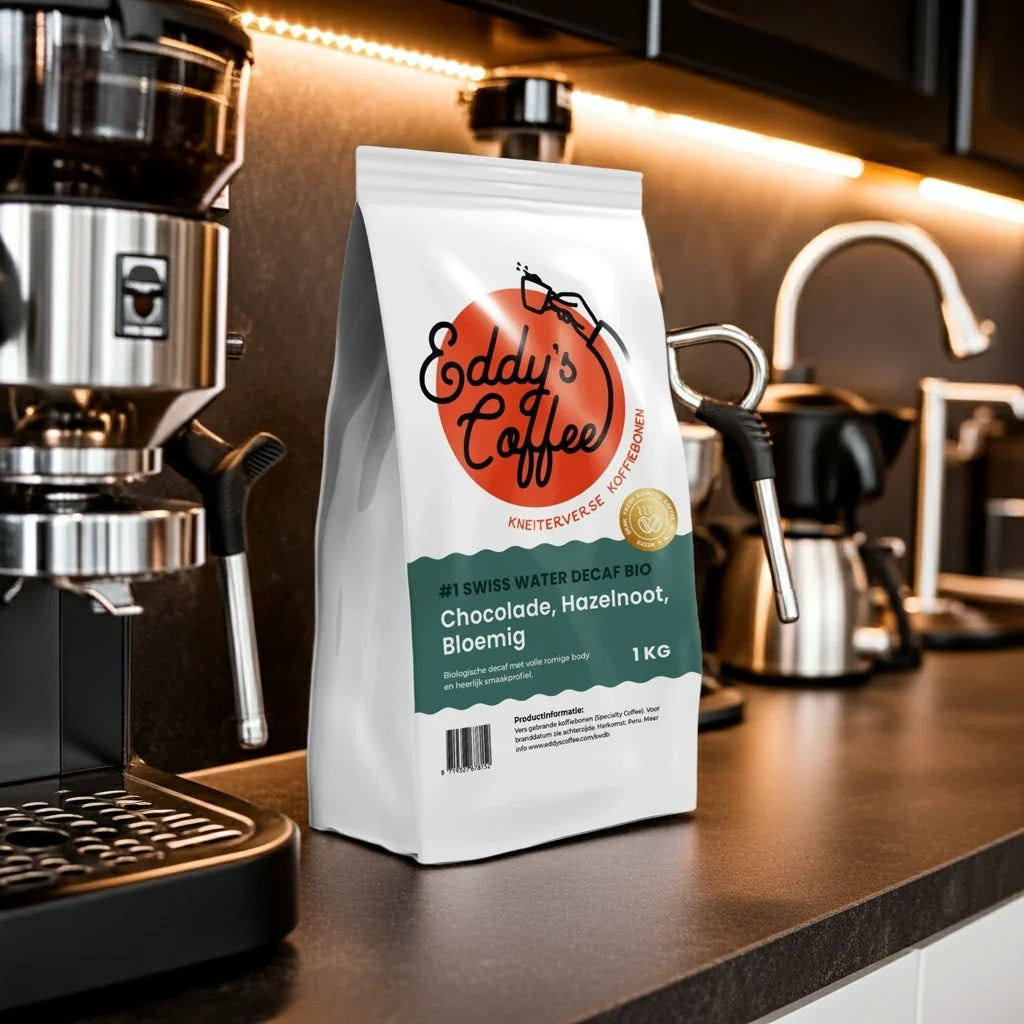
Peru is our primary Swiss Water choice: organically certified in Peru, firm and balanced, with chocolate, hazelnut and a floral nuance. If it is temporarily unavailable, or you prefer a sweeter option, Guatemala is an excellent alternative. It has chocolate and nuts at its core, with a gentle raisin-like sweetness.
Sugarcane Decaf: the method using ethyl acetate from sugarcane
Sugarcane Decaf is a relatively new and less familiar way of decaffeinating coffee. Our Colombia Sugarcane Decaf is processed this way. The name does not mean sugar or sugarcane flavour is added to your cup. It refers to the source of ethyl acetate, commonly abbreviated as EA.
Ethyl acetate is a compound that occurs naturally in fruit and can be obtained from the fermentation of sugarcane. The green, unroasted coffee beans are first steamed under low pressure for approximately 30 minutes. This opens the pores of the beans, making the caffeine easier to extract.
The beans are then immersed in a solution containing ethyl acetate. EA helps separate the caffeine from the rest of the bean through its interaction with chlorogenic acids. When the solution becomes saturated, the tank is emptied and refilled with fresh EA solution. This cycle is repeated for approximately eight hours, or until enough caffeine has been removed.
After decaffeination, the beans are steamed again to remove any traces of EA. They are then dried, polished and packed before going to the roastery. Decaf beans can look darker than regular beans because of the additional processing and roasting; colour alone does not say anything about flavour or quality. Sugarcane is not a “no-process” coffee: naturally sourced does not automatically mean chemical-free.
The flavour of our Colombia is not added. Chocolate, caramel and sweet fruit are tasting notes in the coffee itself. Its fine, soft body makes it an approachable choice for espresso, cappuccino, lungo and filter coffee.
The CO₂ method: useful to know, not in our current selection
Alongside water and Sugarcane methods, there is also a CO₂ method. Green coffee beans are treated under high pressure with liquid or supercritical carbon dioxide. CO₂ can dissolve caffeine while many other aroma and flavour compounds remain in the bean.
After the process, pressure is reduced. The CO₂ becomes a gas, caffeine is separated and the CO₂ can be reused. This method requires specialised, costly equipment and is therefore mostly used at larger scale.
Eddy’s Coffee does not currently offer a CO₂ decaf. We mention it because decaf is not one uniform product: method, origin, roasting and brewing together shape the coffee in your cup.
Decaf coffee beans for espresso, cappuccino and filter coffee
All three decaf coffees are suitable for espresso, lungo, cappuccino and filter coffee. You do not need a separate decaf for every brew method; choose according to flavour instead.
For a classic espresso with chocolate and nuts, choose Peru Swiss Water Decaf Bio. For a softer, gently sweet espresso or cappuccino, Guatemala Swiss Water Decaf is a fine choice. If you enjoy caramel, chocolate and sweet fruit, Colombia Sugarcane Decaf works beautifully.
Grind your beans just before brewing. Espresso needs a finer grind than filter coffee. If you use a bean-to-cup machine, fill the hopper with an amount you will use within a few days to help preserve aroma, flavour and crema.
Learn more about decaf coffee
Want to make a more informed choice? Our guide to buying decaf coffee beans explains what to look for in the bean, decaffeination method and freshness. Curious about the difference in the cup? Read our comparison of decaf and regular coffee. If you make espresso at home, see our practical guide to choosing decaf espresso beans without losing flavour.
Freshly roasted decaf coffee beans from Eddy’s Coffee
Decaf deserves the same attention in the roastery. We roast our coffee fresh so your beans arrive with a full aroma and a flavour that does justice to the coffee. You notice it in the fragrance while grinding, the body in the cup and — with espresso — a generous crema.
Store your coffee beans in a cool, dry and dark place, ideally in a well-sealed coffee storage canister. Grind only what you need so you retain aroma and flavour for as long as possible.
Read more about decaf coffee
Want to learn more before choosing your decaf coffee beans? These guides explain the differences between decaf methods, flavour and brewing:
- How to choose decaf coffee beans without regret – what to look for in origin, method and freshness.
- Decaf vs regular coffee – discover what you can taste in the cup.
- How to choose decaf espresso beans without losing flavour – practical guidance for espresso at home.
- How to choose the best decaf coffee beans – compare quality, freshness and brewing method.