
Colombian Coffee Beans

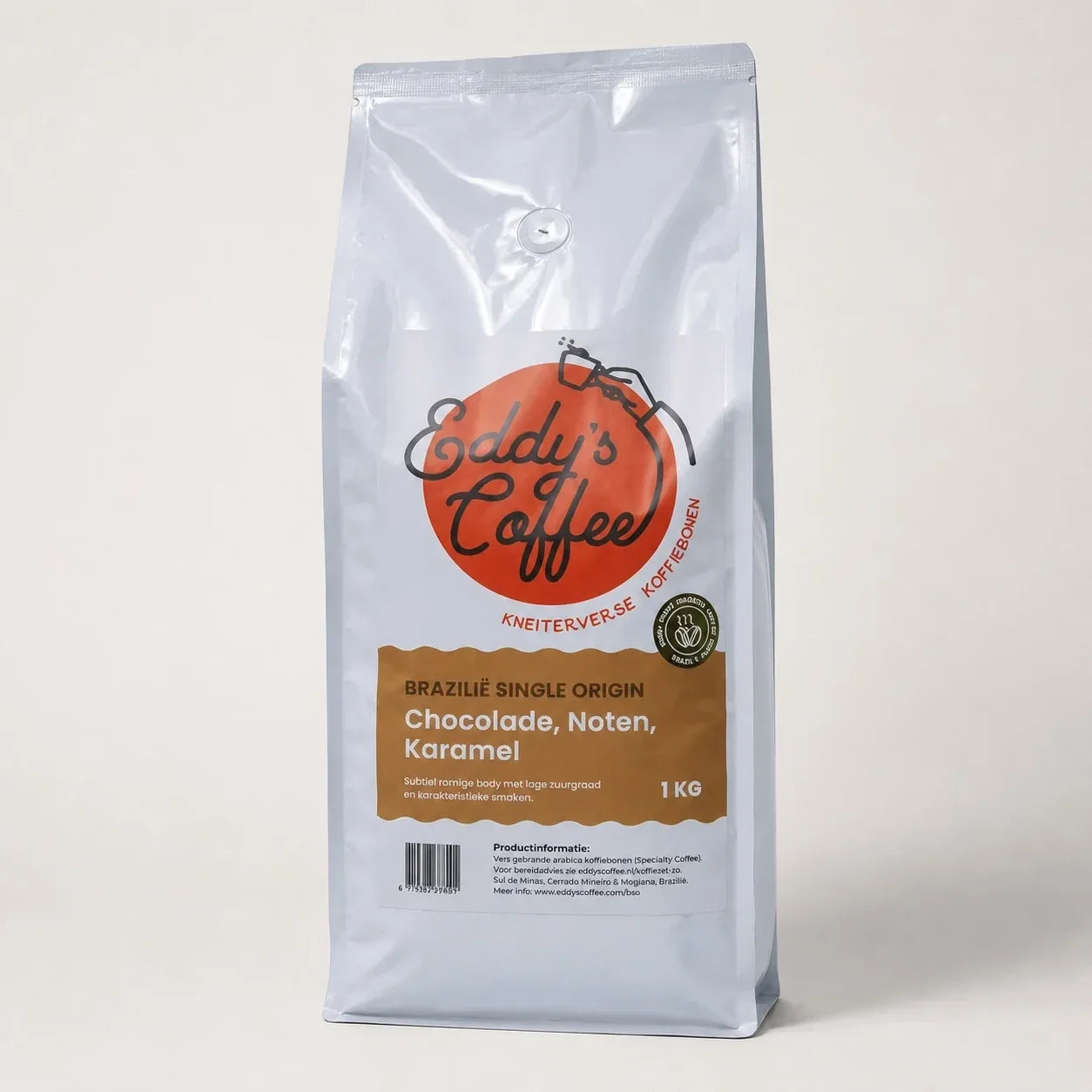

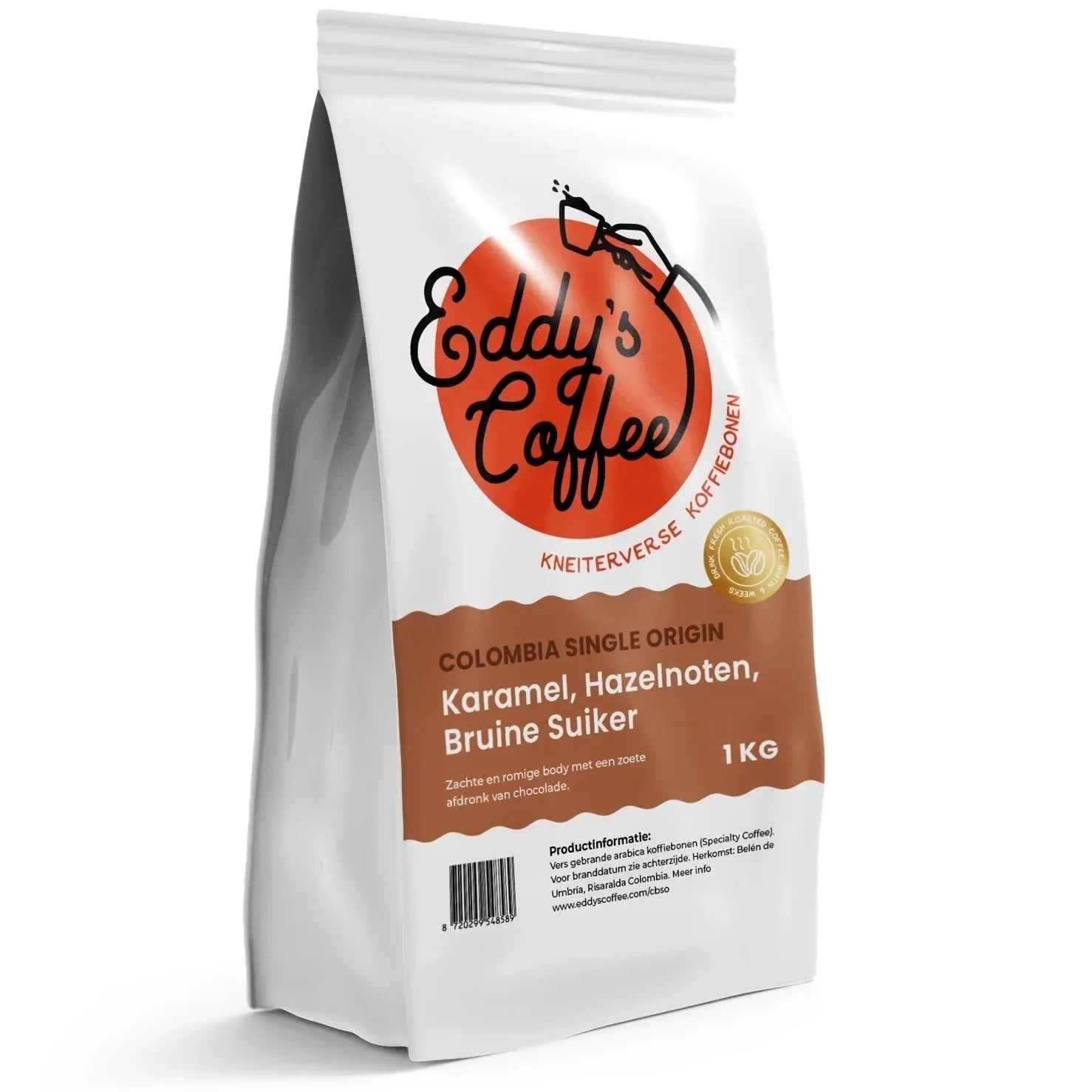
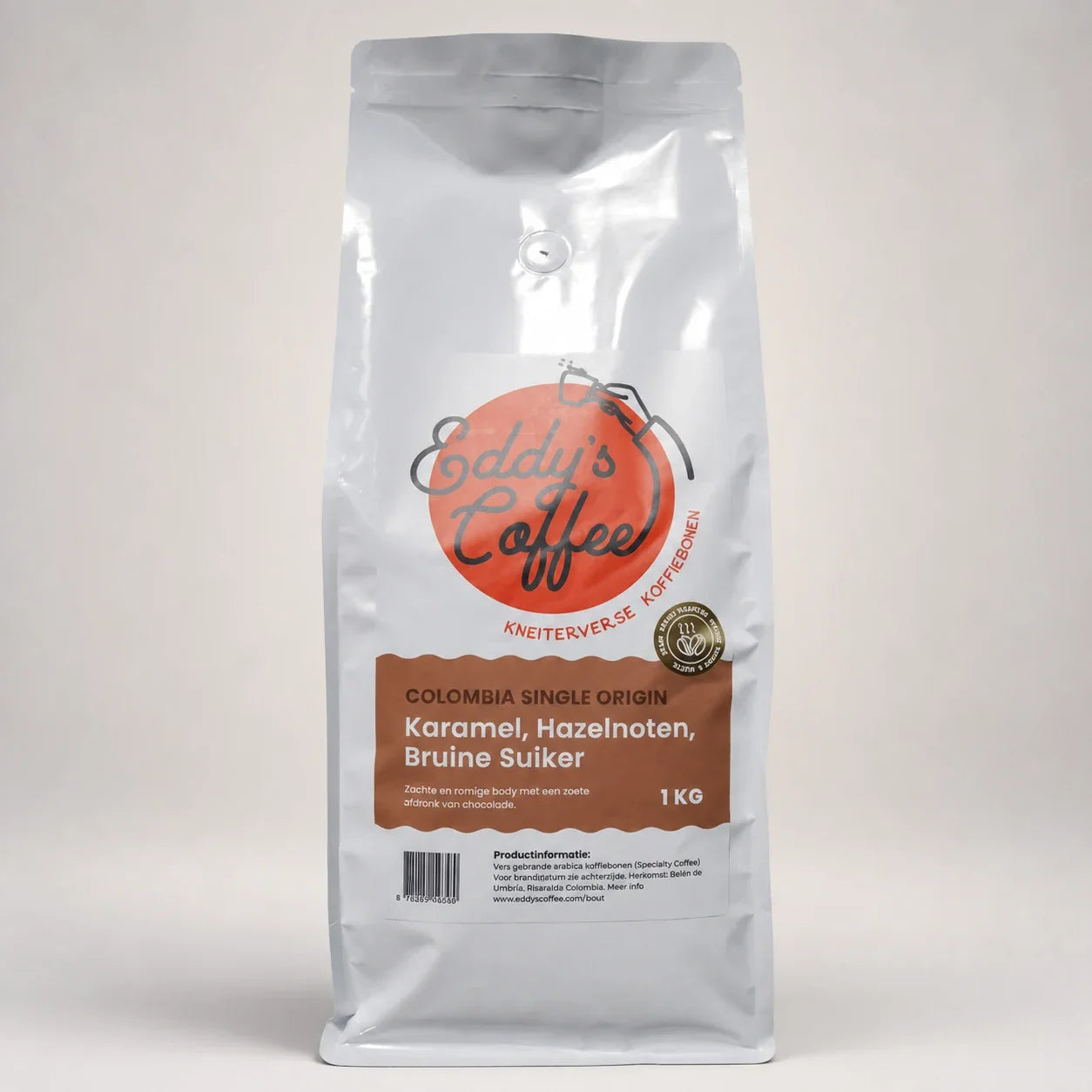


Colombian Coffee Beans
Colombian coffee beans from distinctive coffee regions
Colombian coffee beans are loved because they do not fit into a single flavour profile. A coffee from Colombia can be soft, sweet and chocolatey, but it can also be fruity, floral or bright with citrus notes. That difference is not caused simply by the country name on the bag. The altitude at which the coffee grows, the local climate, the coffee plant variety, the post-harvest processing and the way the coffee is roasted all determine what you eventually taste.
At Eddy's Coffee, we therefore look beyond an attractive story on a bag. As an experienced barista, we want to know how a coffee behaves during grinding, how easy it is to extract and whether its flavour holds up at home. A good coffee bean should not only be interesting to a buyer or taster. It should also help you brew a better cup of coffee every morning.
On this page, we explain where Colombian coffee comes from, why Huila is so important, what Supremo and Excelso mean, and how to choose a Colombian coffee for espresso, filter coffee or cappuccino.
Why Colombian coffee has such a versatile flavour
The main coffee-growing areas of Colombia lie in and around the Andes. Over a relatively short distance, altitude, temperature, rainfall, soil and shade can change considerably. A coffee plant on a cool mountain slope develops its coffee cherries differently from a plant in a warmer valley. Ripening can take longer, allowing more time for sugars and aromas to develop.
That is why there is no single typical Colombian flavour. Some coffees have a round body with caramel and chocolate. Others are lighter and fruitier, with citrus, red fruit or floral notes. Acidity also varies. In coffee, acidity does not mean that the coffee is faulty or unpleasantly sour; it is the fresh liveliness that can, for example, remind you of orange, apple or berries.
Post-harvest processing then makes a major difference. In washed coffee, the fruit is removed before the beans are dried. This can produce a cleaner, more defined cup. The Federación Nacional de Cafeteros describes regional characteristics in Huila that include fruity, caramel-like, citrus-like, chocolate-like and floral notes. These are directions, not guarantees for every individual lot.
Where is Colombian coffee grown?
Colombian coffee is grown in a broad belt of mountain regions. Well-known departments include Huila, Cauca, Nariño, Tolima, Santander, Antioquia, Caldas, Risaralda, Quindío and Valle del Cauca. Each area has its own microclimates and farming traditions. Even within one department, two municipalities or farms can produce a different cup profile.
Huila: the origin of our Colombia Supremo
Huila lies in southern Colombia and is an important origin region for Arabica coffee. Within Huila, coffee from Centro, Norte, Sur and Occidente is distinguished. Official regional descriptions mention fruit, caramel, citrus, chocolate, panela, red fruit and flowers, among other characteristics.
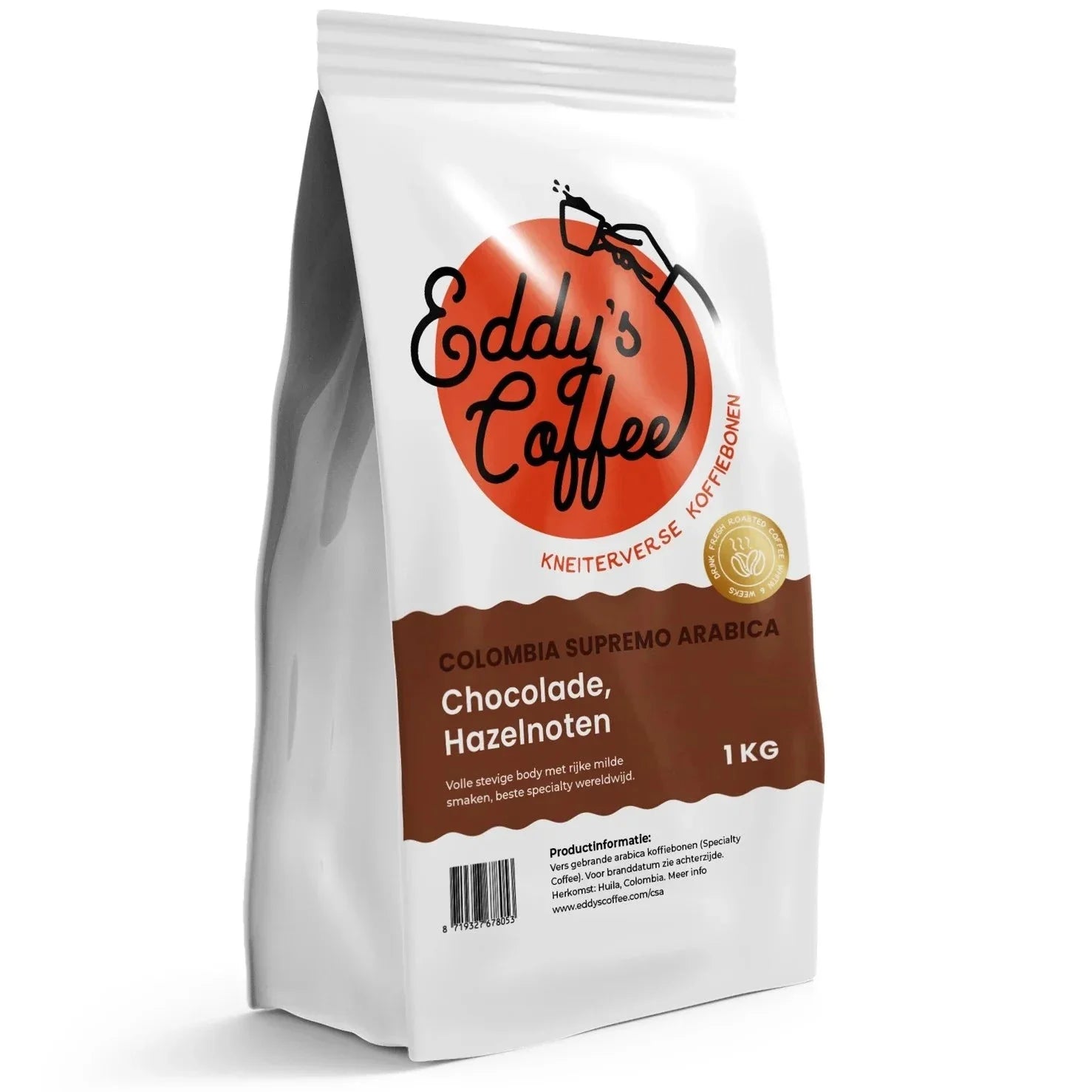
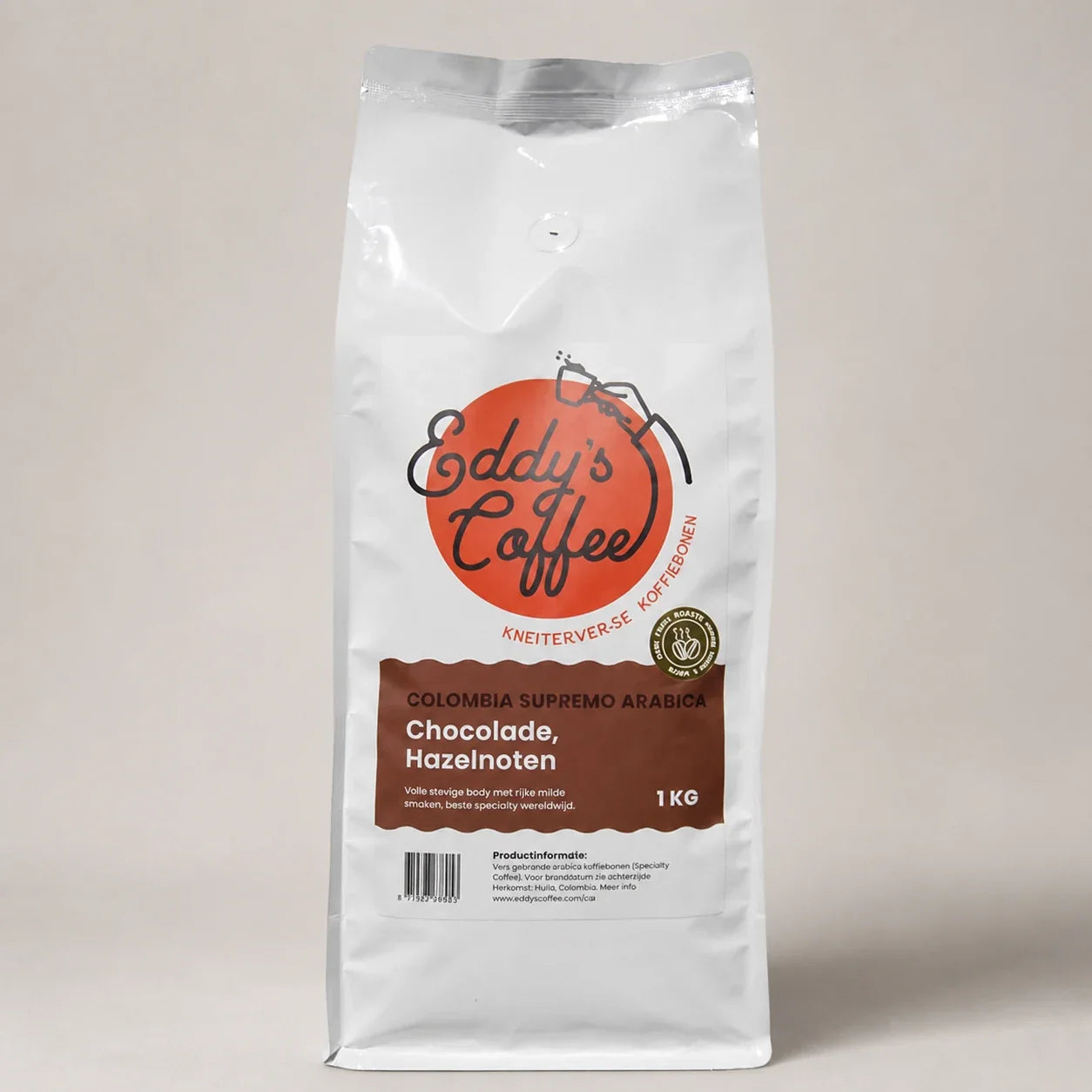
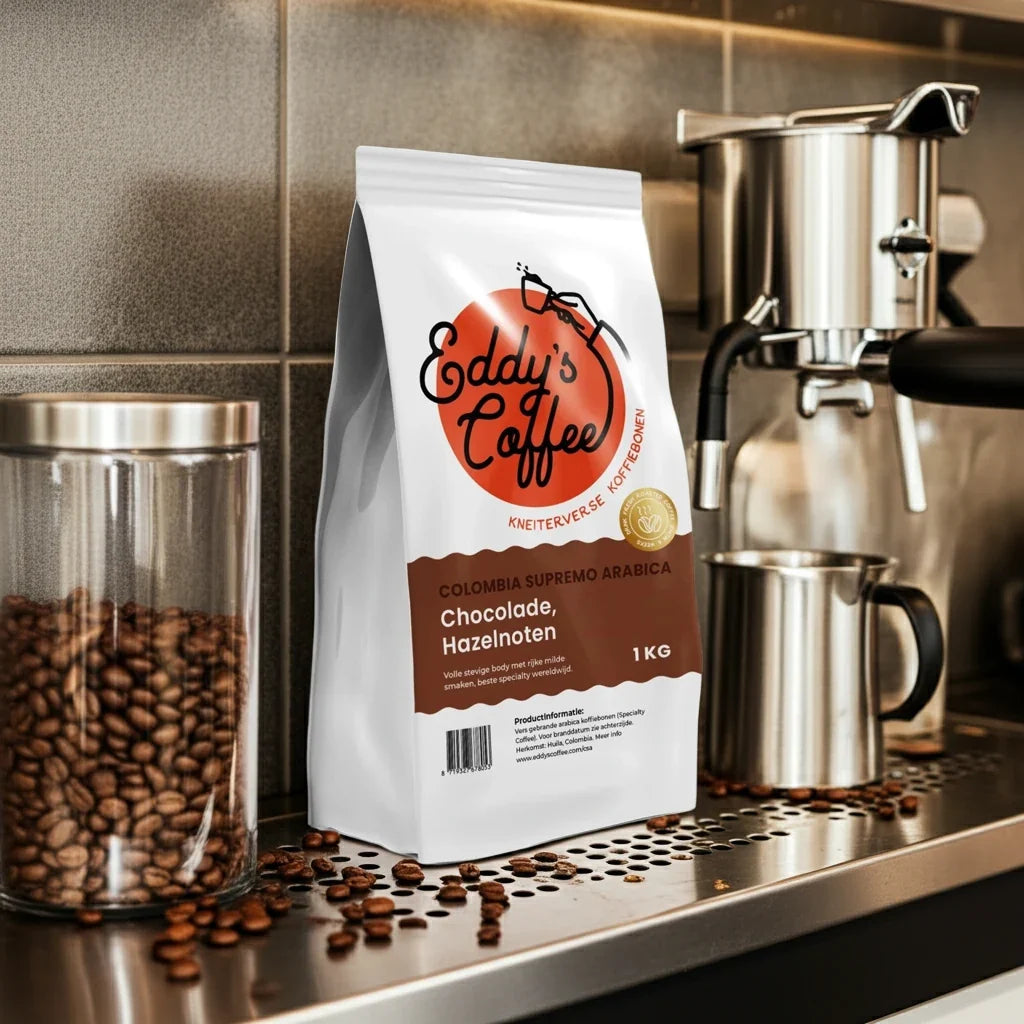
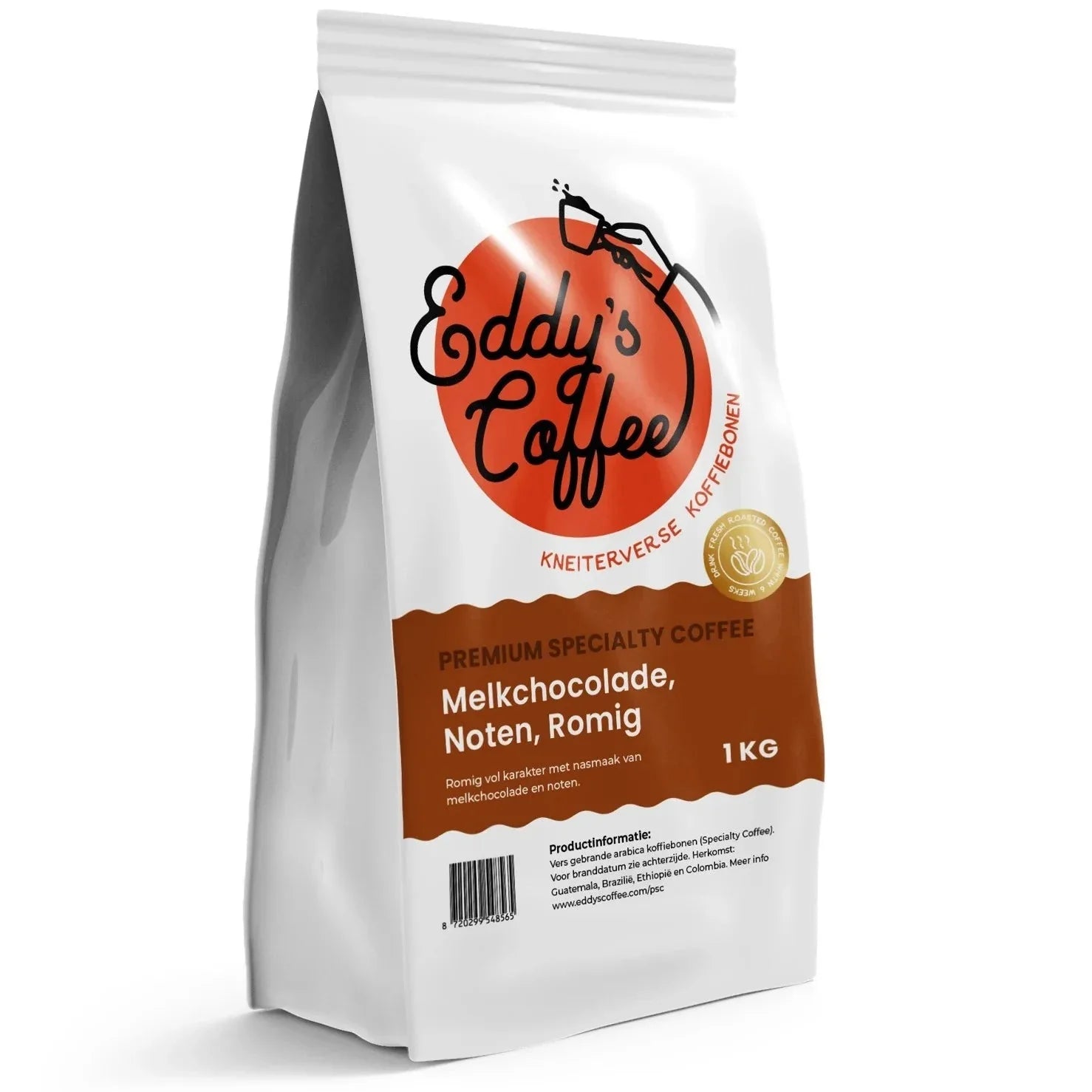
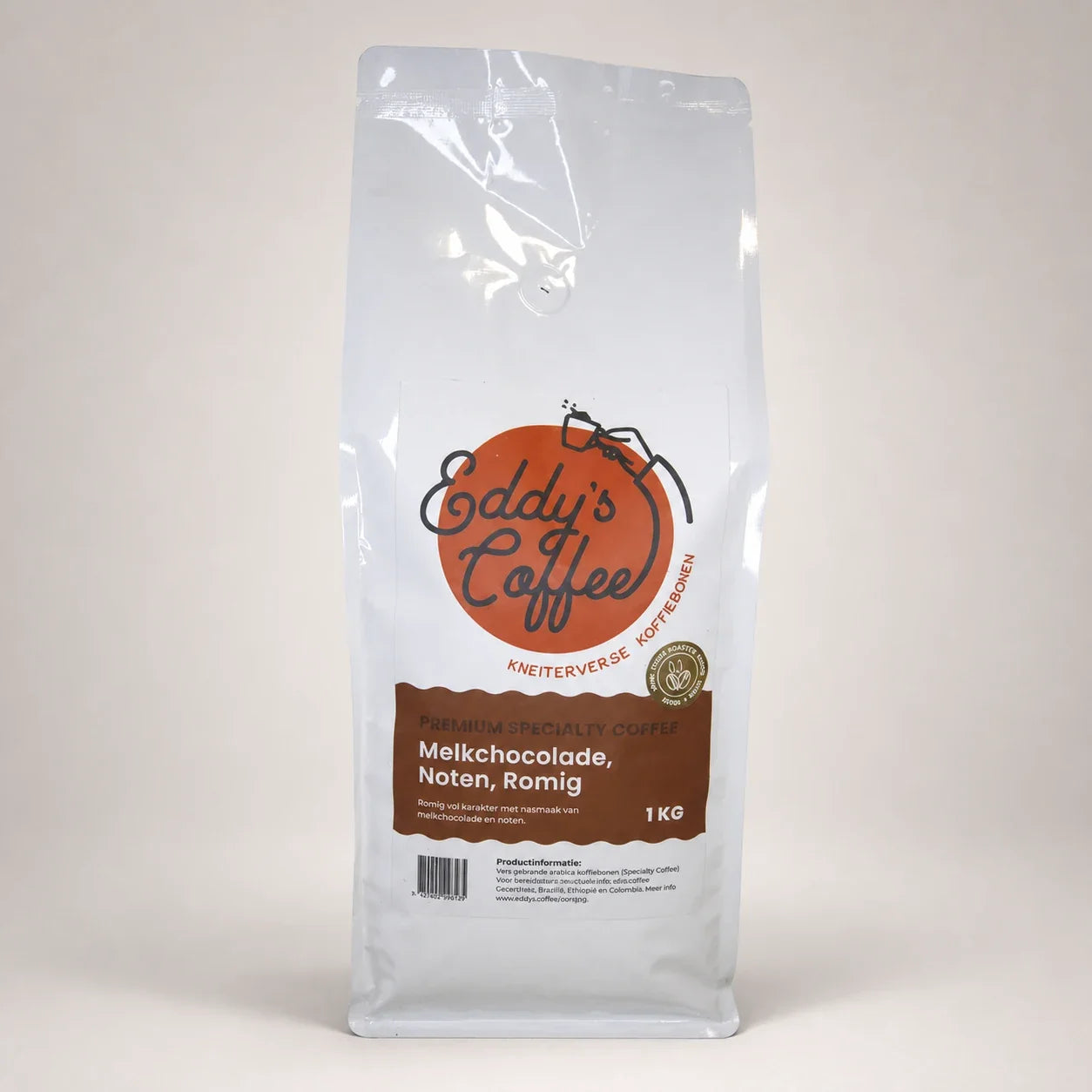
Our Colombia Supremo Arabica comes from Huila and, according to the available product information, grows at approximately 1,400 to 1,600 metres. The coffee is washed processed and has a medium body. In the cup, you can recognise caramel, chocolate and soft citrus. This profile is accessible enough for everyday drinking, but has enough character to reward more attentive tasting.
Would you like to learn more about the landscape and coffee culture? Read our blog Huila, Colombia: the coffee region behind Colombia Supremo.
Cauca and Nariño
Cauca lies southwest of Huila. Coffees from Cauca can be light, sweet and floral, sometimes with berry notes and lively acidity. Nariño lies further south, close to Ecuador, and is known for the high altitude of many coffee areas. Coffees from there can show refined acidity, a creamy body and fruity or stone-fruit notes.
Tolima and Santander
Tolima lies east of Huila. Coffees from Tolima can be soft, sweet and balanced, with floral or chocolate accents. Santander and Norte de Santander lie in the northeast of Colombia’s coffee zone. Softer and milder coffees are also found there, often with lower acidity and an approachable body.
Antioquia and the Coffee Triangle
Antioquia, Caldas, Quindío, Risaralda and Valle del Cauca are often associated with Colombia’s traditional coffee region. The green mountain landscapes, small coffee farms and long coffee tradition make these areas well known to travellers and coffee lovers. Here too, flavour varies considerably by municipality, variety and processing method.
Belén de Umbría in Risaralda: a second important Colombian coffee region
Alongside Huila, Risaralda is another important Colombian coffee origin represented on our website. Belén de Umbría lies in the western Andes and is described by the Federación Nacional de Cafeteros as the principal coffee-producing municipality in Risaralda. It is about an hour and a half from Pereira and forms part of Colombia’s Paisaje Cultural Cafetero, the Cultural Coffee Landscape. This landscape shows how closely coffee, mountain farming, villages and family traditions are connected.
As a barista, I value that regional context, as long as we do not confuse it with a fixed flavour promise. Coffee from Belén de Umbría can taste different depending on variety, altitude, processing and roast profile. The region tells you where the coffee comes from and what coffee culture surrounds it; the specific product information tells you what to expect in your cup. That is why we describe the origin of our coffees separately, even when more than one product is connected to the same region.
According to the available product information, our Colombia Sugarcane Decaf is connected with Belén de Umbría in Risaralda. We also carry another Colombian coffee from this region. For the Sugarcane Decaf, we keep the flavour description to the confirmed overlap: a creamy, full body with notes of chocolate, caramel and sweet fruit and a soft, sweet finish. The region is the origin context; the flavour belongs to the specific product and the way it was processed and roasted.
Families in Belén de Umbría have worked with coffee for generations and continue looking for ways to strengthen quality, sustainability and local value. Cenicafé and the Colombian coffee federation also describe a focus on specialty coffee, export and the renewal of older coffee plantations, supported by resistant varieties and fertilisation. This matters for the future of coffee: it is not only about producing more today, but also about maintaining the soil, plants, knowledge and entrepreneurship needed by the next generation.
Would you like to learn more about the landscape and the way this region is developing? Read our in-depth article Coffee from Belén de Umbría: Risaralda, Colombia. We explain why a region is not a flavour guarantee and how you can compare Belén de Umbría with Huila, the origin of our Colombia Supremo.
Altitude, variety and microclimate
Colombian coffee is grown at a wide range of altitudes. For the country as a whole, coffee importers mention a broad range of approximately 800 to 2,350 metres above sea level. This is not a product characteristic of every coffee, but it does show the scale of Colombia’s geographic variation.
Several Arabica varieties are grown in Colombia, including Caturra, Castillo, Colombia, Typica, Bourbon and Tabí. A variety influences the plant’s growth, yield and flavour potential, but it never tells the whole story. The same variety can taste different at two different altitudes.
From coffee cherry to green coffee
Coffee cherries are picked when they are ripe. Because not all cherries on a plant ripen at the same time, harvesting takes place several times. The harvest period varies by region. In Colombia, an important harvest period often falls between September and December; in some areas there is also a smaller harvest between March and June.
With washed processing, the fruit is removed from the coffee cherry. The beans are then fermented, washed and dried. Drying in particular requires care. Beans that dry too quickly, too slowly or unevenly may later taste less clean or be less stable in storage. After drying, the green beans are sorted by factors including size, colour and defects.
What do Supremo and Excelso mean?
Colombia Supremo and Colombia Excelso are designations for the grading and size of coffee beans. Supremo generally refers to larger beans, usually screen 17/18. Excelso is often associated with a smaller grade, such as screen 15 or 16.
A larger bean is not automatically a better bean. The grade mainly says something about size. Flavour and quality are also determined by origin, variety, processing, drying, defects, roasting and preparation. A well-processed Excelso coffee can therefore taste better than a poorly handled lot with larger beans. InterAmerican Coffee explains the difference between Supremo and Excelso in the same way.
Which Colombian coffee suits your brewing method?
For espresso, many home baristas look for coffee with enough body and sweetness. The Colombia Supremo from Huila therefore works well as the basis for espresso, lungo or cappuccino. Start with a fine grind and adjust the extraction so that caramel and chocolate are clearly present without the soft citrus becoming sharp.
For filter coffee, the coffee can become a little brighter and more transparent. Use a medium grind, fresh water and a steady drawdown. This gives the soft citrus and aromatic notes more room. In a cafetière, the medium body becomes more pronounced because of the longer contact time.
As a starting point, use approximately 60 grams of coffee per litre of water for filter coffee. For espresso, start with the dose that fits your portafilter basket. Then adjust one variable at a time: grind size, dose, brew time or water temperature.
Buy Colombian coffee beans from Eddy's Coffee
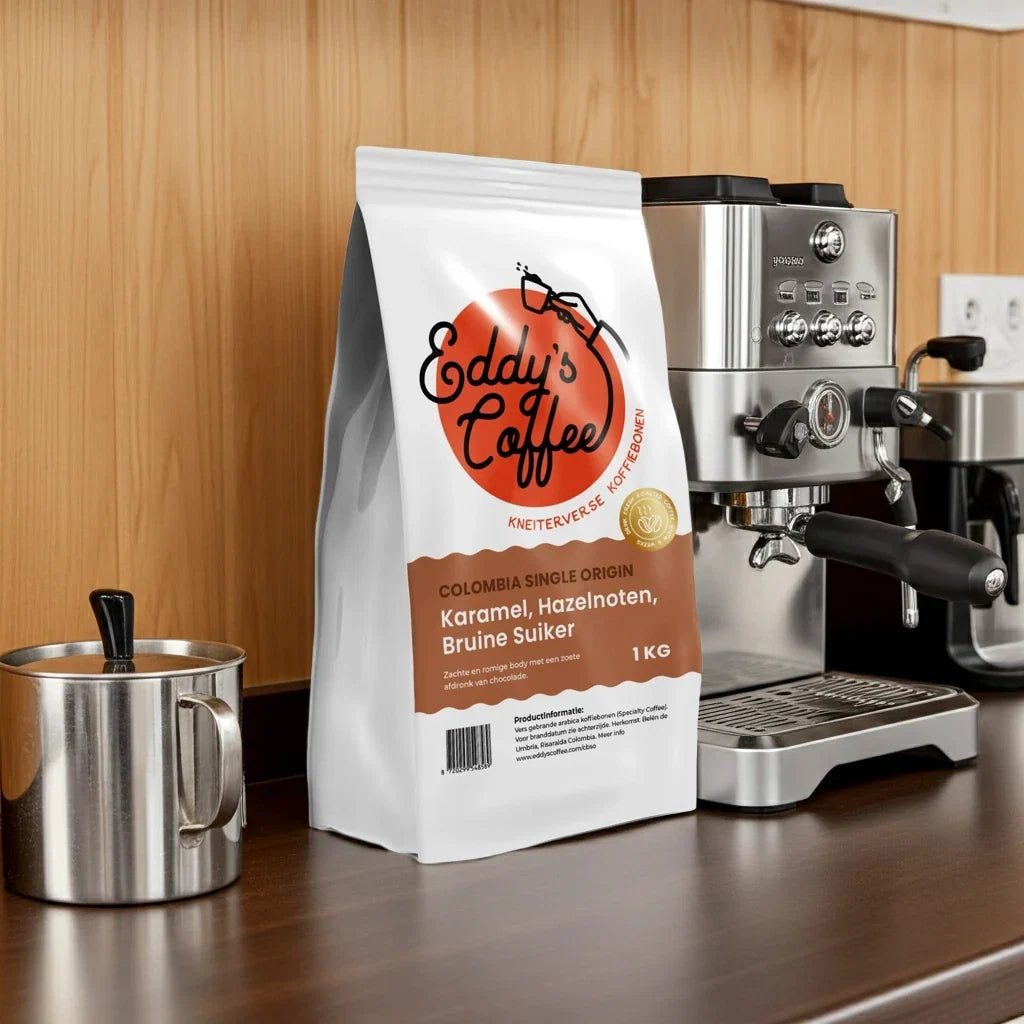
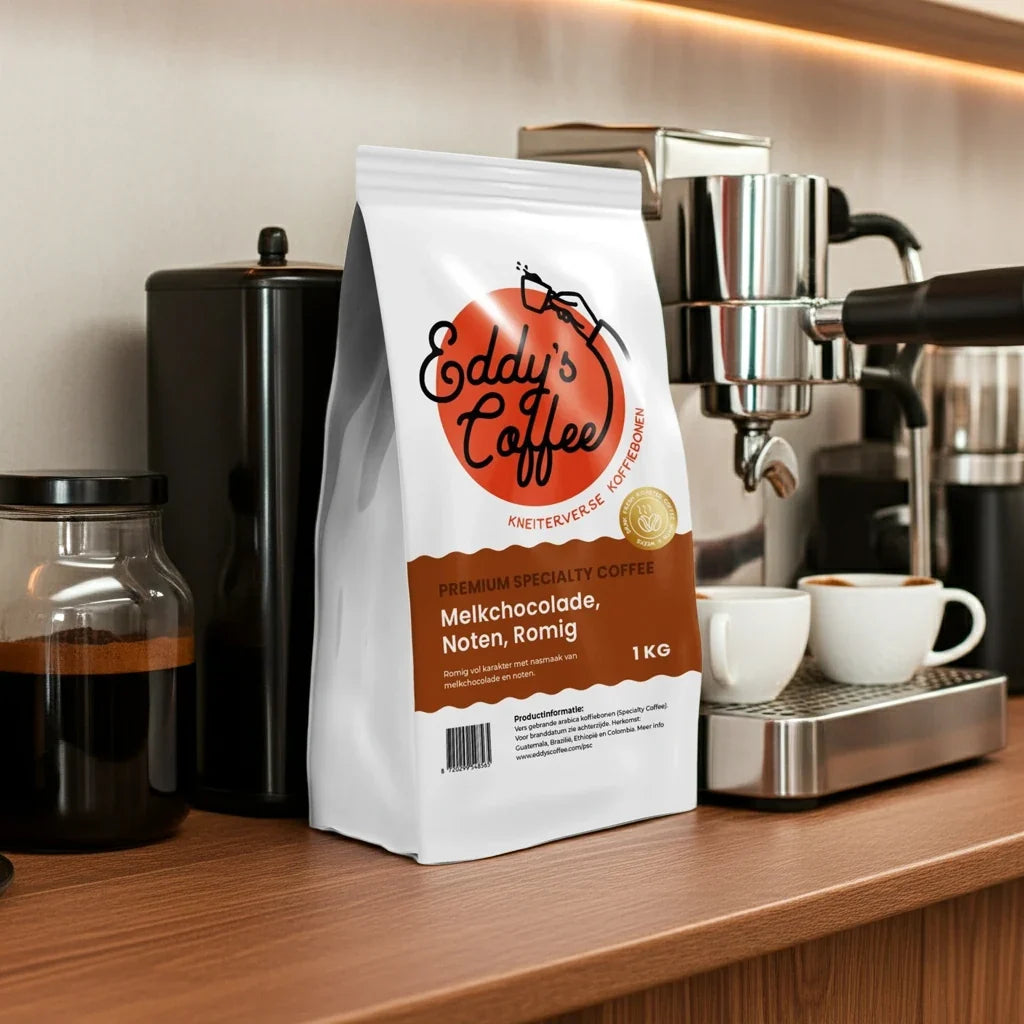
Would you like to buy Colombian coffee beans that are freshly roasted? Take a look at our Colombia Supremo Arabica from Huila. This coffee is available as whole beans and as a grind for different brewing methods. The flavour is recognisable and versatile: caramel, chocolate and soft citrus with a medium body.
After receiving the beans, store them airtight, dry and away from direct sunlight. Ideally, grind only the amount you need. This preserves more aroma and lets you adjust the extraction more precisely. Would you like to taste origins besides Colombia? Explore our specialty coffee collection.
Origin transparency
This coffee comes from Huila, Colombia, and is offered as washed Colombia Supremo grown at an altitude of 1,400 to 1,600 metres. At present, we do not have public information that allows us to name the specific farmer, finca or cooperative for every delivered lot. We therefore do not list a producer name on this page that might belong to another Colombian coffee. As soon as that information is available for each lot, we will expand the origin details.