
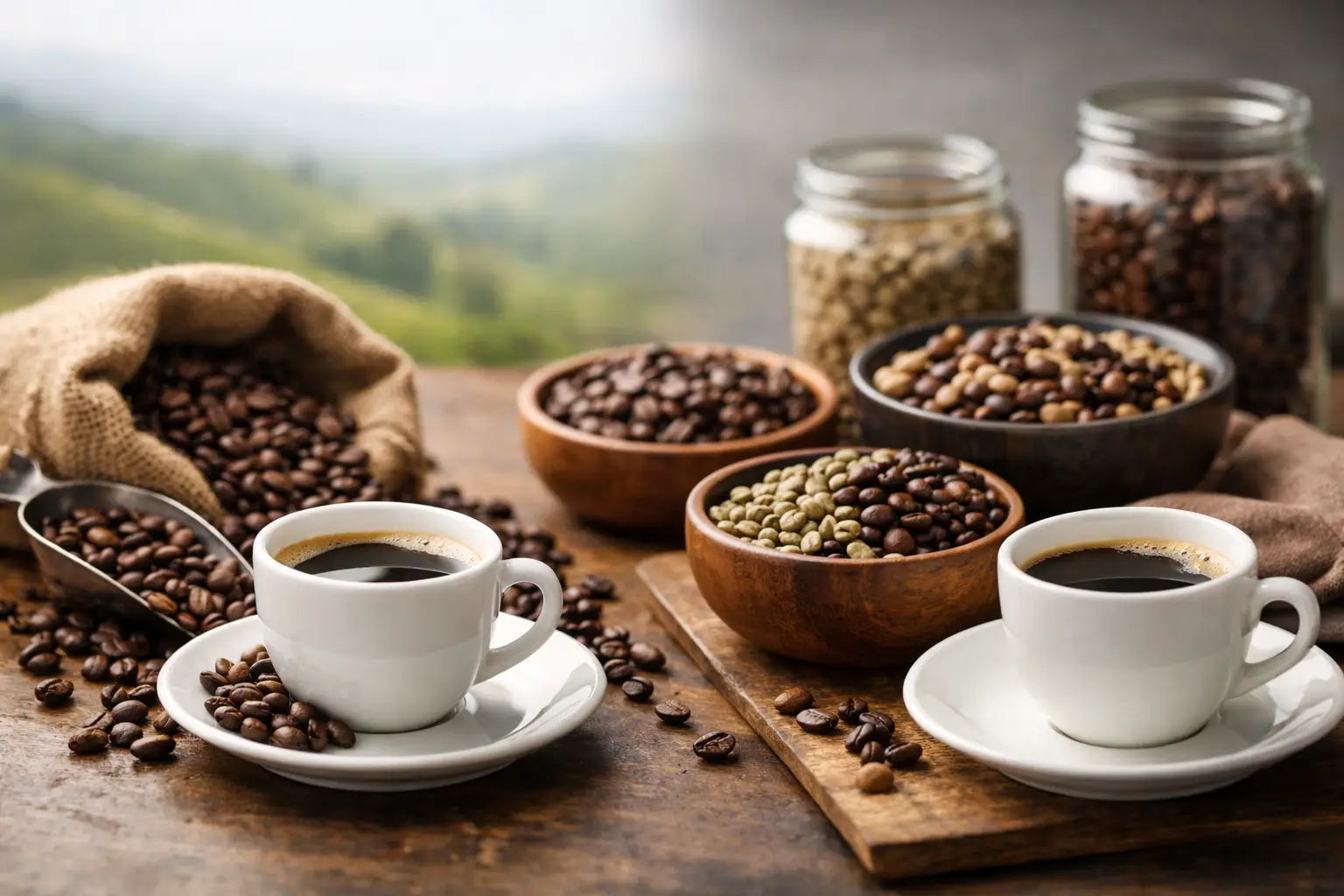
You see it increasingly often on coffee bags: single origin. It sounds clear — coffee from one origin — but that origin can vary considerably. Sometimes it means one country, sometimes a region, cooperative, farm or individual lot. Single origin is therefore not a guarantee that the coffee comes from one small farm. It is mainly an invitation to look more closely at where your coffee comes from.
For specialty coffee, this information is valuable. The Specialty Coffee Association sees origin, producer and traceability as qualities that add meaning alongside flavour and aroma. The more specifically a roaster describes origin, the better you can understand what you are drinking. For wider context, read our specialty coffee guide.
What does single-origin coffee mean?
In practice, single origin means the coffee comes from one named geographical origin rather than being blended from different origins. The Dutch CBI’s European market research identifies a country or region as possible single-origin levels. Coffee from one specific farm is usually described more precisely as single farm or single estate.
That distinction matters. “Colombia” is single origin at country level, but can still include coffee from several regions or producers. “Colombia, Huila” tells you more. A named cooperative, washing station or farm adds another layer of context. The closer you zoom in, the better you can follow the chain and character of the coffee — but more specific does not automatically mean tastier.
From country to region, producer, farm and lot
Think of information on the bag as a map with different zoom levels. Each level tells you something different:
- Country: the broadest level. It gives an initial direction, but a country can contain many climates, regions and producers.
- Region: a smaller area within a country. It provides more context about the environment in which the coffee grew.
- Cooperative or washing station: a group of producers or a place where coffee is collected and processed. This is different from one farm, but can still be highly traceable.
- Farm or estate: coffee from one named farm. This is often called single farm or single estate.
- Lot: a separately kept batch of coffee. With a very specific lot, ask how it was composed and processed; transparent information is more valuable than an exclusive-sounding name.
The specialty market also uses terms such as micro-lot and nano-lot. The CBI generally describes micro-lots as batches of 10 to 75 bags of 60 kilos and nano-lots as even smaller batches. These words mainly tell you about separation and availability, not automatically that the coffee will be your favourite.
Why origin information matters
Coffee gets its flavour from more than one factor. The SCA includes origin, producer, cultivation and processing among the information that adds value. These details do not predict that a coffee must taste exactly like one particular flavour. They do help you compare consciously and find coffees you enjoyed before.
Suppose you enjoy a coffee. If the label only says “single origin”, you still know very little. Does it also name the country, region, producer, processing and flavour? Then you have useful clues for your next bag. You are building choices on information rather than big words.
Single origin is not a quality stamp
A single origin can be exceptional, but the label does not tell you everything. An anonymous country name without a roast date, flavour description or further context is limited information. Conversely, a thoughtfully made blend can be excellent: a roaster can combine coffees deliberately to create a consistent, balanced profile.
The main difference is intention. Single origin gives space to the characteristics of one named origin. A blend is a composition in which the roaster aims for harmony, body or a recognisable style. One is therefore not automatically better than the other.
When should you choose single origin or a blend?
Choose single origin when you are curious about origin and enjoy discovering differences. It is a great way to taste how a region, producer or processing method changes your cup. Do not expect factory-like consistency: coffee is a crop, and availability and flavour may shift with a new harvest.
Choose a blend when you mainly want a familiar style every morning. Especially for espresso and milk drinks, a well-built blend can be reliable, balanced and less dependent on one harvest. That is not a compromise, but a deliberate choice.
How to read a single-origin label
Do not begin by asking, “Is this exclusive enough?” Ask instead, “What do I actually know about this coffee?” Look for origin, who produced or collected it, processing, flavour profile and roast date. These are details you can use.
A country is already useful. A region, producer or farm makes the story more concrete. A lot number can provide more detail, but only when the roaster explains what it means. Transparency is not a competition to put as many terms as possible on the bag; it is clear information that helps you make better choices.
Would you like to choose by origin, flavour and machine? Use our coffee bean buying guide.
The takeaway
Single-origin coffee beans come from one named origin, but that can mean a country, region, cooperative, farm or individual lot. Read the label carefully: the more precise the information, the better you understand what is in your cup — and what you still do not know.
That is the strength of single origin. It does not mean every bag is automatically the best or most spectacular coffee, but it brings you closer to the origin and character of the coffee. The more you taste and compare, the faster you discover which style suits you.
Share:
Choosing Espresso Beans for Real Flavour at Home
Choosing Coffee Beans for Your Taste and Machine