
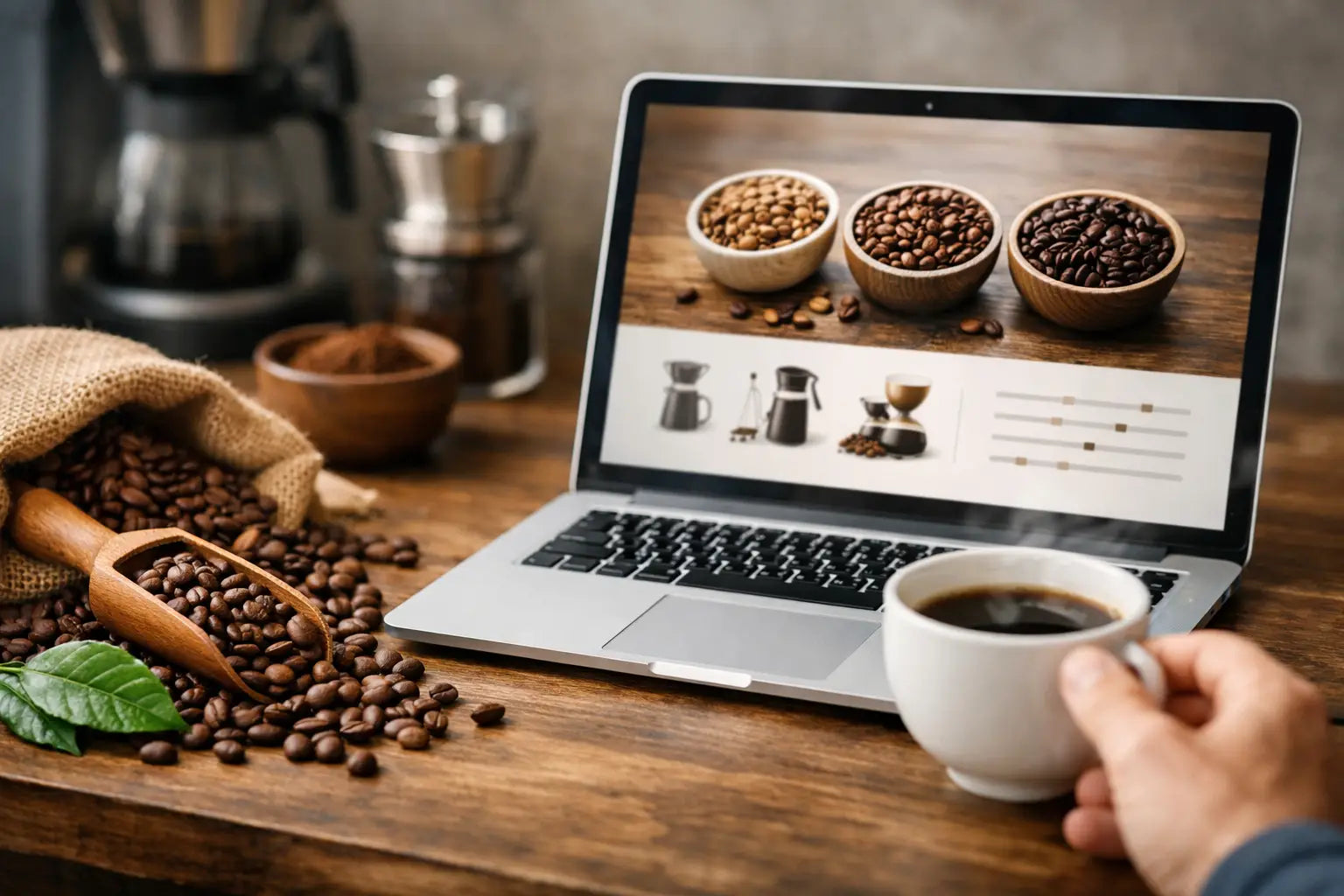
Choosing coffee beans does not have to become a research project. Start with what you like to drink and how you brew. A creamy cappuccino from an automatic machine needs something different from a clear filter coffee on Sunday. Answer those two questions and much of the shelf disappears immediately.
Do not start with the most exotic origin or darkest bag. Start with flavour: do you like round and chocolatey, or fresh and fruity? Then choose a roast that suits your machine. Choosing beans becomes a few logical steps rather than a gamble.
Choosing coffee beans: start with your taste
Looking for full, familiar coffee? Look for chocolate, hazelnut, caramel and brown sugar. These coffees often have creamy body and work well as espresso, cappuccino or latte. The Premium Specialty Coffee is an approachable start in this direction.
Want more liveliness? Look for red fruit, citrus, stone fruit or floral notes. This may sound distinctive, but good fruitiness is not the same as sour or thin coffee. Ethiopia Sidamo Origin is interesting if you are curious about a fresher, more aromatic style.
Sour is not the same as bitter
This distinction prevents many disappointing purchases. Acidity is coffee’s fresh, juicy side, like a ripe apple or mandarin. Bitterness more often comes from dark roasting or espresso brewed too long or too hot. If supermarket coffee tastes harsh, that does not automatically mean you dislike fruity coffee.
Not sure? Choose a balanced medium roast with caramel and a little red fruit. You will taste a difference without immediately jumping into the deep end.
Which beans suit your machine?
| Brewing method | What to look for | Good flavour direction |
|---|---|---|
| Automatic machine | Medium roasted and not extremely oily | Chocolate, nuts, caramel |
| Espresso machine | Sweetness, body and a pleasant finish | Chocolate, caramel, ripe fruit |
| Cappuccino or flat white | Enough power to hold up in milk | Cacao, hazelnut, toffee |
| Filter, V60 or Chemex | Clear aroma and a roast that is not too dark | Fruit, florals, gentle sweetness |
| Moka pot | Full medium roast and a suitable grind | Chocolate, nuts, spice |
Coffee beans for an automatic machine
An automatic machine is happiest with beans that grind predictably and are not jet-black or glossy with oil. Medium roast is usually the safest choice: enough flavour for black coffee and enough body for milk drinks. Brazil Single Origin suits this rounded, approachable style.
Looking for the best match for your machine? Also read our guide to the best coffee beans for different brewing methods.
Coffee beans for espresso and cappuccino
Espresso magnifies everything. A good espresso has sweetness, body and a finish that is not only bitter. In cappuccino and flat white, chocolate, nuts and caramel usually remain beautifully present. If you want a fuller, darker direction, Everyday Dark Roast is a logical choice.
If your first shot disappoints, do not immediately blame the beans. A slightly finer grind often makes a fast, thin espresso fuller. If it is dry and bitter, grind coarser. Choosing coffee is step one; dialling it in does the rest.
Coffee beans for filter coffee
Filter coffee reveals origin and processing more clearly. Light to medium roasts can provide plenty of aroma without becoming heavy. Colombia Single Origin is a good middle step: familiar sweetness with more detail than a classic dark espresso.
Want to experiment with filter coffee at home? Continue with our guide to brewing slow coffee.
What does roast level mean?
Roast level determines how much of the coffee’s original flavour remains visible. Light roast more often reveals fruit, flowers and origin. Medium roast is the all-rounder: enough sweetness and body for espresso, with room for nuance. Dark roast moves towards cacao, toast and roasted nuts.
Light is not automatically better and dark is not automatically stronger. It is about what you like and how you brew. Medium is often comfortable for automatic machines and milk drinks. Light can be beautiful for filter. If you simply want a classic, sturdy cup, there is no need to apologise for dark roast.
Blend or single origin?
A blend combines coffees deliberately for balanced flavour. This is useful when you want a familiar espresso or cappuccino every morning. A single origin comes from one country, region or sometimes producer, making it easier to taste the effect of origin and processing.
Neither is the winner. A good blend is not a collection of leftovers and a single origin is not automatically more special. To compare, order one familiar blend and one single origin. Brew them with the same recipe and note what you actually taste. You learn more from this than from twenty online flavour wheels.
Freshly roasted beans make the difference
A good tasting description is of little use when the coffee is months old. Coffee is a fresh product. It needs a little rest after roasting, but you want to drink it while aroma and sweetness are still present. Buy an amount that fits your usage rather than the biggest discount.
Store beans airtight, dark and dry. Do not leave them beside the oven for weeks and do not keep a daily-opened bag in the fridge. Our practical guide to storing coffee beans explains why.
What if you want less caffeine?
Decaf is not a punishment for coffee drinkers. Good caffeine-free coffee can be just as sweet, full and aromatic as regular beans. Choose it by flavour and brewing method too. Browse our decaf coffee beans.
An easy three-step choice
- Choose your flavour direction: round and chocolatey, or fresh and fruity.
- Look at your machine: automatic, espresso, milk drinks and filter each need a different emphasis.
- Start small and taste consciously: note what works and change one thing at a time.
Then browse all specialty coffee beans. You do not need to find the perfect bag for the rest of your life. If tomorrow morning you understand better why you enjoy this coffee than the previous one, you are doing exactly the right thing.
Sources and methodology
- Specialty Coffee Association — What is Specialty Coffee?. Used for the quality context around specialty coffee, origin and distinctive flavour.
- World Coffee Research — Coffee Varieties Catalog. Used for background on origin, varieties and flavour potential.
- National Coffee Association — How to Store Coffee. Used for practical coffee storage guidance.
Sources last checked on 12 August 2026. Taste is personal: the beans and directions mentioned are practical starting points, not universal rules.
Share:
Single-Origin Coffee Beans: What Does One Origin Mean?
Which Roast Date Should You Look for When Buying Coffee?