
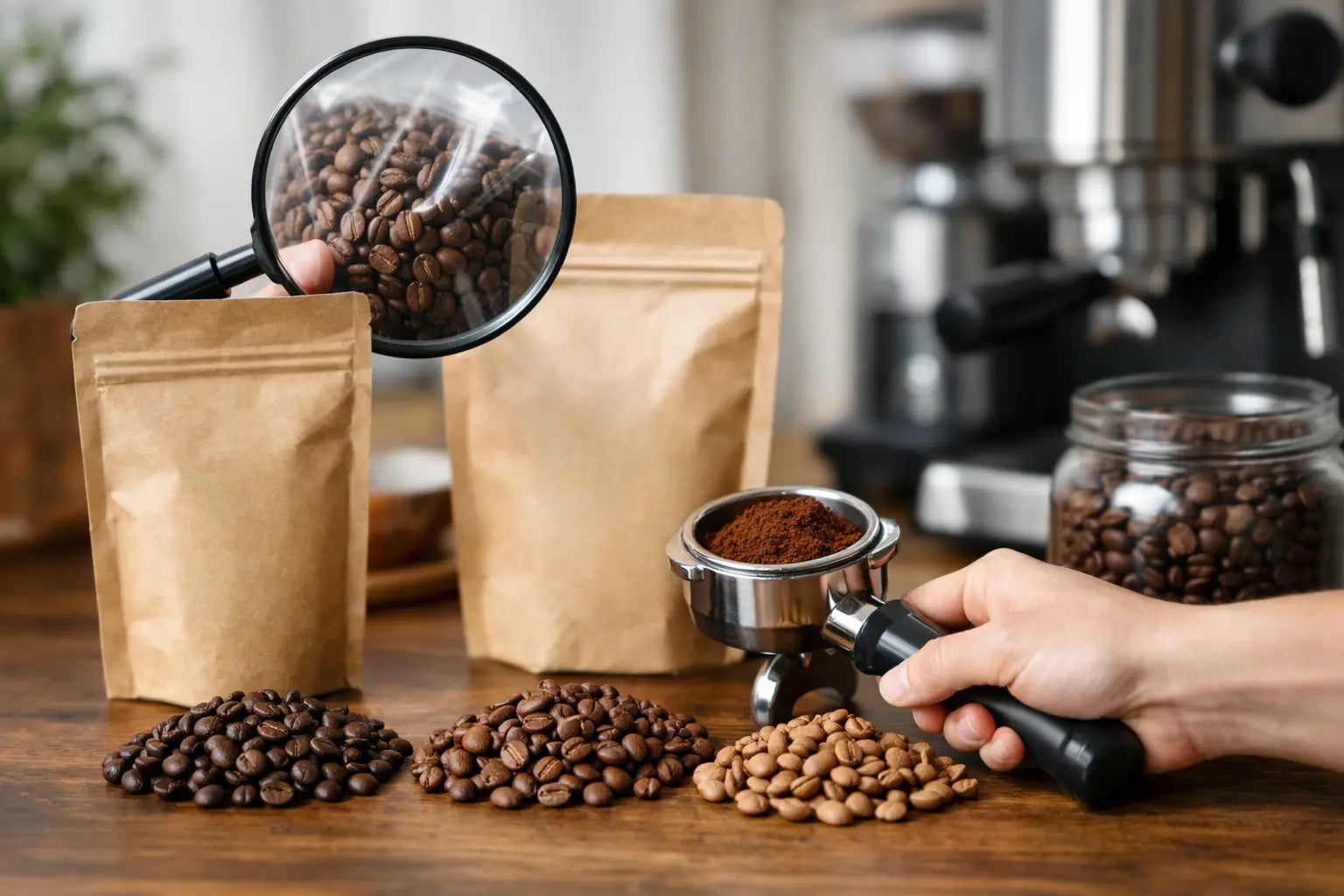
The bag looks good, the coffee smells promising, and then you notice a roast date from four months ago. Which roast date should you look for when buying coffee? That is not a detail reserved for people who overanalyse packaging. It is one of the quickest ways to make a noticeable improvement to the coffee you brew at home. The roast date tells you far more about flavour than a best-before date ever can.
With specialty coffee, you want more than good beans: you want beans that reach your grinder at the right moment. Coffee can be unsettled and difficult to brew when it is too young. When it is too old, it loses liveliness, sweetness and aroma. The best choice is therefore not at either extreme—not necessarily roasted yesterday, but certainly not packed anonymously long ago.
Which roast date should you look for?
For most coffee drinkers, beans taste best from about 7 days to 6 weeks after the roast date. During this period, the coffee has had enough time to degas while its aromas and flavour oils are still fully present. Choose a bag within this window and you give yourself the best chance of a full, clear cup.
Do you use an espresso machine? Then 10 to 21 days after roasting is often a good starting point. Fresh coffee produces carbon dioxide after roasting. In the first few days, that gas can disrupt extraction: the espresso may run unevenly, taste sharp or produce an unusually airy crema. After a week or two, the coffee is generally calmer and easier to dial in.
Do you brew filter coffee, for example with a V60, Chemex or automatic filter machine? You can often get beautiful results from 5 to 7 days after roasting. Filter brewing is more subtle and reveals many aromatic notes. A fresh, fruity coffee can be especially expressive at this stage. Give it a few extra days if the flavour still seems closed or prickly.
These are not absolute rules. A dark roast ages differently from a light roast, and a bean from Brazil behaves differently from a distinctive Ethiopian coffee. Treat the roast date as a practical compass, not a magical boundary.
Why the roast date matters more than the best-before date
A best-before date is mainly about safety and saleability. Coffee beans do not suddenly spoil as soon as that date passes. Flavour is a different matter. From the moment coffee is roasted, volatile aromas slowly begin to fade. Oxygen, heat, light and moisture accelerate that process.
A freshly roasted bean contains thousands of aromatic compounds that create notes of chocolate, caramel, red fruit, nuts or flowers in your cup. Over time, those notes become flatter. The coffee may still be perfectly drinkable, but it is more likely to taste woody, dull or bitter. This happens especially quickly with beans that have already been ground: the larger surface area means coffee loses aroma and character much faster.
That is why a clear roast date is a better quality signal than a vague label such as ‘freshly packed’. The latter tells you nothing about when the beans were roasted. A coffee brand that clearly displays the roast date makes freshness verifiable. That is simply more honest.
Pay attention to the difference between roast date and packing date
Some packaging shows only a packing date or a best-before date. You still do not know how long the coffee has been travelling from roastery to warehouse, shop and your kitchen cupboard. Look specifically for ‘roasted on’ or ‘roast date’.
Can you not find that information anywhere? Then you are effectively buying on guesswork. That may be fine for a bag of office coffee, but if you are investing in a good grinder, espresso machine or hand filter, you want to know what you are brewing.
Fresh is good, but too fresh can disappoint
‘The fresher, the better’ sounds logical, but coffee needs time to rest. Immediately after roasting, a bean releases a lot of carbon dioxide. This is called degassing. With espresso in particular, too much gas can prevent water from flowing evenly through the coffee.
You may notice an espresso that runs quickly at first and then seems to choke, or a flavour that is sour, sharp and barely sweet all at once. You can keep changing the grind size, while the coffee is simply still too young. Wait a few days and the same beans may suddenly be much more balanced.
The effect is often less intense with filter coffee, but some rest helps there too. Do you smell little sweetness and taste mainly a raw, sparkling sharpness? Give the bag another three to five days. Make a note of what you taste if you like. This will quickly improve your ability to recognise the ideal moment for your favourite brewing method.
How old can coffee be when you buy a larger supply?
A larger order is convenient. You save time, always have good coffee at home and do not have to reach for an emergency supermarket solution on Monday morning. The only question is how much you will actually drink in a few weeks.
As a rough guide, allow 18 grams of coffee per double espresso or 15 to 20 grams per generous filter cup. If you drink two double espressos at home each day, 1 kilo of beans will last about 27 days. That is a good amount when the beans are delivered freshly roasted. If you drink less, 500 grams is often smarter, or divide your supply into small, well-sealed portions.
For unopened beans, a practical guideline is that they can still taste good for roughly two to three months after roasting, provided they are stored cool, dark and airtight. Their peak is usually earlier. If you want maximum liveliness, buy a modest amount more often. If convenience matters most without sacrificing decent flavour, a four- to six-week supply works very well.
How to store coffee beans after buying them
A perfect roast date has little value if you then store the beans next to a hot oven or in an open jar. The four major flavour thieves are oxygen, heat, light and moisture. Keep them away and your coffee will stay in good shape for considerably longer.
It is best to leave the beans in their original bag if it has a good valve and resealable closure. Even better is an airtight coffee canister that limits excess air, such as a CoffeeVac. Do not fill it with your entire supply every day if you buy a lot of beans. Keep a smaller working supply in the canister and leave the rest sealed in the bag.
The fridge is not a good idea. Coffee is exposed there to moisture and smells from other foods. The freezer can work for coffee you will not use for several weeks, but only if you freeze the beans in small, airtight portions. Take out one portion and let it reach room temperature while still sealed before opening it. Do not refreeze beans that have thawed.
Grind just before brewing
If there is one habit that makes an immediate difference, it is this one. Buy whole beans and grind them just before brewing. Ground coffee loses aroma extremely quickly, even when the roast date is perfect. A good grinder also gives you control over grind size, which you need to dial in espresso or filter coffee properly.
A quick check before buying coffee
Start by checking the roast date and preferably choose beans roasted 1 to 6 weeks ago. Then consider how you brew your coffee. Espresso may benefit from a little more rest, while filter coffee can often be brewed sooner. Finally, be honest about your consumption: do not buy a kilo if it will take you three months to finish it, however attractive the price per bag may be.
The packaging matters too. A bag with a valve, a clear roast date and information about origin and flavour profile shows that the roaster cares about what ends up in your cup. That fits the way Eddy’s Coffee works: roasting to order so your beans do not spend unnecessary time losing flavour before they reach you.
The best coffee is not the coffee with the most recent possible date; it is the coffee that suits when you are going to drink it. Choose beans that will soon reach their peak, store them properly and give yourself time to dial them in. Then your regular coffee moment is not a gamble, but something you look forward to every morning.
Share:
Choosing Coffee Beans for Your Taste and Machine
Ethiopian Coffee: Flavour Profile and Brewing Guide