
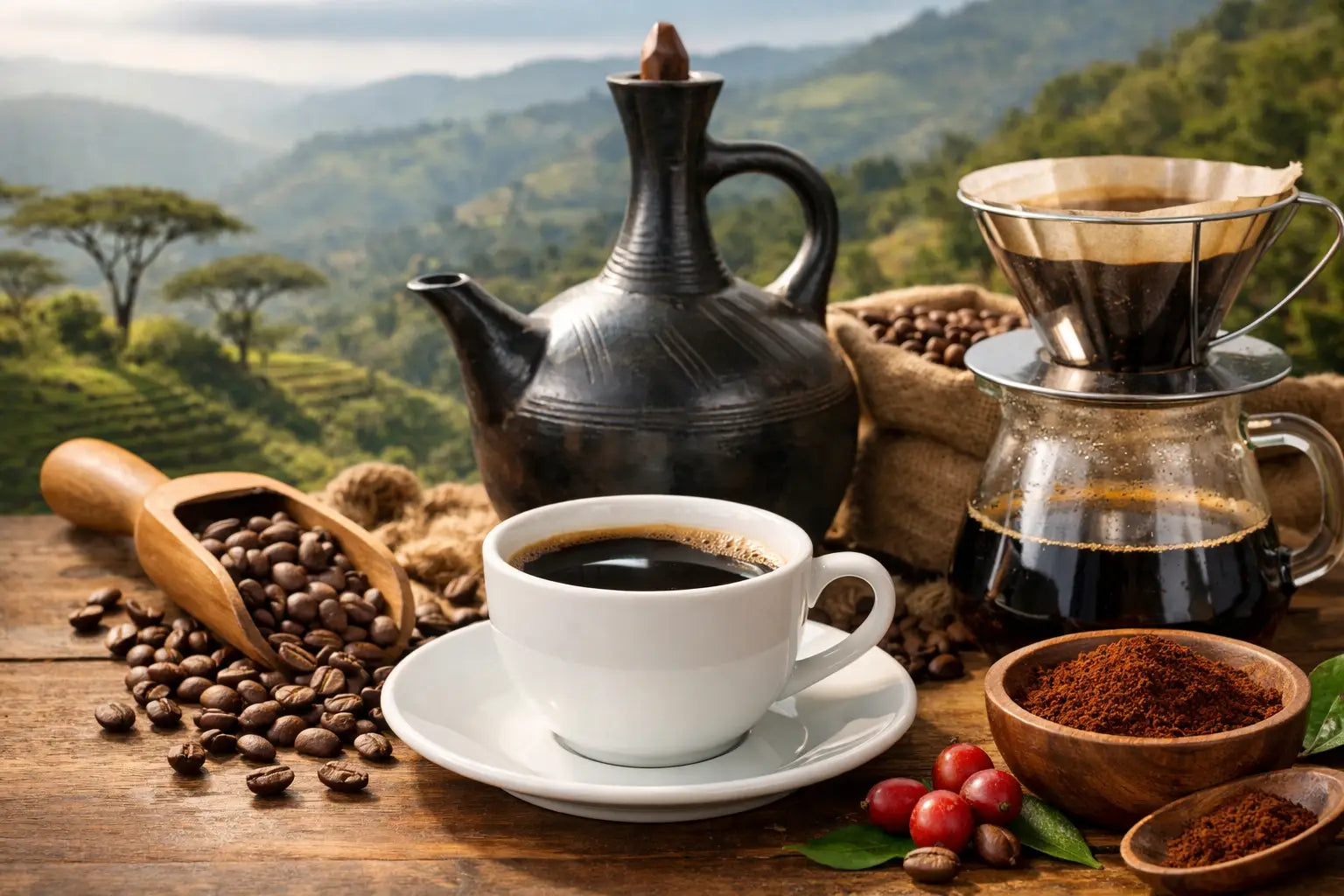
A coffee from Ethiopia that smells of jasmine, peach or blueberry can change your first sip completely. If you search for an Ethiopian coffee flavour profile, you are usually trying to understand why these beans taste so different from a classic chocolate-forward coffee from Brazil or Colombia. The short answer: Ethiopia often produces lively, layered and remarkably aromatic coffee. The honest answer: the flavour depends heavily on the region, processing, roast and how you brew it.
Ethiopia is not the coffee for someone who expects only a heavy, bitter mug. It is for anyone curious about a cup that can be fresh, sweet and almost tea-like. Provided you choose the right bean and brewing method, of course.
Ethiopian coffee: the flavour profile in one cup
Ethiopian specialty coffee is known for clarity and aroma. Think citrus, bergamot, stone fruit, berries, honey and floral notes such as jasmine or orange blossom. The body is often light to medium and the finish clean and refined. This makes it easier to taste individual flavours than in a coffee with lots of cocoa, nuts and a full, syrupy texture.
That does not mean every Ethiopian bean tastes sour or thin. Good freshness is different from a sour, unripe flavour. In a well-roasted Ethiopian coffee, acidity feels juicy and lively, like ripe fruit. Natural sweetness creates balance. When that balance is missing, a light roast can come across as sharp. In that case, the cause may be the roast, the preparation or simply your personal preference.
For many coffee drinkers, Ethiopia is a discovery after familiar espresso with notes of chocolate and caramel. Do not expect a safe middle ground, but a coffee with character. That is what makes it so popular with filter fans and so interesting for home baristas who want to get more from their beans.
Why Ethiopian coffee tastes so distinctive
Ethiopia is often regarded as the birthplace of coffee. Coffee plants grow in many different areas, often at high altitude and in a relatively cool climate. The cherries therefore ripen more slowly, helping to develop complex sugars and aromas. Add fertile soils, many smallholders and enormous genetic diversity among the coffee plants, and you get a country with an exceptionally broad flavour palette.
Many Ethiopian coffees are described as heirloom. The term is used for local, traditional varieties and selections that cannot always be traced as neatly as Caturra or Bourbon, for example. It is not a quality stamp in itself, but it does suggest that you are tasting the country's rich and diverse coffee genetics.
Altitude matters too. Coffee from areas between 1,800 and well over 2,000 metres usually develops a dense bean with plenty of potential for nuance. The roaster has to handle it carefully. Roasting too dark can suppress the floral and fruity qualities. Roasting too lightly without enough development can instead produce a grassy or harsh cup.
Region really does make a difference
There is no single fixed flavour hidden behind the word Ethiopia. Yirgacheffe is probably the best-known name and often represents elegant, floral coffees with lemon, tea and peach. Sidama can also be fresh and floral, but regularly brings a little more sweetness and a rounder structure.
Guji coffees often stand out for juicy red fruit, tropical notes and creamy sweetness. For many drinkers, Limu is a gentler introduction: often floral and citrusy, but with more chocolate or spicy depth. Harrar is traditionally known for a fuller profile with blueberries, wine-like notes and sometimes an earthy edge.
These are not absolute rules. Harvest year, micro-region, processing and roast can shift the profile considerably. Treat a region as a useful first direction, not a guarantee of flavour.
Washed or natural: the biggest flavour difference
If you only check one detail on the label, look at the processing method. It tells you a lot about what to expect in your cup.
With washed coffee, the fruit flesh is removed shortly after picking and the bean is washed before drying. This usually creates a clear and precise flavour profile. In Ethiopian washed coffees, you will often taste lemon, tea, white peach, jasmine and a clean, fresh finish. It is an excellent choice if you enjoy refinement and distinct aromas.
With a naturally processed coffee, the bean dries inside the coffee cherry. During drying, the fruit has more influence on the bean. The result is often sweeter, fuller and more exuberant: blueberry, strawberry, ripe peach, tropical fruit or sometimes a lightly jammy character. A good natural is intense and juicy. A less carefully processed natural can taste too fermenty or messy, however.
There is no single best processing method. Washed Ethiopian coffee is often the clear, elegant choice. Natural Ethiopian coffee is more expressive and fruit-driven. Unsure where to start? Begin with a washed coffee for filter brewing, then try a natural if you want more fruit and body.
Which brewing method suits Ethiopian beans?
Filter coffee is the most rewarding preparation for many Ethiopian coffees. With a V60, Kalita or filter machine, the floral and fruity nuances come through clearly. Use water just off the boil, an even grind and a steady brew time. Water that is too hot or a grind that is too fine can make the cup dry and bitter. Grinding too coarse produces a watery coffee in which the sweetness is missing.
A French press gives more body and texture. This often makes a natural from Guji or Harrar rounder and fuller, although you sacrifice a little clarity. Let the grounds settle properly after brewing and pour slowly. This keeps the final cup less gritty.
Ethiopian coffee can also make an excellent espresso, but choose it deliberately. A very lightly roasted, washed Yirgacheffe can be intensely sour and difficult if you are not used to dialing in coffee. Using a slightly longer ratio—for example, extracting more espresso from the same dose—often gives you more sweetness and less sharpness. A natural Ethiopian can be surprisingly good as espresso: fruity, creamy and almost candy-like.
For cappuccino or flat white, there is a simple rule: the more distinctive and light the profile, the more easily milk will cover its nuances. A slightly more developed natural or an Ethiopian blend usually stands up better in milk than a very delicate washed coffee.
How to get more flavour from your beans at home
Freshness determines how many of those beautiful aromas you actually taste. Coffee beans need time to degas after roasting, but you do not want to leave them open on the counter for weeks afterwards. Buy genuinely fresh beans in an amount you will drink within a few weeks.
Store them somewhere dark, dry and airtight. A good storage canister or CoffeeVac helps keep oxygen out without forcing you to wrestle with half a bag of beans every time. The fridge is usually not a good idea: beans can absorb smells and moisture. Only freeze coffee if you genuinely want to store a larger supply for a long time, and divide it into small airtight portions first.
Grind just before brewing. With Ethiopian coffee, you notice the difference particularly quickly because volatile floral aromas are among the first to disappear. If your grinder has a grind-size setting, change only one step at a time. If the coffee is sharp and thin, grind a little finer. If it is bitter, dry or astringent, grind a little coarser. Do not taste only the first sip; taste again as the coffee cools. Sweetness and fruit often become much clearer then.
Who is Ethiopian coffee a good choice for?
Choose Ethiopia if you want coffee that surprises you without being complicated. It suits black filter coffee, quiet mornings and moments when you really want to taste rather than refill your cup without thinking. A washed coffee is ideal for lovers of tea, citrus and elegant freshness. A natural is a better fit if you enjoy sweetness, ripe fruit and a fuller mouthfeel.
If you are used to dark, powerful espressos with lots of bitter chocolate, a light Ethiopian coffee may take some getting used to. That is not a problem. Choose a slightly more medium-roasted bean, brew it as a lungo or combine it with a little milk. Developing your taste does not have to be complicated or elitist—it starts with a fresh bean and a cup that makes you curious about the next sip.
So do not blindly choose the most exotic description on the bag. Choose an Ethiopian coffee that suits the way you drink, grind it fresh and give it a few brews to reveal itself. There is a good chance that you will taste something new in every cup afterwards.
Share:
Which Roast Date Should You Look for When Buying Coffee?
Arabica vs Robusta Coffee: What Is the Difference?