
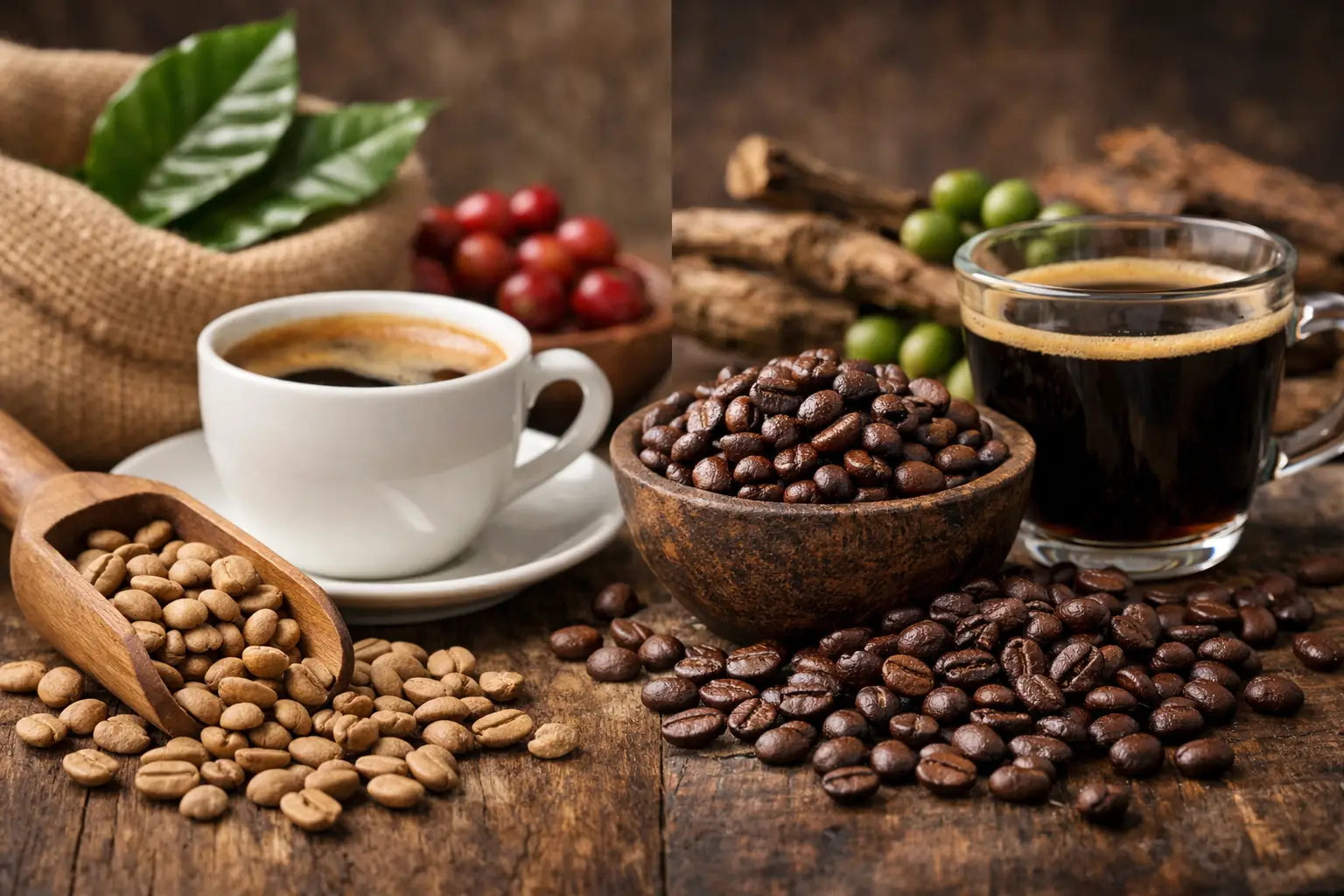
You brew an espresso, take a sip and immediately taste the difference: one coffee is soft, sweet and layered, while the other is powerful, more bitter and extra punchy. The difference between arabica and robusta goes far beyond a label on a bag of beans. It affects how much caffeine you consume, what your crema looks like and, above all, what happens in your cup.
For most coffee drinkers, arabica is the safe choice for refined black coffee. Robusta may be exactly what a strong espresso or cappuccino needs. So there is no single best bean. There is coffee that suits your taste, machine and daily coffee moment better.
Arabica vs robusta at a glance
Arabica and robusta are two different coffee species. Arabica is officially Coffea arabica and is the most widely consumed species in the world. Robusta is the commercial name for Coffea canephora. Both grow on coffee plants, but they have different environmental needs and therefore develop their own flavour profiles.
Arabica generally grows at higher altitudes, often in cooler areas where cultivation and processing receive considerable attention. The plant is more sensitive to disease, weather changes and pests. This makes production more challenging, but also creates plenty of scope for complex flavours. Depending on origin and roast, think red fruit, chocolate, caramel, flowers or citrus.
Robusta grows more easily in warmer, lower-lying areas. The plant is more resistant to disease and usually produces more beans. That explains why robusta is often cheaper than arabica. Cheaper does not automatically mean poor quality. Carefully grown and well-processed robusta can taste surprisingly good, especially in a blend. The quality of the harvest, processing, roast and freshness always remains decisive.
Arabica: soft, sweet and nuanced
Arabica is popular with specialty coffee drinkers because the bean often has a broad and clear flavour palette. A good arabica can combine freshness with natural sweetness and a pleasant finish. This makes it a strong choice for filter coffee, slow coffee and espressos where you want to recognise individual flavour notes.
Arabica's acidity does need one qualification. We do not mean that the coffee tastes sour or unripe. In good coffee, fresh acidity brings liveliness, much like the difference between dark chocolate and milk chocolate. Do you sometimes find black coffee too sharp? Do not immediately switch to robusta. Try a darker-roasted arabica or a bean with chocolate, nut and caramel notes instead.
Arabica contains less caffeine on average than robusta. This is helpful for many people who drink several cups a day or still want coffee later in the afternoon. If you are sensitive to caffeine, you can also choose decaffeinated beans. A good decaf does not have to taste flat: sweetness, body and aroma can all remain present without caffeine.
When arabica is a good fit
Choose arabica in particular if you drink your coffee black, enjoy trying different origins or are looking for a refined espresso. Freshly roasted arabica is also an excellent base for a V60, Chemex, cafetière or automatic machine. Do you like a soft cappuccino? An arabica with chocolate and hazelnut notes can pair beautifully with milk.
Robusta: more caffeine, more body, more crema
Robusta usually has a more powerful character. You are more likely to taste earthy, woody, spicy or cocoa-like notes, with more bitterness and a fuller body. Where arabica can be elegant and light-footed, robusta gives the cup more weight. That is exactly why this bean has a permanent place in many classic espresso blends.
The caffeine content is generally about twice as high as in arabica. Caffeine acts as a natural defence against insects in the plant. For you, that mainly means a stronger lift. This can be useful for an early start or a long working day, but less pleasant if you are quick to experience restlessness, palpitations or disrupted sleep.
Robusta is also known for its crema. In espresso, this bean often produces a thick, stable layer of crema. It looks appealing and adds mouthfeel. Crema is not proof of quality on its own, however. A beautiful layer can still sit on top of a bitter or flat espresso. Flavour, balance and a clean finish remain more important than appearance alone.
When robusta is a smart choice
If you drink espresso with plenty of milk, a proportion of robusta in a blend can work well. Its powerful body remains present in a cappuccino, latte or flat white. If you are looking for an intense Italian-style espresso with lots of crema and a pronounced kick, robusta or an arabica–robusta blend may suit you better than a light single origin.
Pay attention to the roast, though. A dark roast can emphasise robusta's bitter sides. A roaster who knows the bean will therefore look for balance: enough power and body without a burnt or ashy flavour. Freshness makes a noticeable difference here too. Beans that have been sitting around for a long time lose aroma and are more likely to produce a flat, harsh cup.
Arabica or robusta: which beans should you buy?
Start with how you drink your coffee, not with the idea that one species is automatically better. For a relaxed morning coffee that you drink black, 100% arabica is often a logical choice. For a short, strong espresso after lunch, a blend with robusta may give you more satisfaction.
Then consider your brewing method. Filter coffee shows nuances without mercy. Here, choose beans with a clear, clean flavour and a roast that is not too dark. With espresso, body, sweetness and crema play a bigger role. A blend can provide a more consistent result, especially while you are still practising grind size, dose and brew time.
Your taste can change too. Perhaps you want an accessible chocolatey coffee from the automatic machine on workdays, but take time for a fruity filter coffee at the weekend. That is not indecision; it is simply choosing the right coffee for the moment.
Why blends often work better than you expect
A blend is not a trick for hiding inferior beans—at least not when it has been composed with care. A good blend brings together qualities that complement each other. Arabica can provide sweetness, aroma and complexity. Robusta can add body, crema and extra intensity.
The ratio matters a great deal. A blend with a small proportion of quality robusta can still taste elegant, but gains more backbone in espresso. A blend with a high proportion of robusta is often more pronounced, more bitter and higher in caffeine. There is no universally correct ratio. It depends on your machine, how much milk you use and how strong you want your coffee to be.
So do not let terms such as 100% arabica guide you on their own. The statement tells you something about the species, but not automatically about freshness, origin, roast profile or skill. Freshly roasted beans in a well-made blend can taste better than an old bag of 100% arabica from a supermarket shelf.
Get the best from arabica and robusta
Whichever bean you choose, treat it well. It is better to buy smaller amounts that you finish within a few weeks than a large supply that stays open for months. Store beans airtight, in the dark and at room temperature. The fridge is usually not a good idea: moisture and smells are waiting there.
Grind just before brewing. The wrong grind size can make an excellent arabica taste sour and thin, or make a beautiful robusta unnecessarily bitter. Does your espresso run too quickly? Grind finer. Does it drip slowly and taste dry or harsh? Grind a little coarser. Small adjustments often achieve more than immediately buying a different bean.
Freshly roasted beans also give you a more honest picture of what arabica or robusta can really be. That is why Eddy's Coffee focuses on exceptionally fresh coffee: only when aroma, roast and brewing method come together do you taste why the choice between these two beans makes such a difference. Do not choose the prettiest label; choose the coffee you will want to drink again tomorrow.
Share:
Ethiopian Coffee: Flavour Profile and Brewing Guide
How to Order Coffee in the Netherlands: A Guide to Fresh Beans