
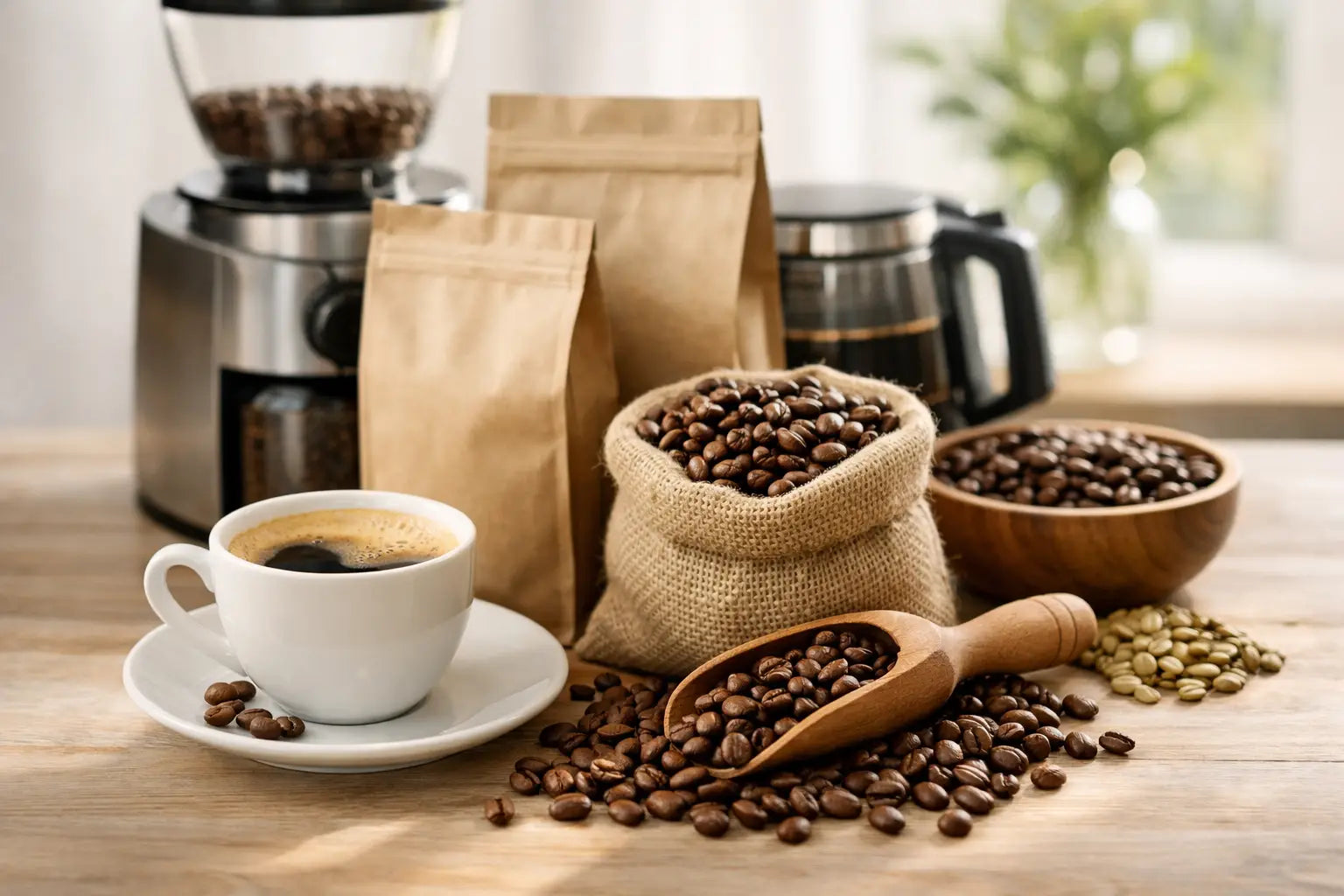
The bag of coffee that arrives on your doorstep on Monday often shapes the start of the rest of your week. When you order online, you do not want beans that have been sitting in a warehouse for months, but coffee that tastes at home as good as it does at a good espresso bar. This guide to ordering coffee in the Netherlands helps you choose what really matters: freshness, flavour, grind size and a supplier that keeps its promises.
Buying coffee online is especially convenient when your schedule is full or you do not want to travel across the country for good beans. But convenience only has value when the coffee is right too. Attractive packaging, a low price or an exotic origin says little by itself about what eventually happens in your cup.
Ordering coffee in the Netherlands starts with the roast date
The roast date is not a minor detail on the label. It is your best indication of freshness. Coffee beans develop flavour and aroma after roasting, but gradually lose that liveliness too. Beans roasted a long time ago often leave you with a flat, papery or slightly bitter cup. You notice this quickly with espresso: less sweetness, less crema and less clarity.
Choose a roaster that clearly communicates when the coffee was roasted and does not rely on a vague story about being ‘freshly roasted’. Ideally, the coffee is roasted to order or shortly before dispatch. This gives it enough time to rest for a good extraction without sending you a supply that is already past its best.
For most beans, it is best not to finish the whole bag on the day it arrives. Espresso often comes to life after a few days of rest, while filter coffee can usually be excellent a little sooner. The precise peak varies by bean, roast and brewing method. Fresh therefore does not necessarily mean just out of the roaster, but it should still be full of life.
Choose your brewing method first, then your bean
A tasting note such as chocolate, red fruit or nuts is useful, but your coffee maker is a better starting point. A bean that shines in a V60 may taste thin or sour in an automatic machine. Conversely, a dark espresso roast may taste too heavy in a filter brewer.
For espresso and automatic machines
Are you looking for coffee for a portafilter machine or automatic machine? A medium to medium-dark roast is often the easiest place to start. Look for full body, gentle acidity and flavours such as cocoa, caramel, nuts or ripe fruit. This creates a solid espresso and stays present in a cappuccino or flat white.
If you drink black espresso, you can certainly choose something more lively with fruity notes. It may require a little more attention when dialling in your grinder. If you mostly drink milk-based coffee, a rounded, sweeter blend is usually the safest and most enjoyable choice.
For filter, cafetière and slow coffee
With filter coffee, the origin can speak more clearly. Light to medium roasts often show bright aromas: citrus, tea-like notes, stone fruit or berries. That can be fantastic, but only if you enjoy this fresh style. If you are used to powerful supermarket filter coffee, a chocolatey or nutty medium roast is often a more accessible starting point.
A cafetière gives a fuller mouthfeel, while a V60 or Chemex brings more clarity. The same bean can therefore taste surprisingly different. When ordering from a new roaster for the first time, do not choose blindly based on the trendiest tasting notes. Choose a profile that matches what you already enjoy, with just enough room to discover something new.
Whole beans or ground coffee: be honest about your routine
Whole beans are almost always the best choice. Once coffee is ground, the surface area in contact with oxygen increases dramatically and aromas disappear much faster. With your own grinder, you simply get more flavour from the same coffee.
That does not mean pre-ground coffee has no place. If you do not have a grinder, use coffee at work or want better coffee without buying extra equipment, order ground coffee in the right grind size. Always specify your brewing method: espresso, moka pot, filter, cafetière and automatic machine each need something different. A grind that is too fine quickly makes coffee bitter and syrupy; a grind that is too coarse is more likely to produce a watery, sour cup.
Only order what you can realistically drink within a few weeks. A one-kilogram bag may look like good value, but it is not if you spend the second half drinking stale coffee. For a household with one coffee drinker, 250 or 500 grams is usually more sensible. If several people drink espresso every day, a larger bag may be perfectly practical.
Look beyond origin and marketing language
Ethiopia, Colombia, Brazil or Guatemala: origin tells you something, but never the whole story. Altitude, variety, processing, harvest, roast and brewing are just as influential. A Brazilian coffee can be creamy and chocolatey, but also surprisingly fruity. An Ethiopian bean can be floral and light, but a darker roast can make it much heavier.
Look for concrete information instead. A good webshop will tell you something about the flavour profile, recommended brewing method, roast and roast date. Clear information about shipping, returns and accessible customer service matters too. If a supplier uses only big words but provides no detail, you still do not know what you are buying.
Specialty coffee generally means that the coffee has been grown, selected and assessed with extra care. That is a good starting point, not an automatic guarantee that every bag will suit your taste. Taste is personal. That is why a satisfaction guarantee is more than a sales argument: it lowers the barrier to trying a new bean without being stuck with a disappointing purchase.
Do not forget decaf if you want coffee later in the day
Decaffeinated coffee has an unfair reputation as a weak alternative. Good decaf can be sweet, full and distinctive, especially when the bean is carefully selected and freshly roasted. The difference often lies in the decaffeination method and, above all, the quality of the original coffee.
Do you enjoy a cappuccino after dinner, work irregular hours or react sensitively to caffeine? It is smart to keep a good decaf alongside your regular bag. You then do not have to choose between a calmer night and a good cup of coffee.
How to keep your order fresh for longer
Once the coffee is at home, storage is just as important as what you order. Do not leave beans next to a hot coffee machine, in direct sunlight or in an open bag. Heat, light, oxygen and moisture are not friends of flavour.
Store your coffee in an airtight canister in a cool, dark place. A CoffeeVac or a similar storage canister is useful if you open the bag frequently. It is better to fill a smaller canister with enough for a few days and keep the rest tightly sealed. The fridge is usually not a good idea because of condensation and smells. Freezing can work for larger supplies, but first divide the beans into small, well-sealed portions that you thaw only once.
Order without guessing
The best online order is not automatically the most expensive bag or the most complicated single origin. It is the coffee that suits your machine, taste and drinking moment, is delivered fresh and is stored properly at home. If necessary, start with two smaller bags: one familiar, rounded coffee for every day and one more distinctive profile to taste alongside it.
At Eddy's Coffee, that means exceptionally fresh specialty beans roasted to order, so online convenience does not have to come at the expense of flavour. Whichever roaster you choose, ask critical questions about freshness and choose coffee that you are already looking forward to drinking tomorrow. That is usually the best sign that you ordered well.
Share:
Arabica vs Robusta Coffee: What Is the Difference?
Online Coffee vs Supermarket Coffee: What Can You Really Taste?