
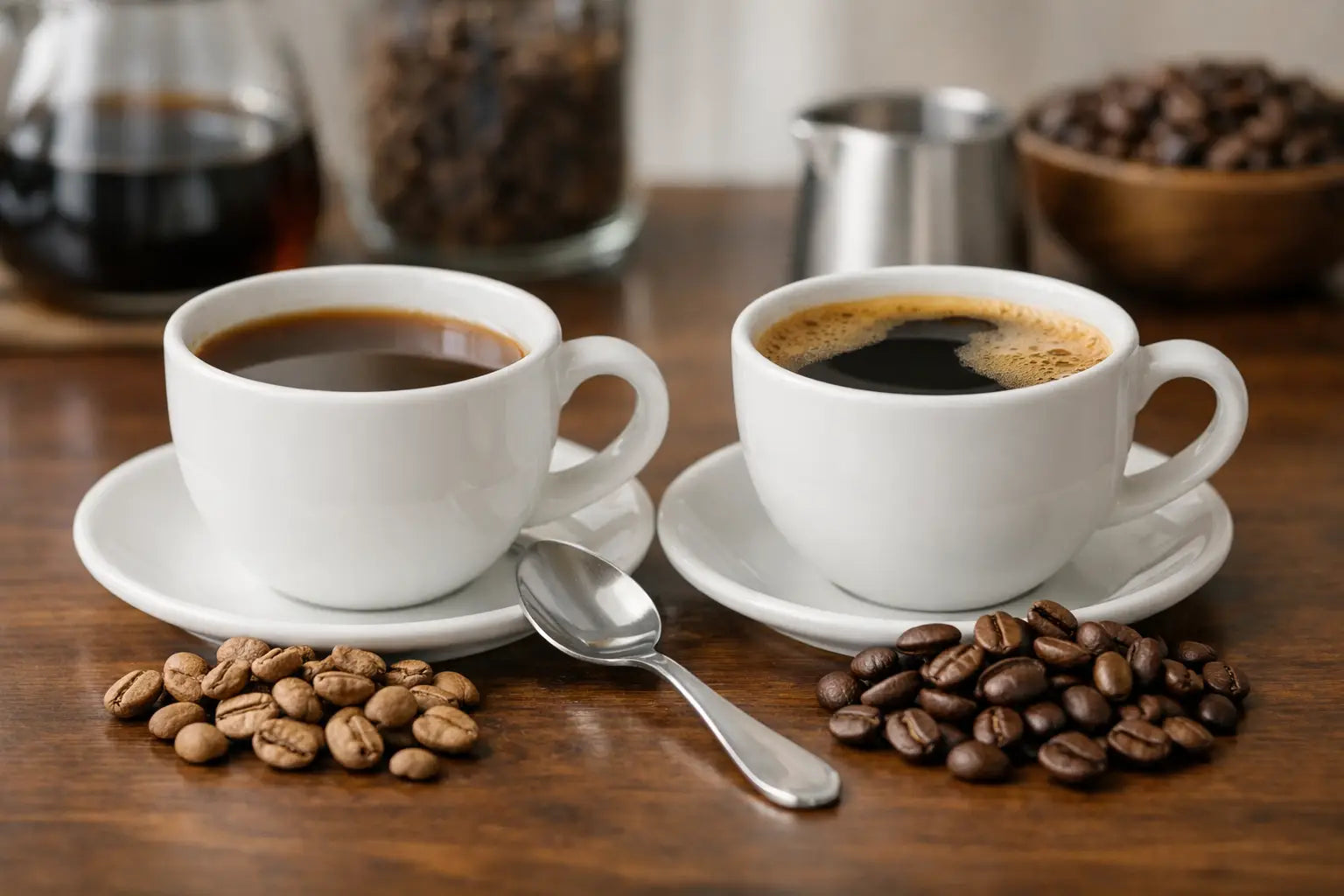
You probably know the moment: it is late afternoon, you want coffee but not a restless evening. Then the question arises: decaf versus regular coffee — are you mainly giving up flavour, or has the difference become much smaller?
The short answer is that it depends on the bean, roast and especially how carefully the decaf was selected and roasted. Poor decaf tastes flat. Good decaf tastes like good coffee, just with much less caffeine. That is the difference many coffee drinkers still have an outdated view of.
Decaf versus regular coffee: the real difference
Regular coffee naturally contains caffeine. Decaf is coffee from which most caffeine has been removed before roasting. That does not mean it comes from a different plant or is automatically an inferior bean. It often starts with the same kinds of coffee beans.
The interesting part is what happens next. Decaffeination changes the bean’s structure and sometimes its flavour potential. Decaf is therefore more sensitive to the quality of the sourcing, processing and roast. With regular coffee, a strong roast or robust blend can hide a lot. With decaf, mediocre quality is exposed sooner.
That is why some people say they can “always taste decaf”. Often they are not tasting the absence of caffeine, but a difference in quality. A freshly roasted specialty decaf can taste surprisingly sweet, round and clean. Average decaf quickly becomes mushy, woody or flat.
What about flavour?
If you look purely at flavour, regular coffee is usually a little livelier. It may offer more tension in the acidity, more layers and sometimes a longer, more complex finish. This is especially noticeable with light to medium roasts.
That does not mean decaf is boring. A good decaf can have chocolate, nut, caramel and ripe-fruit notes, with enough body to work as espresso. For many home drinkers, the difference in a cappuccino or flat white is small enough to be barely noticeable.
It also depends on what you look for. If you chase floral Ethiopian coffees with citrus and tension, regular coffee will often offer more. If you prefer a full, sweet, balanced cup without fuss, decaf can come surprisingly close.
Why decaf used to have such a bad reputation
Decaf had an image problem for years, and honestly, it did not come from nowhere. Much caffeine-free coffee was made from average or old beans because the market already had lower expectations. It was then roasted dark to hide inconsistencies. The result was often bitter, dull or simply boring.
The specialty coffee world has changed that image considerably. More roasters now choose better decaf lots, roast them more precisely and treat decaf as a complete coffee rather than a by-product. The difference between decaf and regular coffee has therefore become smaller than many people think.
It has not disappeared, but it has narrowed. That nuance matters. Anyone who claims you can never taste a difference is telling an overly neat story. Anyone who says decaf is undrinkable is stuck in the past.
Caffeine: less, but not always zero
Another misconception is that decaf is completely caffeine-free. In practice, it usually contains a small residual amount. For most people that is negligible compared with regular coffee, but it is rarely zero.
Regular coffee is often chosen for focus, alertness and that familiar morning boost. Decaf is more often chosen for the ritual, flavour and company without the full caffeine kick. This makes it useful for evening coffee, people sensitive to caffeine or anyone who simply wants to lower their total intake.
There is no universal winner. It is mainly a matter of timing and personal response. One drinker can have a double espresso at 9 p.m. and sleep soundly; another feels restless after one regular cappuccino at 4 p.m.
How decaf is made and why it matters
Not every decaf process produces the same result. Without getting too technical: caffeine is removed from green coffee beans before roasting. This can be done in different ways, and the approach affects how much flavour remains.
For home drinkers, the important point is that a good decaffeination process tries to preserve as many flavour compounds as possible while removing caffeine. The more carefully this is done, the better the cup usually remains.
You do not need to memorise every process to choose well. Transparency and quality matter more. If a roaster takes origin, freshness and roast seriously, the decaf is much more likely to be worth trying.
For espresso, filter or cappuccino?
With decaf versus regular coffee, brewing method matters more than many people expect. For espresso, a sweet, full decaf often works extremely well. Lower acidity and a round body can be pleasant in a shot or milk drink. Decaf often performs better in cappuccinos and lattes than people expect.
With filter coffee, the difference is more sensitive. You taste nuances directly without milk or concentration shaping the profile. If you drink filter coffee for fruit, florals and complexity, regular coffee will often provide more tension. If you prefer clean, soft and approachable filter coffee, a good decaf can still be convincing.
For automatic machines, choose beans that are not too old and are suited to the method. Decaf may react slightly differently in extraction time or crema. That is not a problem, but it is worth considering.
When should you choose decaf?
Decaf is not a compromise for people who “do not really drink coffee”. That idea can be left behind. For many lovers of coffee, it is simply a smart second option alongside their regular beans.
If you quickly experience palpitations, restlessness or poor sleep, decaf is a logical choice. It can also help if you already get enough caffeine from several coffees, tea or energy drinks. Sometimes you simply want an after-dinner espresso because it tastes good, not because you need to be more productive.
More and more coffee drinkers therefore keep both at home: regular coffee for mornings and focus, decaf for later in the day. That is often smarter than forcing yourself into one camp.
What should you look for when buying good decaf?
Here it becomes practical. When buying decaf, you do not only want less caffeine — you still want genuinely fresh coffee that tastes good. Look for the same things as with regular specialty coffee: roast date, origin, roast profile and clear information about flavour and use.
Vague terms such as “mild” or “aromatic” say little. A clear flavour description is more useful: chocolate, nuts, caramel, red fruit or brown sugar. At least that gives you direction.
Freshness is especially important. Coffee loses aroma over time, and decaf can taste flat even sooner. Choose freshly roasted beans rather than a bag that has been sitting on a shelf for months. Store them airtight, cool and dark, but not in the fridge.
Decaf versus regular coffee in everyday life
The best choice is rarely ideological. It is practical. What do you want from this cup?
If you want maximum liveliness, complexity and caffeine, regular coffee remains the favourite for many. If you want comfort, flavour and flexibility without the full stimulation, decaf is a serious option. With good beans, the choice does not have to feel like a sacrifice.
That may be the biggest shift in recent years. Decaf is no longer the dusty alternative for people who “are not allowed to drink real coffee”. It is simply coffee when it is done well. And doing it well starts with fresh beans, careful roasting and honesty about what you can expect.
At Eddy’s Coffee, more home baristas are approaching it sensibly: regular coffee when they want energy, decaf when flavour matters more than caffeine. That is not half-hearted. It is simply smart coffee drinking.
If you are unsure, do not make it bigger than it is. Taste both consciously, preferably black and freshly brewed. Not to declare one the winner, but to discover which coffee suits which moment in your day.
Share:
What Grind Size Is Best for Filter Coffee?
How to Store Coffee Without Losing Flavour