
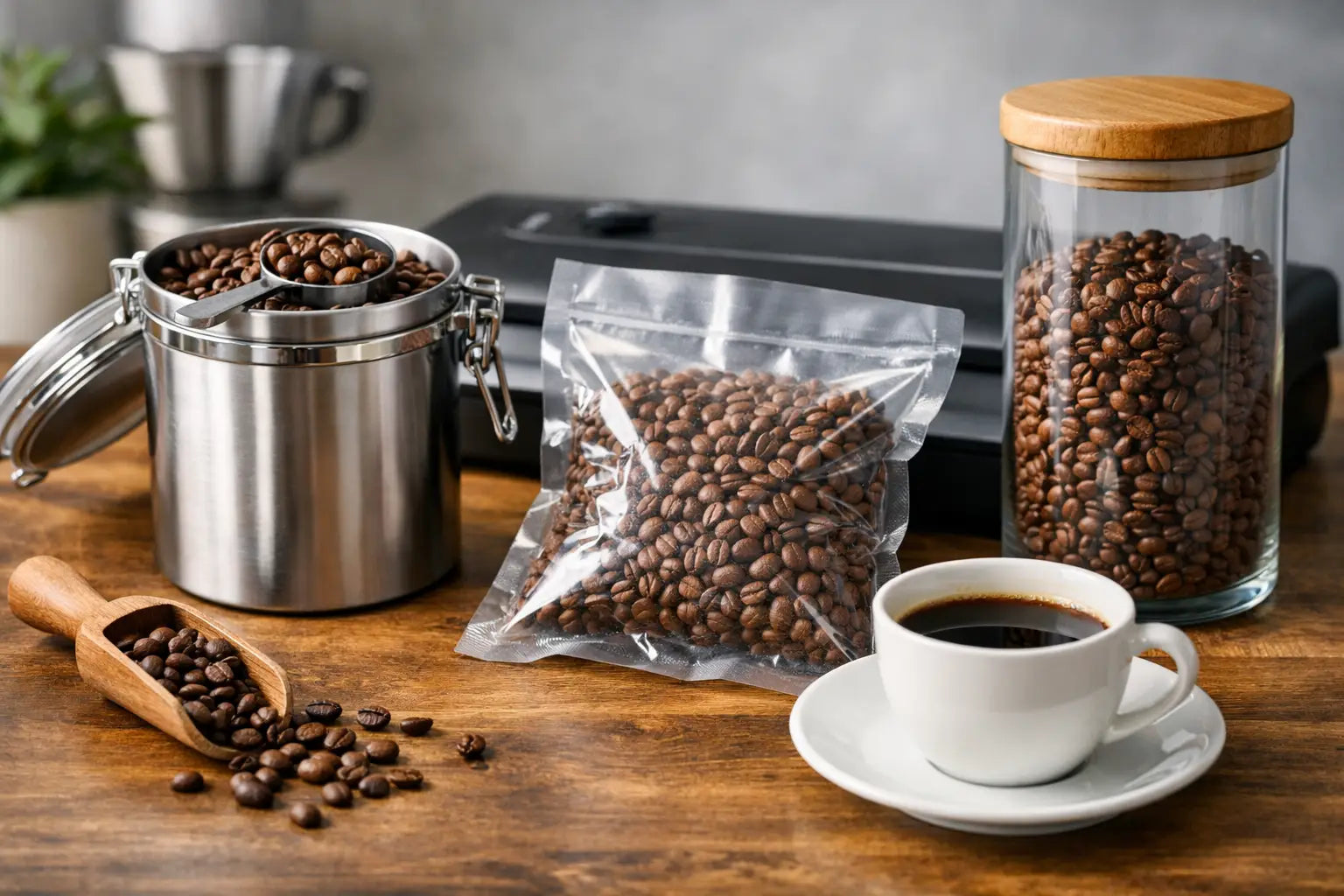
You usually do not notice it on day one, but a few days later. Suddenly the espresso has lost its energy, your filter coffee smells flatter and the sweet notes have disappeared into the background. If you are wondering how to keep coffee fresh for longer, you are almost always dealing with the same problem: good beans lose their character faster than you expect when they are stored incorrectly.
That is not a minor detail; it is exactly where flavour is won or lost. Specialty coffee has more nuance, aroma and often more sweetness than standard supermarket coffee. That is why you also notice the decline in freshness sooner. The good news is that a few smart choices keep coffee at a good level for noticeably longer.
How to keep coffee fresh for longer in practice
The short answer is simple: protect coffee from oxygen, light, heat and moisture. These are the four great flavour destroyers. Coffee does not “go bad” like milk, but it does lose aroma quickly. The volatile aroma and flavour compounds that make coffee enjoyable disappear step by step as soon as beans come into contact with air.
That is why the packaging your coffee arrives in already matters. Fresh coffee should ideally be packed in a valve bag. This allows gases to escape from the beans without continuously drawing new oxygen inside. If you then leave the beans half-open on the worktop for weeks, you undo that protection within days.
The best approach is therefore less complicated than many people think: buy freshly roasted coffee, keep the package properly closed or transfer the beans to a well-sealing storage canister, and do not open more coffee at once than you can use reasonably quickly.
Whole beans or ground coffee?
If you really want to make a difference, start here. Whole beans stay fresh significantly longer than ground coffee. As soon as coffee is ground, its surface area increases enormously. That means more contact with oxygen and therefore faster loss of aroma.
For anyone who wants the best flavour at home, the order is clear: buy whole beans, grind just before brewing and store only the amount you need in the short term. Ground coffee is convenient and sometimes simply more practical when you do not want any hassle in the morning. But that convenience almost always costs flavour. You notice it quickly, especially with espresso or filter coffee with distinctive origin notes.
If you do use ground coffee, buying small amounts is wiser than buying a large supply. A bag finished in a week usually produces a better cup than a large stock that slowly becomes flat.
The best place to store coffee
The kitchen seems logical, but is often inconvenient. Many kitchens are warm, humid and subject to large temperature changes. A spot next to the cooker, above the dishwasher or in direct sunlight is therefore a bad idea.
A dark, dry cupboard at room temperature usually works best. Not too warm, not too humid and, above all, stable. Temperature fluctuations are more troublesome than many people realise. They speed up ageing and, especially with cold storage, can cause condensation when you bring the coffee back out.
Do not store coffee in a glass jar on the worktop, however attractive it looks. There is simply too much light and air there. An opaque, airtight canister works better. Better still is a storage system that actively limits excess air. For enthusiastic home drinkers, that is not a gadget but a practical way to preserve flavour for longer.
Airtight storage helps, but not every canister is equally good
Many storage containers are mainly decorative. They close “reasonably well”, but not tightly enough to protect coffee properly. That may be fine for biscuits, but less so for freshly roasted coffee.
A good coffee storage canister closes firmly, allows as little oxygen as possible inside and is preferably opaque. Some systems use a vacuum principle or push excess air out of the canister. This is especially helpful when you have a larger quantity of beans that you will not finish within a few days.
One important detail: do not keep scooping from a large canister that you open five times a day. Fresh air enters every time. If you drink a lot of coffee, store the larger supply somewhere cool and dark and use a smaller working supply for daily use. It is tidier, more consistent and often better for flavour.
Should coffee go in the fridge or freezer?
This is where things often go wrong. The fridge is usually not a good idea. It is humid, the temperature changes and coffee easily absorbs odours from its surroundings. Nobody wants beans with a subtle aftertaste of cheese or leftovers.
The freezer is more nuanced. For daily use, freezing is usually unnecessary and often inconvenient. But if you want to keep a larger supply fresh that you will not open until later, the freezer can work—provided you do it properly. Divide the coffee into small, airtight portions that you use completely each time. This prevents the same beans from repeatedly warming up and cooling down.
Do not take a large bag out of the freezer, open it and put it back repeatedly. That introduces moisture and temperature fluctuations, which do not help the coffee. For most home drinkers, the simplest rule is best: keep what you will drink this week airtight and in the dark at room temperature. What you need much later can be frozen in individual portions.
How fresh is fresh?
Not every coffee is at its best on exactly the same day after roasting. With specialty coffee, there is often a short rest period between roasting and optimal brewing. Freshly roasted beans still release carbon dioxide. That is normal. Using them too early can sometimes give less balance, especially with espresso.
In practice, coffee often tastes very good somewhere in the first weeks after roasting, depending on the bean, roast and brewing method. Espresso usually needs a little more rest than filter coffee. After that, quality declines gradually. Not from one moment to the next, but noticeably.
“Fresh” is therefore not just a marketing word. Freshly roasted coffee that reaches your home quickly gives you more room to work with. You start closer to the flavour peak and enjoy the beans for longer, especially when you store them properly. That is precisely why coffee that has spent months in a warehouse or supermarket rarely has the same liveliness.
Packaging, quantity and buying habits make a difference
People who drink good coffee sometimes like to buy more at once. Convenient, but not always smart when freshness is a priority. One large bag may look economical, but you also open a larger quantity at once. If you do not drink much coffee, buying two or three smaller bags is often better than one bulk package.
Your routine matters too. If you drink several cups every day, you can keep a somewhat larger supply. If you only brew coffee at weekends, buying smaller amounts more frequently is often better. There is no universal ideal stock level. It depends on how much you drink, how you brew and whether you use beans or ground coffee.
For many home baristas in the Netherlands and Belgium, the best middle ground is simple: buy quality coffee that is freshly roasted, choose whole beans, store them in a proper canister and keep your supply realistic. That prevents waste and weak cups.
Small mistakes that cost a lot of flavour
Sometimes the loss does not come from one major mistake, but from a few small habits. Leaving a bag open during breakfast. Transferring beans to a pretty glass jar without a good seal. Preparing several days’ worth of ground coffee in advance. Folding the package closed and assuming that is enough.
None of these things makes the coffee undrinkable immediately. Together, however, they lead to less aroma, less energy in the flavour and less sweetness in the cup. Especially when you invest in better beans, you do not want that difference leaking away on the worktop.
If you buy seriously fresh coffee, you also need to take that freshness seriously at home. It does not have to be complicated. A good storage habit produces results faster than endlessly adjusting your recipe.
How to keep coffee fresh for longer without hassle
Keep it practical. Buy fresh coffee a little more often instead of too much at once. Store beans airtight, in the dark and somewhere dry. Grind only when you are about to brew. Use a storage canister that genuinely seals instead of one that merely looks sleek.
This gives you surprisingly large gains—not only in aroma, but also in consistency. Your espresso responds more predictably, your filter coffee stays lively and you need fewer corrections to grind size or dose. Good coffee does not have to be difficult at home as long as you treat freshness as part of brewing itself.
If you change one thing tomorrow, let it be this: do not only look at which coffee you buy, but also at what happens to those beans once they arrive at your home. That is often where the difference begins between an acceptable cup and one you remember.
Share:
How to Choose a Coffee Canister for Coffee Beans
How to Give Coffee Beans as a Gift: Choose Well