
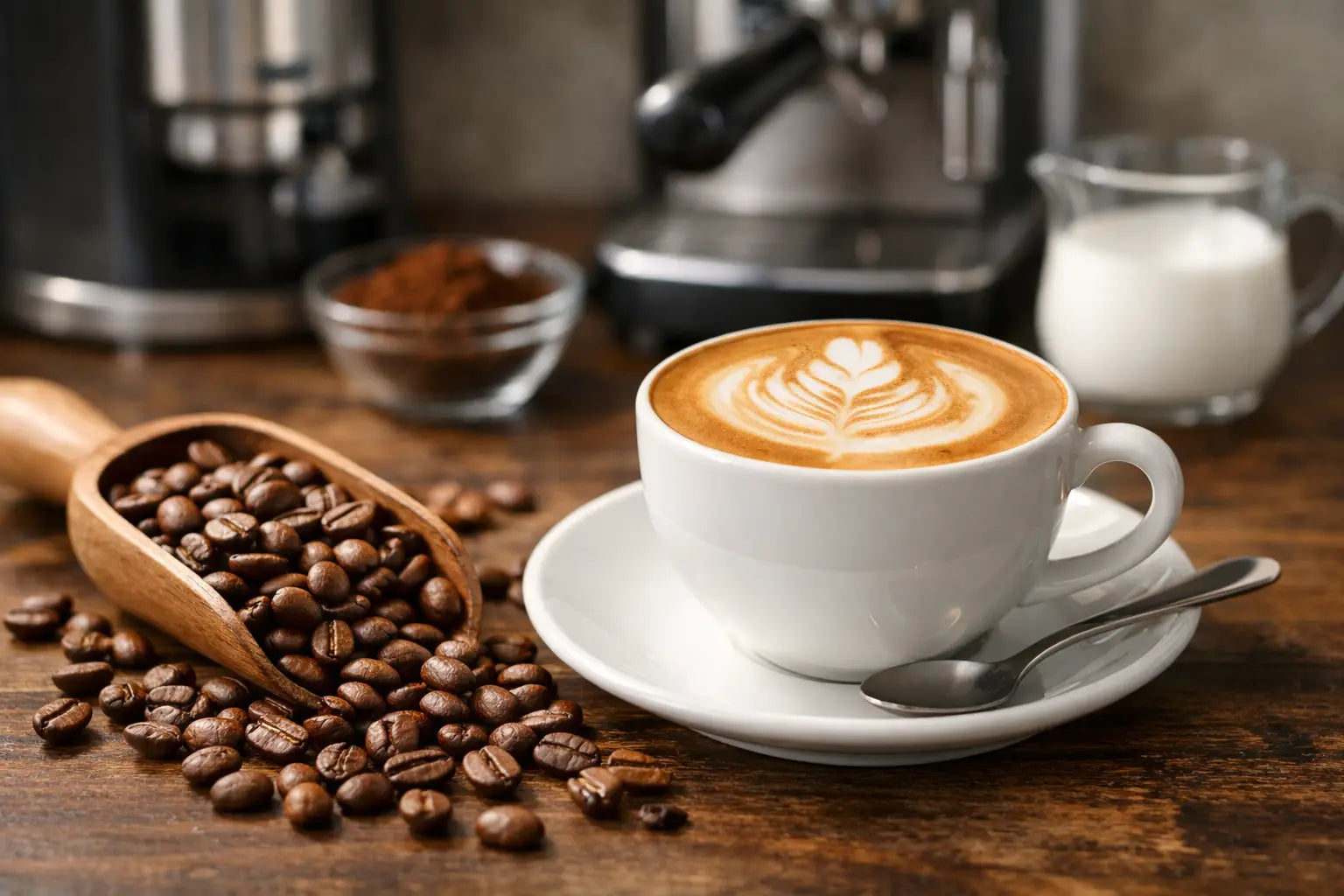
A cappuccino is not defined by the milk foam alone, but by what is underneath it. You can texture the milk perfectly, but if the espresso tastes thin, flat or stale, you will never get the full cappuccino you were hoping for. That is why the search for the best coffee beans for cappuccino starts not with latte art, but with flavour balance, freshness and the right roast.
What makes coffee beans suitable for cappuccino?
For cappuccino, you need beans that hold their own alongside milk. That sounds simple, but it is where things often go wrong. Beans that taste floral and subtle as black coffee can suddenly disappear in a cappuccino. Milk softens acidity, rounds off bitterness and places more emphasis on body and sweetness. Different flavour profiles therefore work better.
The best cappuccino beans usually have a clear foundation of chocolate, nuts, caramel or gentle spice. These are flavours that do not disappear when milk is added. An espresso with lots of citrus, jasmine or tea-like notes can be beautiful, but it often requires very precise preparation and is less forgiving in a cappuccino.
That does not mean light-roasted specialty coffee is automatically unsuitable. It does mean you should be honest about what you want in the cup. If you want a cappuccino that tastes creamy, sweet and substantial, you will usually end up with a medium to medium-dark roast. If you prefer a fresher, more modern cappuccino with more fruit and tension, you can go lighter, but that is more often a preference for enthusiasts than a safe all-round choice.
Best coffee beans for cappuccino: what should you look for?
The first factor is roast level. A medium roast often works best for cappuccino. It develops enough body, sweetness and solubility without becoming smoky or flat. Very dark roasting can go wrong too. You then mainly get bitterness and ash-like notes, which remain noticeable in milk.
Origin also matters. Brazilian beans often work very well in cappuccino because they naturally bring nutty, chocolate-like and creamy notes. Beans from Colombia or Guatemala often add freshness and complexity while remaining balanced with milk. Ethiopian coffee can be surprisingly good in a cappuccino too, but choose a profile that is not too light or floral.
The composition makes a difference as well. A blend is often the most logical choice for cappuccino. Not because single origin is inferior, but because a good blend can be built around balance. You might combine body from Brazil with extra sweetness or liveliness from Central America. This gives you an espresso that stands strongly on its own and does not disappear in milk.
Single origin can be very interesting if you enjoy tasting what one origin does in a cappuccino. Expect a more distinctive character and sometimes less forgiveness. Delicious, but not always the easiest everyday route.
Freshness is not a detail, but the foundation
Many people search for the best coffee bean and forget freshness. That is a shame, because old beans lose exactly what you need for cappuccino: crema, intensity, aromatic sweetness and body. You are left with a bland espresso, no matter how good your machine is.
You notice this especially quickly in cappuccino. Milk softens coffee, so anything that is already weak or dull becomes even flatter. Fresh beans give you more strength, texture and liveliness. That is exactly why freshly roasted specialty coffee makes such a difference at home. Not as marketing talk, but simply in your cup.
So do not look only at attractive packaging or a bold name. Look at the roast date. Beans can benefit from a few days of rest after roasting, especially for espresso, but buying months-old coffee and hoping for a full cappuccino is asking to be disappointed.
Arabica or robusta in cappuccino?
This is a subject surrounded by many simplifications. Arabica is often seen as better and robusta as harsh and cheap. The reality is less black and white.
A high-quality Arabica blend usually gives you more finesse, sweetness and flavour nuance. For specialty cappuccino, this is often the best foundation. But a small amount of good robusta can add something valuable: more crema, extra body and a stronger punch through the milk. This is especially useful if you enjoy a classic Italian cappuccino with a little more bite.
The downside is clear. Poor-quality robusta quickly tastes woody, bitter or rough. It is therefore not wise to choose an “espresso blend” blindly without looking at quality. For most home baristas who want a modern, full but clean cappuccino, a good specialty Arabica blend is the safest choice. If you want more power and a traditional profile, a blend with a modest amount of robusta may be exactly right.
How flavour profiles behave in milk
Not every delicious espresso automatically makes a delicious cappuccino. Chocolate and hazelnut often become rounder and sweeter in milk. Caramel notes create a dessert-like effect that many people enjoy. A touch of red fruit can be exciting as long as it does not become too sour.
What works less well for a broad audience are very light, strongly floral or wine-like coffees. They can taste sharp or out of place in a cappuccino. Some people find that interesting, but if you simply want a cappuccino that works every morning, classic comfort flavours are usually the better choice.
A useful rule of thumb is this: if your espresso already tastes thin, sour or very fragile without milk, it rarely improves in a cappuccino. If it tastes compact, sweet and clear enough, you have a much better chance.
Choosing the best coffee beans for cappuccino at home
At home, bean quality is not the only consideration. You also need coffee that is forgiving. In a coffee shop, top equipment and experience allow you to correct a lot. At home, you want beans that still perform well when your morning starts a little chaotically.
That is why medium-roasted espresso blends are the smartest choice for many people. They are usually easier to dial in, produce more stable shots and combine well with regular cow’s milk as well as plant-based alternatives. This matters increasingly because oat milk behaves differently from whole milk. Sweeter, fuller beans often suit it better than very bright coffees.
If you use an automatic coffee machine, this is even more important. Such machines often extract less nuance from light roasts, so a bean with enough body and development is more logical. If you work with an espresso machine, you can play more precisely with extraction and use more adventurous beans, but that does not necessarily make the result better. The best bean is ultimately the one that tastes consistently good in your setup.
Common mistakes with cappuccino beans
A classic mistake is choosing beans based on intensity numbers on the packaging. They do not always tell you anything useful about flavour in cappuccino. “Strong” can mean dark and bitter, while you may actually be looking for something sweet, full and balanced.
Another mistake is grinding too coarsely or brewing too quickly. Then the milk gets the blame while the espresso is actually under-extracted. Poor storage matters too. Do not leave beans open in the kitchen next to heat, light and air. You lose flavour before you even begin.
Good storage is not a detail for fanatics, but simple common sense. Fresh beans stay at their best longer when stored airtight and in the dark. This is especially relevant if you buy a larger supply for home in one go.
Which choice suits your cappuccino?
If you like a classic cappuccino with plenty of body, choose a medium to medium-dark blend with notes of chocolate, nuts and caramel. It is the safe, strong route. If you prefer a cappuccino that tastes fresher and more modern, look for a blend or single origin with more fruity liveliness, as long as the body remains present.
If you are taking coffee more seriously and want less guesswork, freshly roasted specialty coffee is almost always a better investment than a random supermarket bag that has been sitting on a shelf for a long time. That is often the real difference, even before you start talking about machine settings or milk texture.
For many home drinkers, a genuinely fresh espresso blend is ultimately the smartest choice. Not because it is the only right option, but because it gives you the best chance of a cappuccino that tastes full, sweet and reliably good. That is what most people hope for in the morning.
If you want to test what works for you, do not change everything at once. Start with fresh beans in a profile that suits milk, dial in your grind properly and taste with attention. The best cappuccino rarely comes from chance. It usually starts with better beans.
Share:
How to Order Freshly Roasted Coffee Without Guesswork
CoffeeVac Review for Coffee Beans: Does It Work?