
You know immediately when you have chosen the wrong beans: an espresso that turns sour, a cappuccino that disappears behind the milk or filter coffee that stays flat and dull. How do you choose coffee beans when the selection is large and almost every package makes claims about flavour, intensity and quality? The short answer: do not rely on marketing terms alone. Focus on a few choices that genuinely affect your cup.
There is no single best coffee bean. The right bean depends on how you brew, what you enjoy and how fresh the coffee is. That may sound less romantic than a story about origin, but it gets you to coffee that tastes genuinely good at home much faster.
How to choose coffee beans without guessing
Start not with the packaging, but with your own taste. Ask yourself what you want to taste. If you like chocolate, nuts and full body, you will usually end up with a medium to dark roast, often well suited to espresso and milk drinks. If you prefer fresh, fruity or floral notes, a lighter roast is often more interesting, especially for filter coffee.
Many people buy beans as if they are reading wine labels: country of origin, altitude, processing method and an impressive story. That can be fun, but it is not always the most useful starting point. If you do not know whether you prefer round and sweet or lively and complex, you are still guessing. Flavour profile first, details afterwards — that works better in practice.
Choose for your brewing method, not just your taste
The same bean can be excellent in a filter machine and disappointing in an automatic machine. The reverse can also happen. Always connect your choice of beans to your brewing method.
For espresso and automatic machines
Espresso needs balance, sweetness and enough body. In an automatic machine, this is even more important because you have less control over extraction than with an espresso machine. Beans with chocolate, caramel, nut or a little red-fruit character often work well. A very light roast can quickly taste sour or thin in many automatic machines.
That does not mean light roast is bad. It mainly means your equipment determines how much room you have for adjustment. If you mainly drink cappuccino, flat white or lungo at home, medium-roasted specialty coffee is usually a safer choice than extremely light, complex beans.
For filter coffee
With filter coffee, the beans can be more lively. Light roast reveals more of the origin and fresh notes. Think citrus, stone fruit, tea-like elegance or berries. If you drink coffee black and enjoy nuance, it is worth looking beyond intensity.
Light is not automatically better here either. A roast that is too light can taste underdeveloped or be difficult to brew well without the right grind and recipe. Good filter coffee is clear and sweet, not merely sour.
Arabica, robusta and the missing nuance
Packaging often says 100% Arabica as if that automatically means superior quality. Arabica is usually more refined, aromatic and complex than robusta, but reality is less black and white. Good robusta can add body, crema and power, especially in espresso blends.
For most home drinkers looking for quality, specialty Arabica is the logical starting point. Not because robusta is forbidden, but because you are more likely to get cleaner flavours and more sweetness. If you are buying coffee for everyday home use and want to avoid bitter, rough flavours, specialty-grade Arabica is usually the safest choice.
Freshness is not a detail but the foundation
You can choose the perfect bean on paper, but if it is old, little remains. Coffee beans taste best when freshly roasted rather than after months in a warehouse or supermarket. With specialty coffee especially, the difference is substantial: more aroma, sweetness and liveliness.
Do not look only at the best-before date. Look for the roast date. An unclear best-before date tells you little; a clear roast date tells you much more. For most home users, the ideal window begins after a short resting period and remains well within the first weeks. Exact timing depends on the bean and method, but the principle is simple: the fresher and better stored the coffee, the better your chance of flavour.
That is why genuinely fresh coffee is not marketing talk, but relevant. When beans are roasted after you order, you start with an advantage.
Roast level matters more than many people think
To understand how to choose coffee beans, you need to understand roasting. The roaster controls not only colour, but also flavour, solubility and mouthfeel.
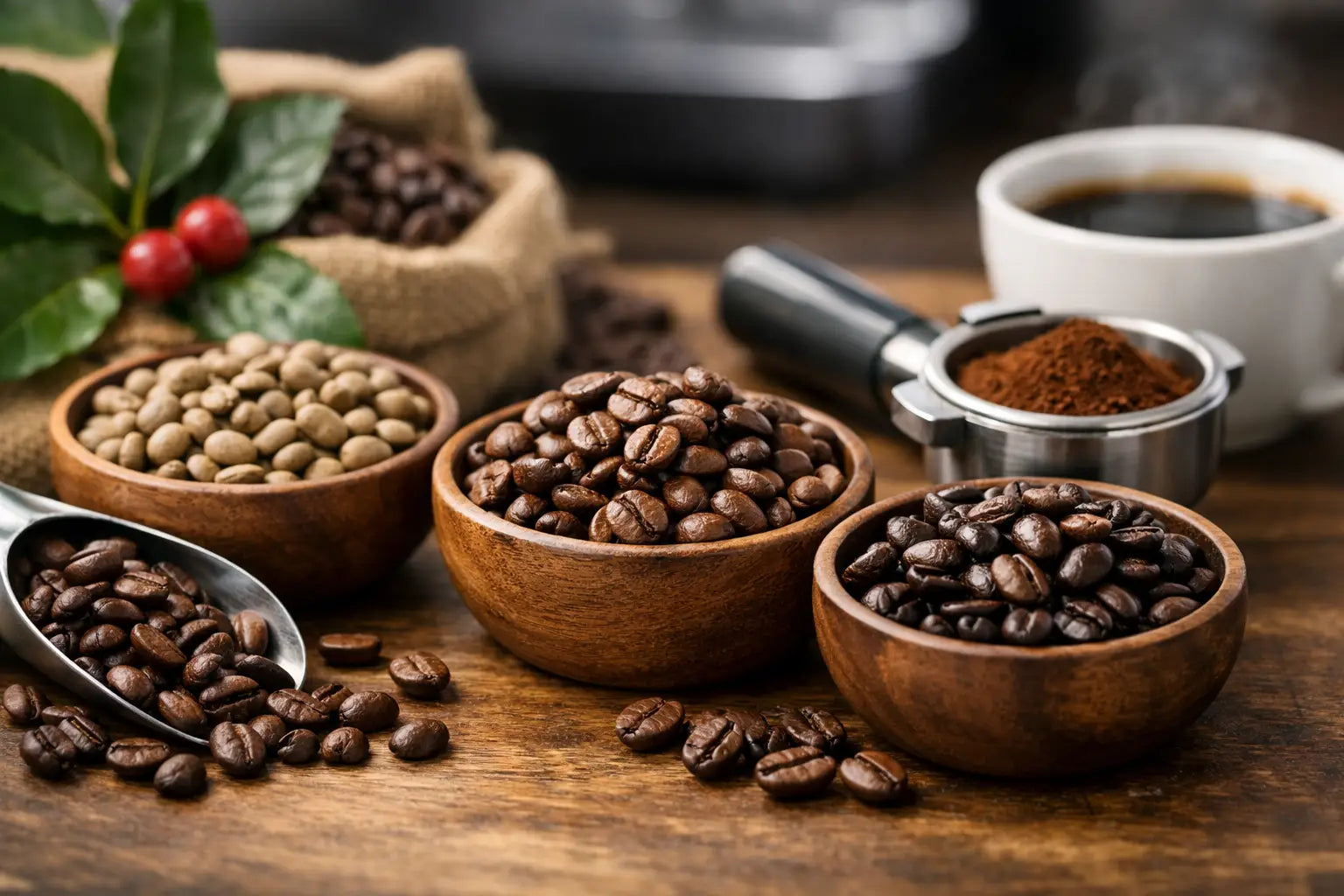
Light roast preserves more of the bean’s original characteristics. You taste more fruit, floral notes and acidity. Medium roast often offers the best balance between origin and sweetness. Dark roast moves towards cacao, roasted nuts and bitterness, while finer nuances may disappear.
There is no single best roast level. Dark can be delicious in milk drinks but flat in filter coffee. Light can be spectacular in a V60 but difficult in an automatic machine. If you want everyday convenience and consistent results, the middle often feels most comfortable.
Origin is useful when you know what it tells you
Once the basics are right, origin becomes interesting — not as a status symbol, but as a flavour compass. Brazilian coffees are often nutty, chocolatey and soft. Ethiopian coffees can be floral, citrusy or berry-like. Colombia often sits between freshness and sweetness. Guatemala and Costa Rica often produce clear, balanced cups.
Do not treat this as a hard rule. Processing, variety and roasting matter just as much. But once you know what you like, origin helps you choose more deliberately. If you loved a round, sweet Brazilian espresso, you are more likely to enjoy that direction than an ultra-fruity washed Ethiopian coffee.
Look for these quality signals
Good coffee often reveals itself through the transparency of the supplier. Is there a roast date? Does the supplier explain the flavour profile, roast and brewing advice? Is it clearly specialty coffee, or only described with general claims such as premium and intense? The more concrete the information, the smaller the chance that you are buying an anonymous bulk bean wrapped in a good story.
Whole beans are also preferable when possible. Pre-ground coffee loses aroma faster. With your own grinder, you get more from fresh coffee and can match the grind to your method. If you do not have one, have only the amount you will use soon ground.
How should beginners choose coffee beans?
Keep it simple. Choose a medium-roasted specialty coffee with chocolate, nut and caramel notes. This profile is forgiving, versatile and immediately enjoyable for many people. It is usually a good fit for an automatic machine, moka pot or espresso machine.
From there, explore. If you want more freshness, go a little lighter. If you want more power in milk drinks, choose something fuller or darker. If you drink black coffee and are curious, try a fruity single-origin filter coffee. Your taste develops faster than you think, as long as you do not order something completely random every time.
Storage makes the difference after purchase
Even good beans become mediocre when stored badly. Light, heat, oxygen and moisture are the main flavour destroyers. Store coffee sealed, dark and at room temperature. Not in the fridge, where it is exposed to moisture and odours.
A good storage canister or vacuum container really helps, especially when buying a larger amount. It is not a gadget for enthusiasts, but a practical way to preserve freshness for longer. Buy an amount you can finish within a few weeks rather than a huge bag that takes two months.
Ultimately, choosing coffee beans is not a question you solve once. It is a way of tasting and adjusting. Start with your brewing method, choose by flavour profile, pay attention to freshness and do not be afraid to change course when a bean behaves differently at home than expected. Good coffee does not need to be complicated — it needs to be honest, fresh and suited to the way you drink it every day.
Share:
How to Choose Coffee Beans for an Automatic Machine
How to Recognise Real Specialty Coffee