
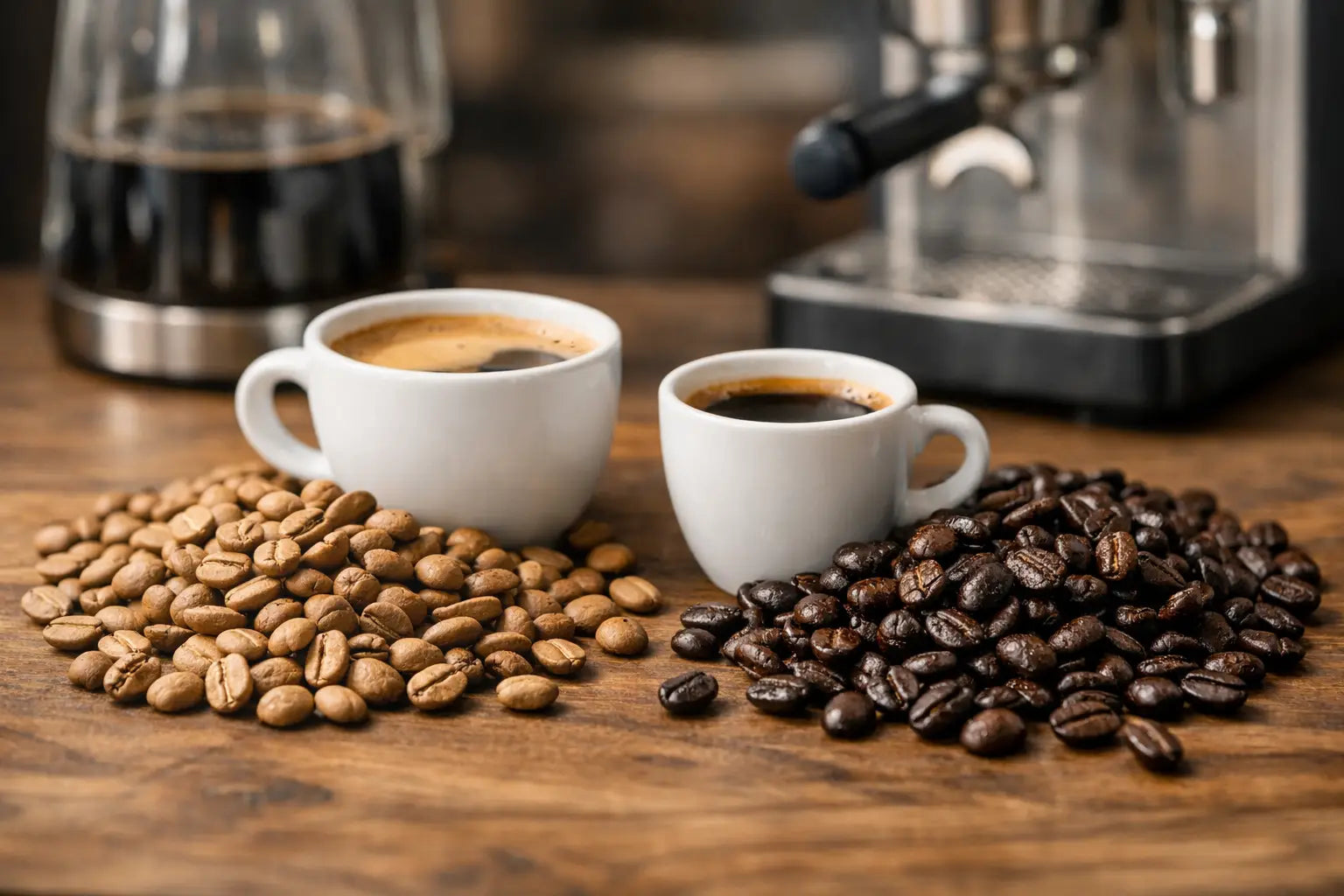
You often taste it from the first sip: light or dark roast is not a minor detail, but largely determines how your coffee tastes. One bean gives you bright acidity and fruit, while another offers chocolate, nuts and more body. The difference is often explained too simply: dark is stronger, light is more acidic, end of story. In practice, it is more nuanced.
Light or dark roast — what is the real difference?
Roasting is the process in which green coffee beans change through heat into the brown beans you know. Aromas develop, sugars caramelise and the balance between acidity, sweetness and bitterness shifts. The longer and further you roast, the more the bean’s original characteristics give way to flavours created by the roast.
With light-roasted coffee, the origin usually remains clearer. Think floral notes, citrus, red fruit or stone fruit, depending on the bean and processing. The coffee often tastes livelier, fresher and more complex.
With dark-roasted coffee, the profile shifts. Acidity decreases, bitterness increases and the flavours become deeper and heavier. You taste cacao, dark chocolate, roasted nuts or caramel more quickly. Roast even further and you move towards smoky and burnt notes.
That does not mean dark is automatically worse or light automatically better. It mainly means you get something different in your cup.
Why light roast is not necessarily milder
A persistent misconception is that a light roast produces weak coffee and a dark roast strong coffee. It sounds logical, but is not really correct. Strength in the cup mainly depends on dose, grind, brewing method and extraction.
A light-roasted filter coffee can taste very distinctive, sometimes even more intense than a dark roast, just in a different way. You get fewer heavy bitters and more tension, freshness and detail. If you are used to a supermarket blend or classic espresso, this may initially taste “sour”. Often it is actually lively acidity — the kind of freshness that makes coffee interesting rather than flat.
Dark roast is often experienced as stronger because the flavour is heavier, more bitter and fuller. That mouthfeel creates a powerful impression, but says nothing about how much caffeine the coffee contains or how much coffee was used.
What roasting does to flavour
If you want to choose between light and dark roast, first consider what you want to taste, not what you think you should choose.
Light roast often suits drinkers who value nuance. It is easier to taste differences between Ethiopia, Colombia and Kenya. The bean tells more of its own story. That is why much specialty coffee is roasted lighter than what you know from the supermarket: not to be fashionable, but to make quality visible in the flavour.
Medium roast sits beautifully between the two. You retain some origin character, while gaining more roundness and sweetness from the roast. For many home drinkers, it is the most forgiving choice, especially when switching between filter and automatic machines.
Dark roast is attractive if you like a sturdy, familiar profile. Less playful, more comforting. Think flavours that hold up well in milk drinks and espresso with a classic Italian character. It absolutely has its place, as long as the roast does not go so far that everything tastes bitter and smoky.
Light or dark roast by brewing method
The right roast also depends on how you brew. The same bean behaves very differently in a V60, automatic machine or espresso machine.
Filter coffee
Light to medium roasts are often at their best for filter coffee. The longer brewing time and clear extraction reveal complex flavours well. You taste more fruit, flowers and fresh sweetness. This can be beautiful if you drink your coffee black.
If you prefer round, nutty filter coffee without much acidity, a medium roast may be smarter than a very light roast. Not everyone wants excitement in every mug.
Espresso
For espresso, the answer is less black and white. A light roast can be fantastic, with lots of sweetness and lively fruit, but it demands more from your recipe. Grind size, water temperature and extraction time need to be right or it quickly becomes sharp or thin.
A medium to medium-dark roast is often more accessible: more body, more balance and easier to dial in. That is why it works better as a daily espresso for many home baristas.
Automatic coffee machines
Medium or slightly darker roasts usually work best in automatic machines. Not because light roast is impossible, but because automatic machines offer less control over extraction. A very light bean may then taste under-extracted — sour, grassy or flat.
To get the most from an automatic machine, choose beans that are sufficiently developed in the roast but not oily and excessively dark. Very dark roasting can cause flavour problems and contribute to machine residue.
Milk drinks
If you mainly drink cappuccino or flat whites, the coffee can be a little more robust. Milk softens acidity and emphasises sweetness. Coffee with chocolate, caramel and nut notes often holds up better than a very floral light roast. It is not a law, but it is a useful rule of thumb.
When dark roast is a less suitable choice
Dark roast has its place, but it also has drawbacks. The further you roast, the more origin characteristics can disappear. A distinctive single origin from a high altitude may end up simply tasting “dark”. That is a shame when you bought the bean for its quality, terroir and processing.
Dark roasting is also sometimes used to hide lower-quality coffee. Bitterness, smoke and heaviness can mask defects. With good specialty coffee, that is unnecessary. You want the bean itself to have something to say.
Also distinguish between dark and burnt. A dark roast can be well balanced. Burnt coffee tastes of ash, charcoal and harsh bitterness. That is not a style you need to learn to appreciate; it has simply gone too far.
When light roast is not ideal
Light roast sounds attractive if you like specialty coffee, but it still needs to suit your taste and brewing habits. If you mainly want a strong cup from an automatic machine without much adjustment, a very light roast may not be enjoyable.
If you are sensitive to bright acidity, an ultra-light roast can also become tiring as an everyday coffee, especially on an empty stomach or in large mugs. A medium roast may then be the better purchase: still lively, but more accessible and rounded.
The same applies to beginners. You do not have to choose the lightest roast to drink good coffee. A good medium roast already shows how much more flavour fresh specialty beans contain than standard supermarket coffee.
How to choose intelligently between light and dark
Do not start with words such as “expert” or “premium”, but with your own cup. If you drink black coffee and want more detail, freshness and origin, look towards light to medium roast. If you drink espresso or milk drinks and enjoy chocolate, nuts and body, medium to slightly darker roast is often a good fit.
Freshness matters more than many people realise. A genuinely fresh medium roast often tastes better than an old light roast of excellent quality. Coffee depends on roast date, storage and the right grind. Choose freshly roasted beans and store them properly.
Do not try to reduce everything to one flavour word. “Sour” can be juicy and elegant or unripe and sharp. “Bitter” can be pleasantly deep or simply harsh. Bean quality and roasting precision matter at least as much as light or dark roast itself.
The best choice is the roast you keep brewing
There is no moral winner in the light-versus-dark-roast debate. There is, however, a clear difference between coffee roasted deliberately for flavour and coffee taken too dark because it sells easily. Good roasting is not about extremes, but about giving the bean exactly enough development to show its best side.
If you want to drink better coffee at home, that is perhaps the most useful way to look at it: do not search for the darkest or lightest bean, but for the roast that suits your taste, machine and rhythm. Every cup then becomes not only better, but more consistent. You can taste that every morning.
Share:
Buy Coffee Beans with Fast Delivery
How to Choose Decaf Beans for Espresso Without Losing Flavour