
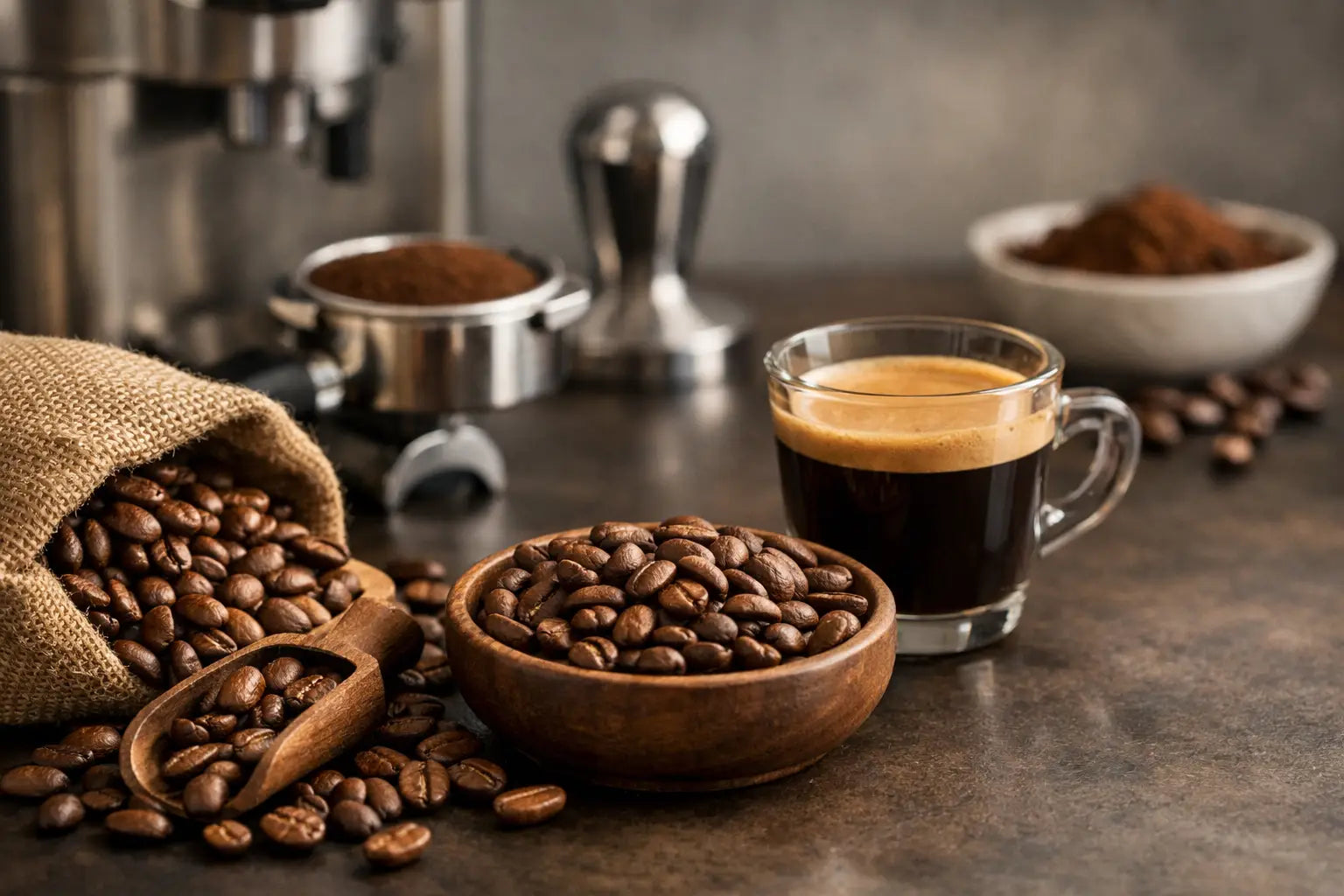
An espresso without caffeine still sounds like a compromise to some coffee drinkers. Understandably so, because many people mainly know flat, bitter decaf from the supermarket. But good decaf beans for espresso can taste surprisingly full, sweet and clean — as long as you know what to look for.
For home brewing, the difference is significant. Espresso magnifies everything: body, bitterness, sweetness, acidity and flaws. Beans that taste fine as filter coffee can fall apart in espresso. Decaf therefore does not automatically work well in every machine or for every taste. The bean, roast and freshness all need to be right.
Why decaf espresso beans are often underestimated
Removing caffeine is not a neutral step. During decaffeination, the structure of the bean changes, affecting how the coffee roasts and extracts. Decaf beans can become more brittle, react differently to heat and be more sensitive to uneven extraction.
That is why cheap decaf so often disappoints. If the green coffee is already average and the roast is mainly intended to hide defects, the result tastes harsh, woody or empty. In espresso, you notice this especially strongly. You may get crema, but no real depth.
With specialty decaf, it is different. It starts with better origins, careful decaffeination and a roast that respects the bean’s character. The result is not a weak alternative, but a serious espresso with chocolate, nuts, caramel or even fruit notes, depending on the style.
What to look for in decaf beans for espresso
If you want genuinely good decaf espresso at home, look beyond the word decaf on the packaging. The first question is how the coffee tastes, not just whether its caffeine has been removed.
An espresso bean needs enough solubility and body. This usually means a slightly more developed roast works well, as long as it does not become burnt or smoky. You are looking for balance: enough power for a full shot, but still sweetness and definition in the finish.
Freshness also matters more than many people realise. Decaf beans often age a little faster in terms of flavour. For espresso, avoid beans that have been sitting around for months. Genuinely fresh roasting makes a real difference, especially when using a semi-automatic or automatic machine and looking for consistent results.
Pay attention to the flavour profile too. Chocolate, hazelnut and caramel work very well in milk drinks such as cappuccino or flat white. If you prefer straight espresso, more complexity can be welcome as long as the bean is not too lightly roasted. Very light decaf can quickly taste thin or unsettled in espresso.
The influence of the decaffeination method
Not all decaf coffee is made caffeine-free in the same way. This does not tell you everything about quality, but it helps set expectations.
The Swiss Water process is known for a clean flavour and appeals to many specialty lovers. Sugarcane or EA decaf is also popular because it often produces a sweeter, livelier profile. Which method is better depends less on marketing and more on the complete chain: green bean quality, process precision and the roast that follows.
For espresso, the most important thing is that the coffee retains its body. Some decafs are technically well processed but simply lack energy in the cup. Others deliver such a round, full shot that you would hardly identify them as decaf in a blind tasting. That is why tasting remains more important than the label.
Which roast works best for espresso?
Many home baristas think darker is always better for espresso. That is only partly true. A roast that is too light can be difficult to dial in and turn sour or watery, but a roast that is too dark removes all nuance and leaves mainly bitterness.
For most home espresso machines, a medium to medium-dark roast is the most comfortable choice. It provides enough solubility for a syrupy shot while leaving room for sweetness and recognisable flavour notes. With decaf especially, this middle ground is valuable. Espresso should be powerful, not heavy.
This is even more relevant with automatic machines, which generally extract less from very light beans. A well-roasted decaf with approachable body and low sharpness gives you the best chance of a rich espresso without hassle.
How to dial in decaf espresso
Decaf beans often need a slightly different approach from regular espresso. That does not make them difficult, but you should not blindly copy your standard recipe.
Start with a slightly finer grind than usual and watch the extraction time carefully. Decaf can react differently to water, so extraction may be quicker or less predictable. A useful starting point is 18 grams in and around 36 grams out in 25 to 30 seconds. Then taste and adjust.
If the espresso tastes thin and sharp, grind finer or reduce the output. If it tastes dry and bitter, go a little coarser or shorten the shot. Small adjustments can have a large effect with decaf. That is not a disadvantage; it simply means freshly roasted beans reward attention.
Let the coffee rest for a while after roasting too. Extremely fresh beans can create unsettled espresso, while a few extra days often bring more balance. At the same time, do not wait until the bean has lost its freshness. This is why ordering fresh and storing well matter so much.
Storage matters more than many people think
An excellent decaf can taste average very quickly if stored poorly. Oxygen, light, heat and moisture are the main flavour destroyers. If you buy a kilo because it is practical or better value, protect the beans properly.
Store them airtight, cool and dark, but not in the fridge. That creates a greater risk of condensation and odour transfer than of preserving quality. A good storage canister that keeps air out is often the best home solution. Your espresso stays more stable and you need to adjust the grind less often.
Buy at a pace that matches your consumption. If you drink decaf only in the evening or occasionally, smaller amounts that are used quickly are better than a large bag that slowly declines.
Who should choose decaf espresso beans?
Not only people who want to avoid caffeine completely. Serious coffee drinkers often benefit from having good decaf available. Think of an espresso after dinner, an extra cappuccino during a long workday or a second coffee without lying awake later.
Decaf is also practical in households with different preferences. One person wants intensity, another wants calm. With good decaf, you do not have to fall back on inferior coffee. That makes it a grown-up choice, not an emergency solution.
There is a price difference. Good decaf often costs a little more because of the additional processing and the requirements for roasting and selection. But per cup, the difference is small compared with the gain in flavour and enjoyment.
How to recognise genuinely good decaf at home
Good decaf espresso beans are rarely identified by grand claims. Look for a clear roast date, a clear flavour profile, origin information and a roast visibly suited to espresso. If the supplier also communicates honestly about freshness and storage, it usually takes coffee seriously.
For home brewing, only one question ultimately matters: do you get an espresso you look forward to, even without caffeine? If the answer is yes, you have found the right bean. Not because it says decaf on the bag, but because the coffee is simply good.
Once you taste genuinely good decaf espresso, the old image feels outdated. Decaf does not have to be flat, bitter or timid. It simply needs to be fresh, intelligently roasted and well brewed — and then you have a shot you would happily make again even late at night.
Share:
Light or Dark Roast: Which Suits You?
How to Choose Coffee Beans for an Automatic Machine