Welcome to Eddy's Coffee, home of Kneiterverse Coffee Beans. In our Specialty Coffee webshop, we select coffees from around the world and roast your chosen beans fresh after you order. Order before 23:59 and your coffee will be delivered the day after tomorrow. We aim for 100% customer satisfaction; you can also read our verified WebwinkelKeur reviews.
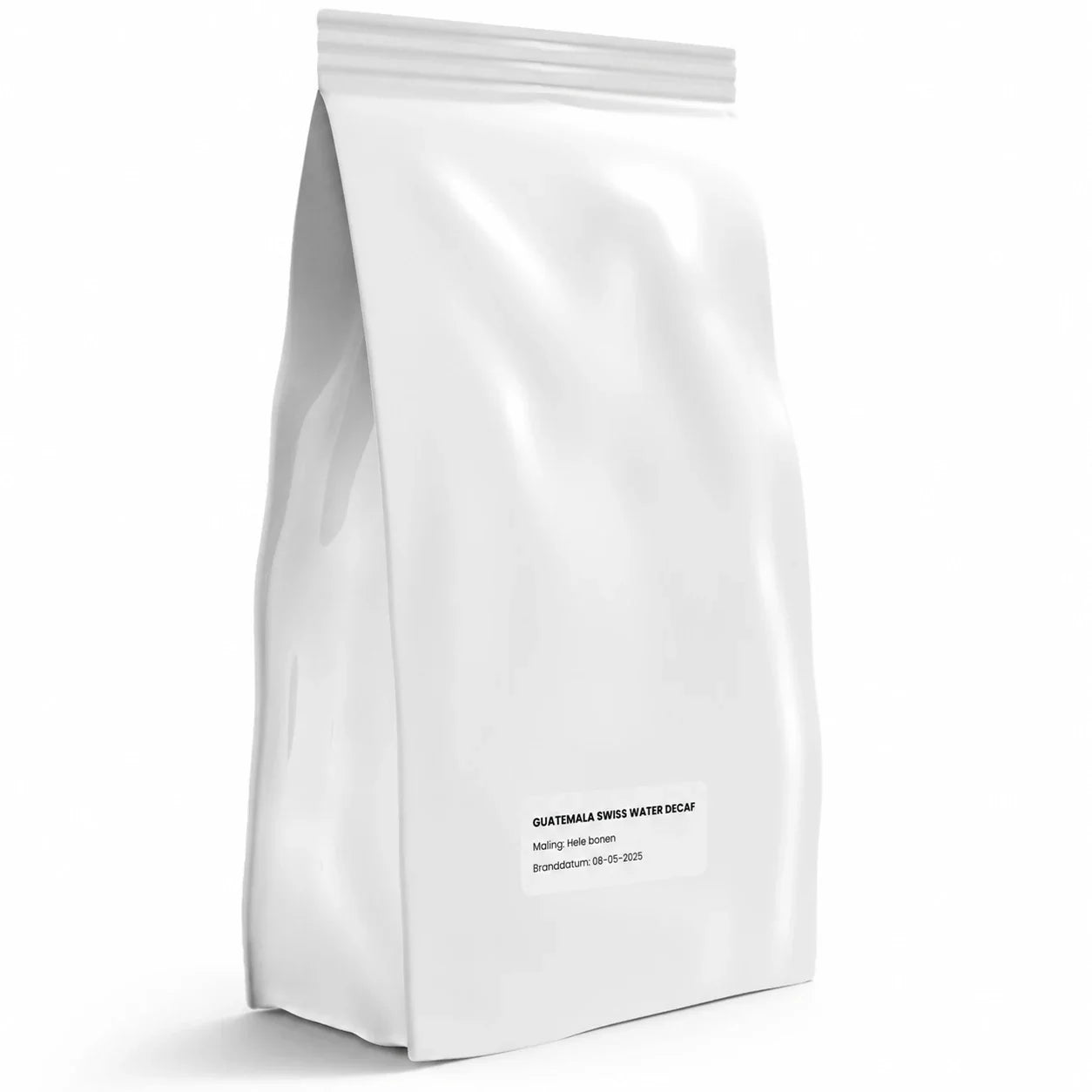
Please note: this temporary alternative to the Peru Swiss Water Decaf is supplied in plain packaging showing the coffee name, roast date and grind type.
Guatemala Swiss Water Decaf
What is Guatemala Swiss Water Decaf?
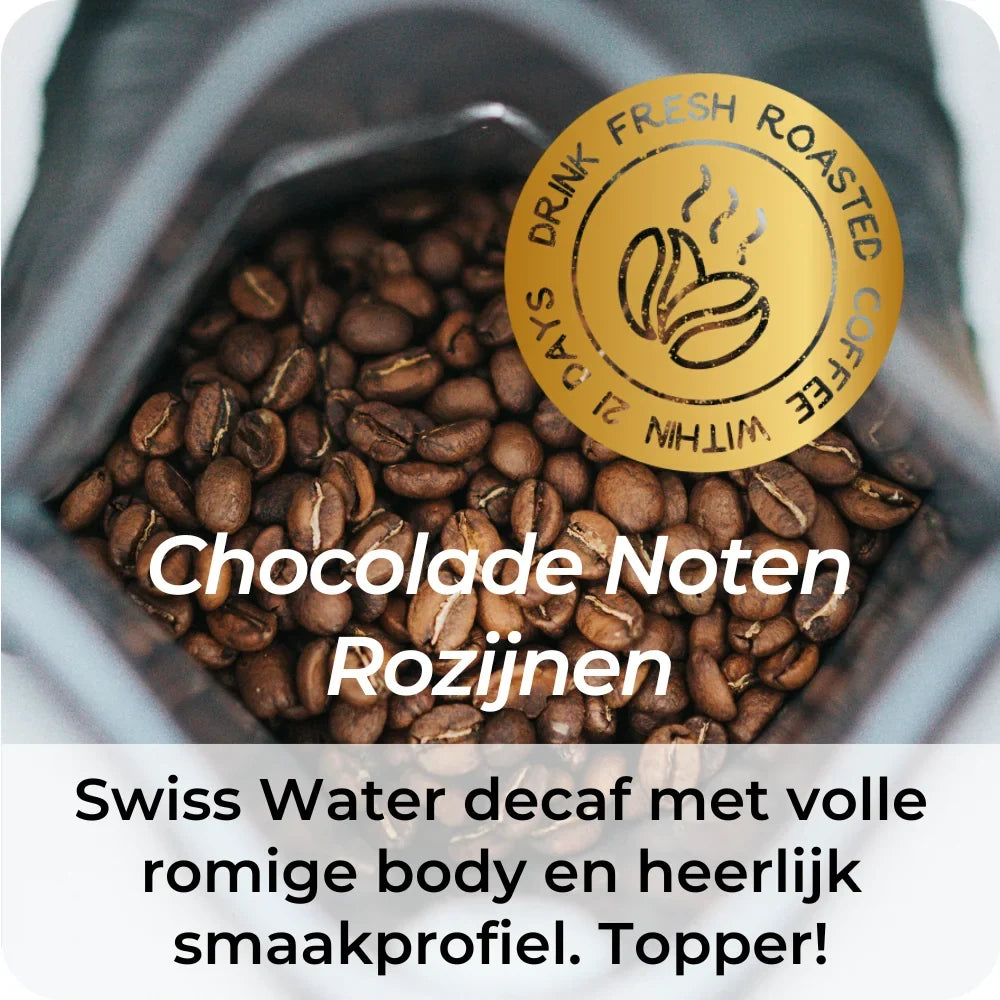
Full and creamy · Chocolate · Nuts · Lightly sweet raisins
Guatemala Swiss Water Decaf is a decaffeinated coffee without compromising on flavour. It has a full, creamy and approachable profile with clear notes of chocolate and nuts, gentle sweetness and raisin nuances in the finish. The coffee is rich enough for espresso, yet soft enough for a lungo, cappuccino, filter coffee or moka pot. You get a full coffee experience without the watery impression that can occur with some decaffeinated coffees.
A carefully composed selection from Guatemala
This coffee is made from carefully selected Arabica coffees from different farms and regions in Guatemala. The beans grow at different altitudes and include different varieties. It is therefore not a single origin from one specific farm, but a carefully composed selection in which quality, flavour and consistency come first. Because the coffee combines several origins, it would not be accurate to attach one farmer, finca, altitude or variety to the entire product.
Soft, sweet and well balanced
Compared with our Peru Swiss Water Decaf, the Guatemala is slightly sweeter, while the Peru has a more pronounced nutty character. In terms of strength and accessibility, the two coffees are close. This makes Guatemala a good option for people who enjoy Peru Swiss Water Decaf and need a temporary alternative. Guatemala is not certified organic in its country of origin; it is selected for quality and consistency.
Read more about the Peru Swiss Water Decaf and compare the available coffees in the decaf coffee collection.
Decaffeinated with the Swiss Water Process®
The caffeine is removed from the green coffee beans using the Swiss Water Process®. Despite its name, the process does not take place in Switzerland: the technique originated there, while the company behind Swiss Water Process® is now Canadian.
The method uses water, temperature and time rather than chemical solvents. First, an extract is made from green coffee. This extract contains the coffee's natural flavour components, but the caffeine has been removed with carbon filters. New green coffee beans are then immersed in the extract. Because the extract already contains many flavour compounds and oils, mainly caffeine moves out of the new beans while their flavour is retained.
The green-coffee extract is filtered again and passed back through the beans. This cycle is repeated for approximately 8 to 10 hours until around 99.9% of the caffeine has been removed. Decaf therefore does not technically mean that every final caffeine molecule is gone. Anyone who must avoid every trace of caffeine for medical reasons should discuss that with a doctor or healthcare professional.
The result is a decaf that tastes the way coffee should taste: full, creamy and rich in flavour, but with virtually no caffeine.
How to brew Guatemala Swiss Water Decaf
This coffee is available as whole beans, filter grind, espresso grind, cafetière grind and moka-pot grind. Choose whole beans if you grind at home and want to adjust the grind for each method. Choose the matching ground option if you want to brew straight away.
Espresso and fully automatic machines
The coffee works in both a portafilter machine and a fully automatic machine. Its full body and creamy texture give espresso, cappuccino and latte enough structure. Decaf often needs a different setting on each machine, so start with a consistent recipe and change one variable at a time.
If the espresso tastes sour or thin, try a slightly finer grind or a longer extraction. If it tastes bitter, dry or heavy, grind a little coarser or shorten the extraction. Customer experiences range from easy and flavourful to more difficult to dial in; grind, dose, water, temperature and machine all affect the cup.
Filter coffee, cafetière and moka pot
As filter coffee, the gentle sweetness and chocolate base come through clearly. In a cafetière, a coarse grind and sufficient contact time add body. A moka pot makes the coffee more intense while keeping the chocolate and nut notes recognizable. The coffee also works well in milk drinks because its creamy body remains present alongside milk.
Ideally, grind only the amount you need. Store the rest airtight, dry and away from direct sunlight. Coffee needs time to degas after roasting, so especially for espresso it can help to let the beans rest for a few days before making final grind adjustments.
What customers experience
In the customer feedback we collected, Guatemala Swiss Water Decaf is often described as full, rounded and flavourful, with little of the typical decaf impression. Customers mention its creamy character, soft finish and the fact that it tastes better than many supermarket alternatives. Several drinkers use it for espresso, moka pot, milk drinks and coffee later in the day.
People who want to reduce caffeine or still enjoy coffee in the evening also describe it as a comfortable alternative. Some customers say they can hardly distinguish it from regular coffee. These are personal experiences rather than a guarantee for every palate.
The feedback is not completely uniform. Some customers experience acidity or find the espresso difficult to dial in, even after adjusting grind, temperature and ratio. We therefore present this coffee as a versatile decaf with a soft, full base, not as a coffee that will be perfect on every machine without adjustment.
Guatemala Swiss Water Decaf at a glance
- Flavour: chocolate, nuts and lightly sweet raisins in the finish
- Body: full and creamy
- Character: soft, lightly sweet, approachable and balanced
- Origin: selection of Arabica coffees from several regions and farms in Guatemala
- Decaffeination: Swiss Water Process®
- Caffeine removed: approximately 99.9%
- Uses: espresso, lungo, cappuccino, filter coffee, cafetière and moka pot
- Best for: coffee drinkers who want less caffeine, coffee in the evening or a versatile decaf
Product specifications
| Property | Information |
|---|
| Product | Guatemala Swiss Water Decaf coffee beans |
| Country | Guatemala |
| Origin type | Selection from several regions and farms |
| Coffee type | Arabica |
| Decaffeination | Swiss Water Process® |
| Process | Water, temperature and time; no chemical solvents |
| Caffeine removed | Approximately 99.9% |
| Flavour profile | Chocolate, nuts and raisins in the finish |
| Body | Full and creamy |
| Available sizes | 250 grams and 1 kilogram |
| Available grinds | Whole beans, filter, espresso, cafetière and moka pot |
When should you choose this coffee?
Choose Guatemala Swiss Water Decaf when you want a full, creamy decaf that works across several brewing methods. The combination of chocolate, nuts and light raisin sweetness suits black coffee, espresso and milk drinks. It is also a logical choice when you like Peru Swiss Water Decaf but need a temporary alternative.
Would you like to compare another decaffeination method? Explore Colombia Sugarcane Decaf. In the decaf coffee collection you can compare the available decafs. Read our explanations of how decaf coffee is made, decaf methods and Sugar Cane Decaf.
If you want a Swiss Water coffee from another country, compare it with #1 Peru Swiss Water Decaf Bio. Note the difference in origin and taste: Guatemala is slightly sweeter, while Peru is more distinctly nutty.