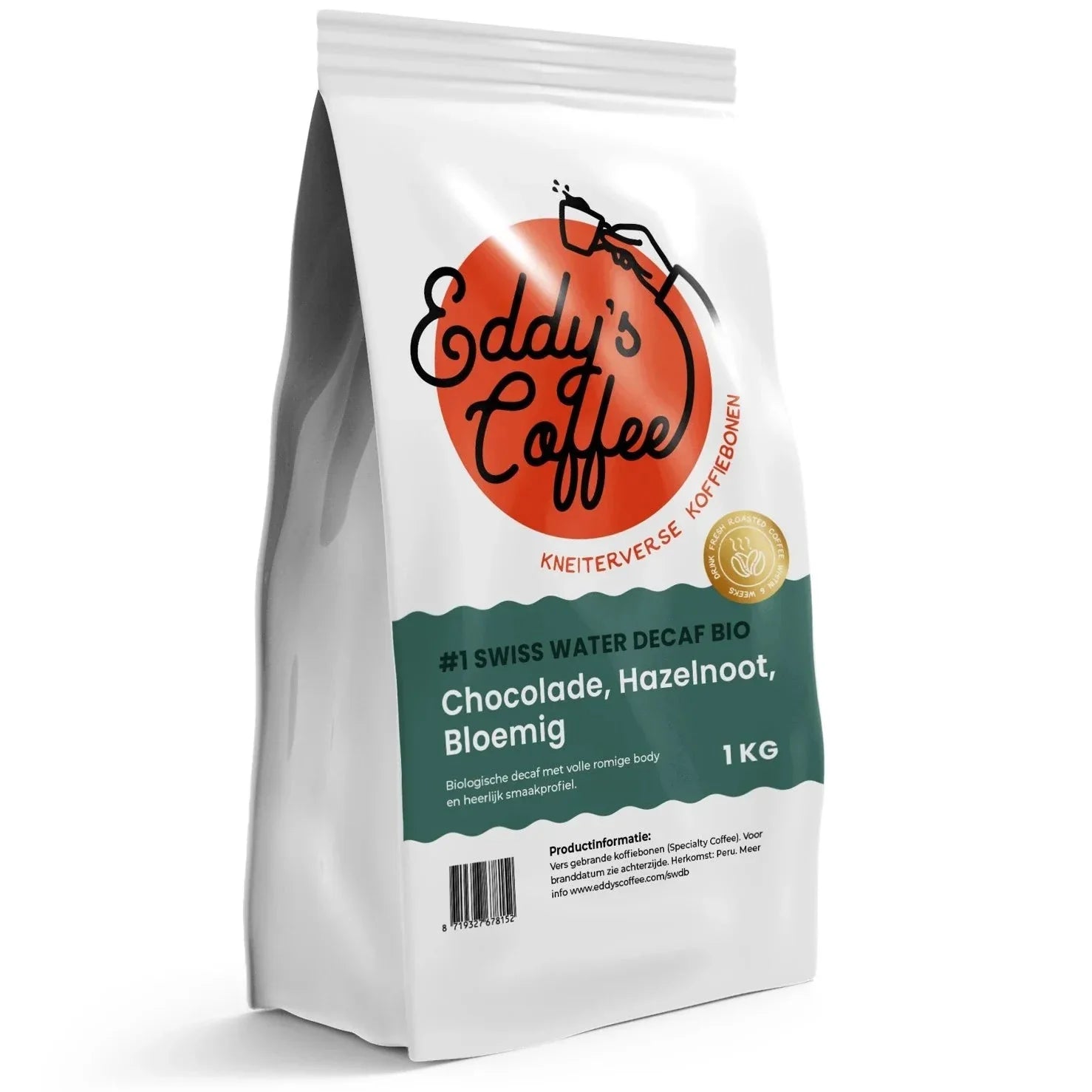
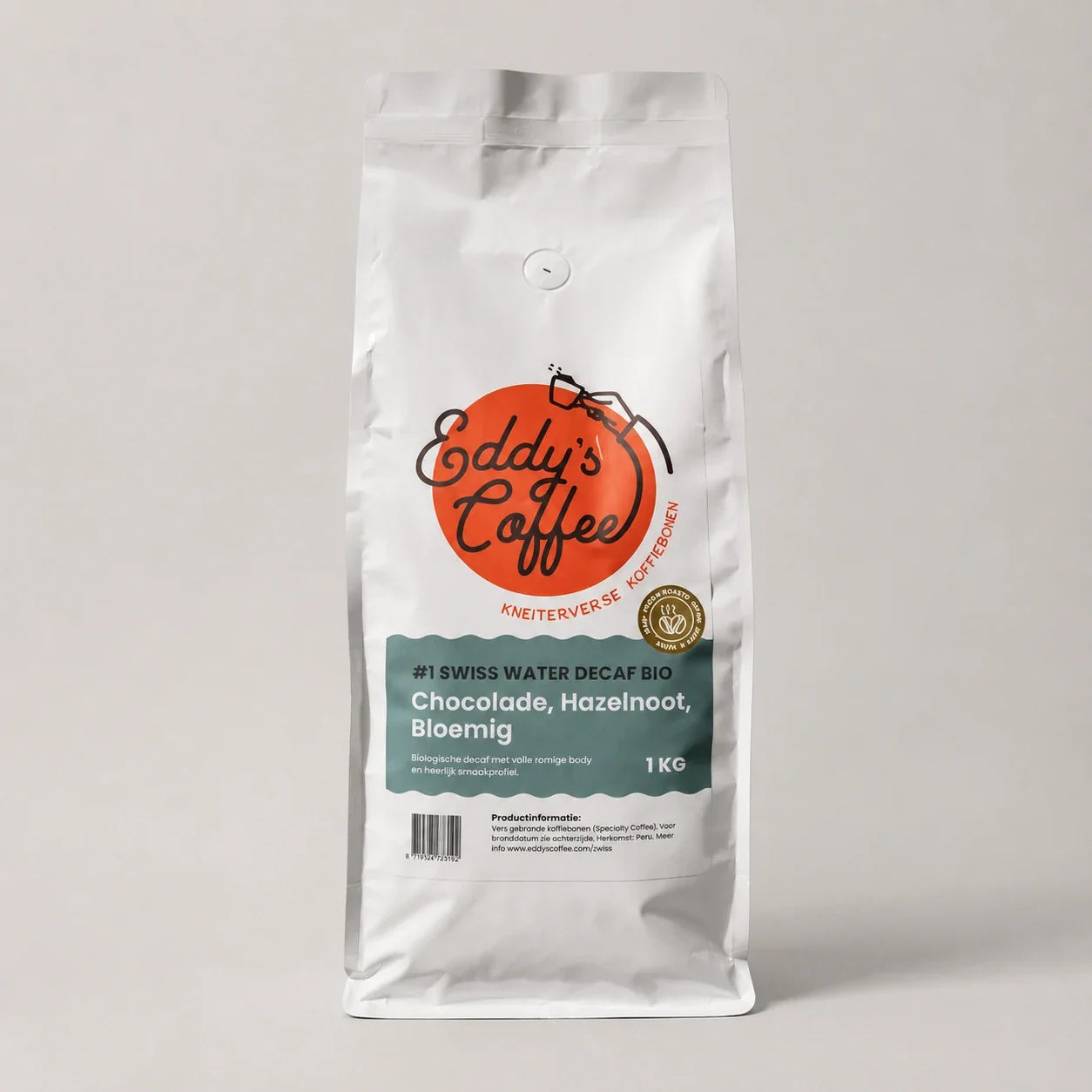
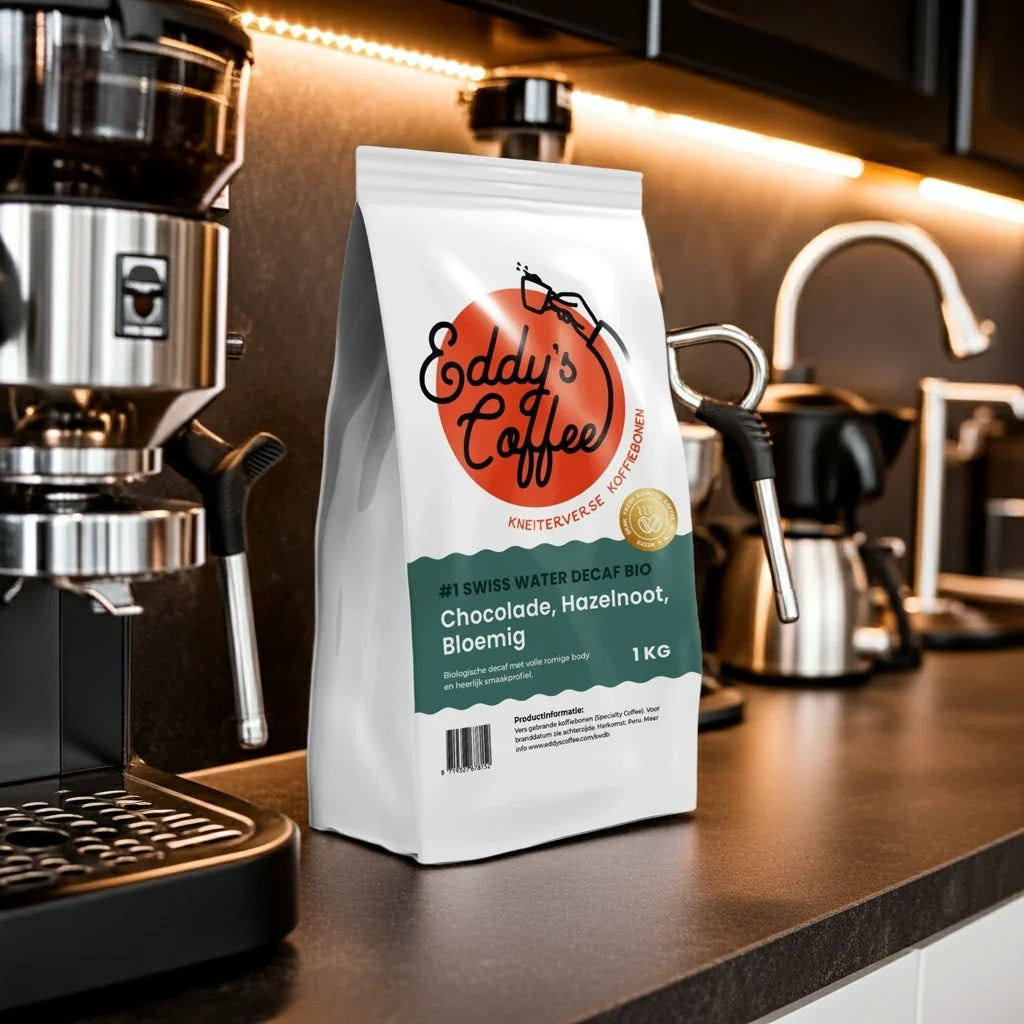
The #1 Peru Swiss Water Decaf Bio is currently replaced by the Guatemala Swiss Water Decaf. The Guatemala is currently the available alternative. Once the Peru is available again, it remains the original choice for anyone looking for a full, creamy decaffeinated coffee with chocolate, hazelnut and a floral finish.
Welcome to Eddy’s Coffee, where we work with exceptionally fresh coffee beans and select coffee for what you can actually taste in the cup. In our Specialty Coffee webshop, we look for coffees with a clear origin, their own character and enough quality to brew a beautiful cup at home. For available coffees, we roast after ordering so that you receive the beans as fresh as possible. We take care with selection, roasting and brewing advice, because coffee only reaches its potential when the bean, grind, recipe and brewing method work together. Eddy’s Coffee stands for personal service and 100% customer satisfaction.
A decaf that still tastes like coffee
The Peru Swiss Water Decaf Bio is made for coffee drinkers who want to avoid caffeine without giving up flavour, body or the familiar coffee moment. It has a full, creamy texture. Chocolate and hazelnut are central to the flavour profile, with a floral impression in the finish. That makes it versatile: you can brew a calm, rounded filter coffee, but also a lungo, cappuccino or latte. The coffee is mild enough to enjoy more than once a day while retaining enough depth to stay present when milk is added.
This character is also reflected in customer feedback. Several coffee drinkers say they can hardly taste that it is decaf. Others describe it as a decaf that finally tastes like real coffee, without the bitter or artificial aftertaste they have experienced with other caffeine-reduced coffees. Some customers notice a gentle sweetness, depth or fruitiness alongside the fixed chocolate and hazelnut notes. These are personal perceptions that can vary with the recipe and brewing method; our fixed product promise remains chocolate, hazelnut and floral.
According to the available product information, this coffee is organically certified in its country of origin, Peru. That certification is an important part of the product identity, but it is not the only thing that matters. As a barista, I also look at how a coffee behaves after brewing: does the body remain present, is the finish pleasant and can you enjoy it at different times of day? Those qualities come together particularly well in this Peru Swiss Water Decaf.
What does Swiss Water Decaf mean?
Swiss Water Process® is a decaffeination method that uses water, temperature and time instead of chemical solvents. The treatment takes place before roasting, while the beans are still green and unroasted. The aim is to remove caffeine while retaining as much as possible of the coffee’s original flavour and structure. A decaf process can change a coffee, but it does not have to make the result flat or characterless.
During the process, green beans are first extracted in hot water. Both caffeine and soluble flavour components enter the water. This water is then passed through carbon filters. The filters retain the caffeine molecules while much of the dissolved coffee material remains in the extract. That coffee extract is reused to treat a new batch of green beans. Because the extract is already saturated with many flavour components, mainly caffeine can migrate from the new beans without the same level of flavour loss.
The beans remain in contact with the extract for several hours, while the solution is repeatedly filtered and refreshed. According to the supplied product information, the treatment takes approximately eight to ten hours and removes around 99.9% of the caffeine. The coffee is therefore strongly reduced in caffeine, but “decaffeinated” does not mean that literally no caffeine remains. The beans are dried after treatment and prepared for transport and roasting. Swiss Water processing and the roasting profile are two separate steps.
For a detailed explanation, read our blog How is decaf coffee made? In Decaf methods compared, we also explain how Swiss Water compares with other ways of removing caffeine. This background helps you choose consciously, looking not only at the word decaf but also at flavour, origin and processing.
How to brew the Peru Swiss Water Decaf Bio
As filter coffee, this decaf produces a calm, round cup with a recognisable chocolate base. The hazelnut note can become more pronounced with a slightly lower dose or a somewhat coarser grind, while a longer contact time gives more body and depth. For a V60, AeroPress or Clever Dripper, start with your normal filter recipe and adjust the grind from there. If the cup feels thin or the finish disappears quickly, grind a little finer or extend the brewing time. If it tastes too heavy or bitter, use a slightly coarser grind or shorter contact time.
The coffee also works well in a French press, moka pot or percolator when the grind and dose match the method. A French press benefits from a coarser grind and its longer immersion brings a firm, creamy texture. A moka pot often emphasises the chocolate character. A percolator can produce a stronger cup; avoid letting it run too long, otherwise the finish may become harder. If you grind at home, choose whole beans and grind immediately before brewing. For convenience, filter, French press and moka-pot grinds are also available.
Espresso, lungo and milk drinks
You can use this decaf for espresso as well, but I recommend taking a moment to dial it in. Decaf beans do not always behave exactly like a regular espresso, so a short extraction can sometimes taste sour or sharp. Start with a familiar recipe and judge the flavour rather than the time alone. If the espresso is too sharp, try grinding a little finer, extending the extraction slightly or carefully adjusting the ratio. A lungo gives the creamy body and chocolate-hazelnut character more room. In cappuccino, latte and latte macchiato, the coffee remains present instead of disappearing behind the milk.
In a fully automatic machine, use the coffee when the machine supports the chosen beans or grind. Choose espresso grind for a portafilter or semi-automatic machine and adjust the grind until the espresso is balanced. A filter machine or manual filter method needs a finer filter grind. French-press grind is coarser for immersion; moka-pot grind is adapted to the higher pressure and shorter flow of a moka. You do not need to use one grind for every appliance.
Who is this coffee a good choice for?
This Peru Swiss Water Decaf Bio is a good fit for people who want strongly reduced caffeine in the evening, after dinner or throughout the day. It also suits households using several brewing methods: filter in the morning, a cappuccino in the afternoon or a small coffee after dinner. The full body works well with milk, while the round chocolate and hazelnut notes remain recognisable in black coffee. People who react sensitively to caffeine often choose this kind of coffee to keep their coffee routine without the same caffeine load.
If you are looking for a very dark, powerful espresso with a pronounced roast character, this decaf may not be the best match. Some drinkers find it too mild or subtle, and espresso can taste sour if it is not dialled in carefully. In that case, another coffee or a more powerful blend may suit you better. Because the Peru is currently unavailable, you can view the Guatemala Swiss Water Decaf as an alternative. The method is similar, but the flavour is not identical.
What do customers experience?
Customer feedback gives a more useful picture than an average rating alone. Most reactions are positive about the fact that the coffee is not immediately recognisable as decaf. Customers mention a full, creamy cup, a pleasant aroma of fresh beans and a soft taste without a chemical or harsh aftertaste. They use it for filter, V60, AeroPress, French press, moka pot, percolator and milk drinks. At the same time, not every preparation is equally easy: espresso needs dialling in and some drinkers find the cup less powerful than expected with their chosen recipe.
- Frequently mentioned advantage: a full, creamy body with chocolate and hazelnut.
- Frequently mentioned advantage: customers can hardly taste that it is decaf.
- Frequently mentioned advantage: no bitter or chemical-tasting aftertaste.
- Frequently mentioned use: evening, after dinner and before bed.
- Frequently mentioned methods: filter, V60, AeroPress, French press and moka pot.
- Point to note: espresso can taste sour when the grind or extraction is not dialled in.
- Point to note: people seeking a very heavy, dark cup may find this coffee mild.
Product specifications
- Product: Peru Swiss Water Decaf Bio
- Country of origin: Peru
- Decaffeination: Swiss Water Process®
- Flavour profile: chocolate, hazelnut and floral finish
- Body: full and creamy
- Suitable for: filter coffee, espresso, lungo, cappuccino and latte
- Available sizes: 250 g and 1,000 g
- Available grinds: whole beans, filter, espresso, French press and moka pot
- Product type: coffee beans
- Current availability: temporarily replaced by Guatemala Swiss Water Decaf
Freshness and storage
The flavour of a good decaf remains clearest when the beans are protected from oxygen, heat, light and moisture. Keep an opened bag well sealed and do not place it next to the coffee machine or on a warm windowsill. If you drink coffee every day, store the beans or ground coffee in a well-sealed coffee canister. Ideally, grind only the amount you need immediately before brewing. This keeps the aroma, creamy body and chocolate-hazelnut character clear for as long as possible.
For other reduced-caffeine options, view our full decaf coffee beans collection. If you want to compare origins and flavour, explore Specialty Coffee. The product page shows the available grind and size; the visible Q&A below adds practical advice about flavour, brewing, decaffeination and choosing the right variant.