
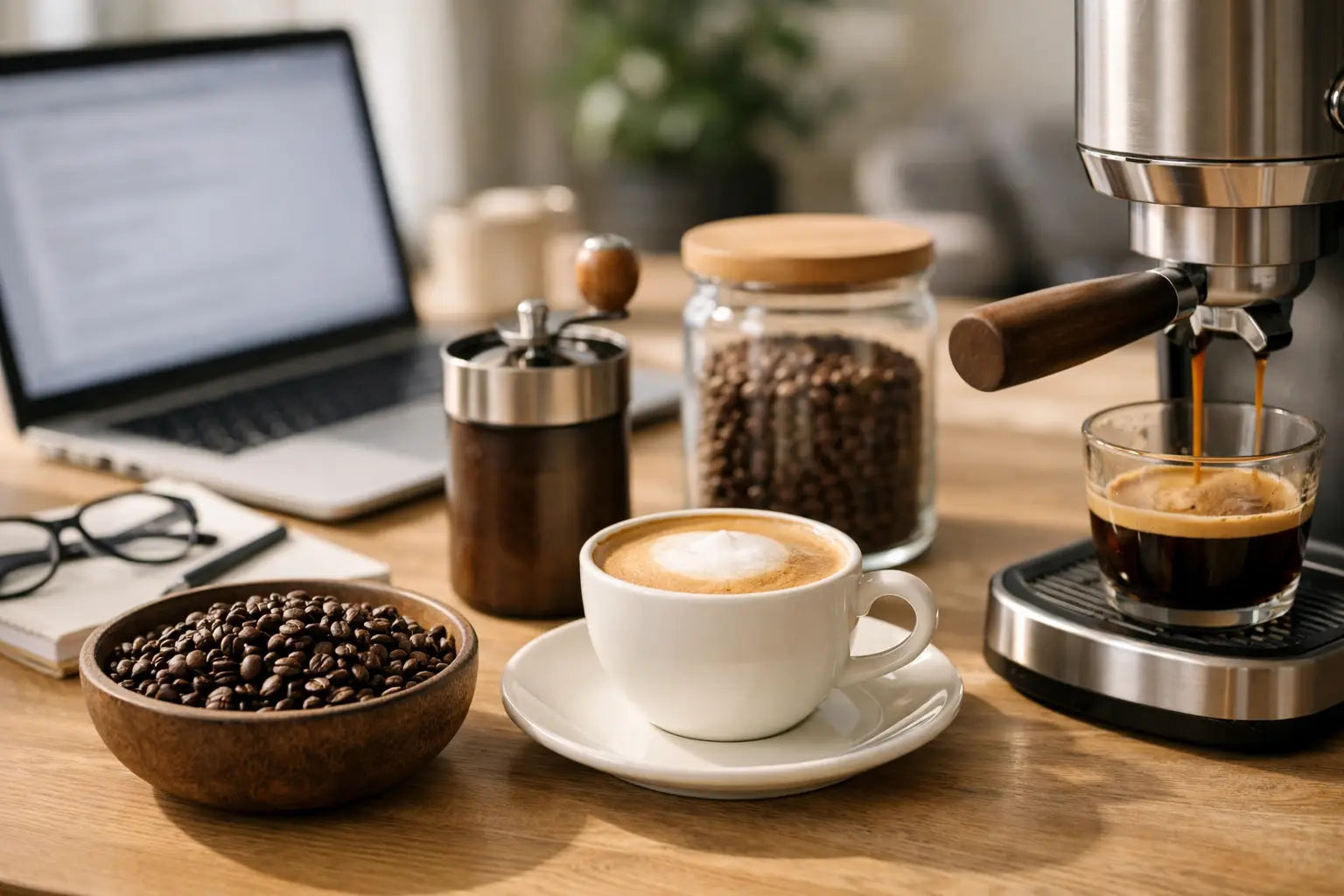
Your first video call starts in ten minutes, your inbox is already full and the kitchen is suddenly the most important place in the house. The best coffee beans for remote workers turn that brief moment into more than a quick break. They give you a cup of coffee that you can count on every working day: suitable for your taste, your machine and the rhythm of working from home.
That doesn't require complicated coffee language. It does require a few conscious choices. Because a bean that is delicious as espresso can taste completely different from a filter device. And a bag of good beans only really comes into its own when it is fresh, stored properly and ground at the right time.
What home workers need from coffee beans
Working from home does not have a fixed coffee break. Sometimes you quietly make a cup before you start. Sometimes you press the button on your fully automatic machine between two meetings. And on other days you want something tasty after lunch, without immediately looking for a strong coffee.
That is why good coffee beans for home use are especially reliable. You want a taste that you will enjoy drinking again, even with the second or third cup of the day. Very distinctive beans can be surprising and interesting, but are not always the most logical choice if your coffee is a regular part of your work rhythm.
Many home workers are therefore happy with beans that are balanced: sufficient body, a pleasant sweetness and a fresh touch that is not overpowering. Think of flavors such as chocolate, caramel, nuts or ripe fruit, depending on roast and origin. That is not a hard and fast rule. If you like it lively and fruity, you can of course consciously choose that. It's about matching your coffee with what you like on a regular Tuesday afternoon.
Best coffee beans for home workers: start with your brewing method
The best bean cannot be separated from the way you brew it. Your equipment determines which properties are highlighted in your headline.
For fully automatic machines
A fully automatic machine requires beans that grind consistently and produce a pleasant, round coffee. Medium to slightly darker roasted beans are often a nice choice. They usually deliver a full flavor and work well in an espresso, lungo or cappuccino.
Don't necessarily avoid lighter roasts, but take the settings of your machine into account. A light bean can turn out a bit fresher or more sour in a fully automatic machine than you expect. Start with a medium grind size and adjust one setting at a time. If the coffee becomes thin and sharp, grind a little finer. If it becomes bitter or runs very slowly, try something coarser.
For a semi-automatic espresso machine
With a semi-automatic espresso machine you have more influence on your espresso. That's nice if you like to tune in, but it also requires a little more attention on a busy morning. Choose beans with a flavor profile that you like as espresso, because that's where everything starts. If you often drink milk drinks, the coffee may have more body so that the taste remains intact next to milk.
Weigh your coffee and keep track of the brew time if you want consistency. This does not have to be an extensive ritual. Two minutes of extra attention can make the difference between a flat cup and an espresso with beautiful sweetness and structure.
For filter coffee and slow coffee
If you make coffee with a filter machine, V60, Chemex or cafetière, you can get more nuance from the bean. Here, bright, sweet and fruity notes often emerge more clearly. A medium or lighter roast can therefore be a good fit.
Filter coffee is ideal when you want to work quietly on a task that requires concentration. You make a larger cup, drink it without rushing and taste how the coffee changes as it cools. For the French press, a coarser grind is important. This way you prevent too much coffee grounds in your cup and an unnecessarily heavy extraction.
Choose flavor that supports your working day
Choosing coffee based on taste starts with a simple question: what do you usually feel like? If you like classic, round and familiar, look for beans with notes of chocolate, nuts and caramel. They often work well as espresso and in milk drinks.
If you want more freshness in your cup, beans with notes of red fruit, citrus or stone fruit can be a good fit. That profile usually comes into its own as filter coffee or as a carefully adjusted espresso. It may take some getting used to if you mainly enjoy full, dark flavors. So give a new flavor a few cups a try, preferably with the same brewing method and settings.
A blend is often a practical choice for those who like to drink a consistent taste. Different coffees are composed to create a balanced whole. Single origin beans, from one country or region, can have a clearer character of their own. Neither is better. A blend can be exactly what you are looking for for your daily cappuccino, while a single origin is fun if you have time to experiment with filter coffee.
Freshness is not a detail
Coffee beans contain aromas that change slowly after roasting. That's why freshly roasted coffee makes a noticeable difference in smell, taste and experience. Better to buy a quantity that you will drink within a few weeks than a large stock that will remain open for a long time.
At Eddy's Coffee, beans are roasted to order. This suits home workers who do not want to run to a store, but consciously choose fresh coffee. Then pay attention to how you store the beans at home. Do not leave them next to a hot appliance, in direct sunlight or in an open bag for long periods of time.
A well-sealable coffee container helps to protect the beans against air, light and moisture. Store it in a cool, dry place in a kitchen cupboard. The refrigerator is usually not a convenient place due to moisture and odors. Do not automatically fill your storage jar completely if there are still old beans at the bottom. Empty and clean it first, so that new beans really stay fresh.
Do not grind until just before moving
Grinding it yourself is one of the simplest steps to better coffee at home. Once coffee is ground, the aroma is lost more quickly. Keeping beans whole and only grinding what you need gives you much more flavor in your cup.
The grind also determines the outcome. Espresso requires a fine grind, filter coffee requires a medium grind and a cafetière requires a coarse grind. If your coffee is too acidic or watery, the grind is often too coarse or the extraction is too short. If it tastes dry and bitter, the grind may be too fine or the water may have been in contact with the coffee for too long.
Don't change everything at once. First adjust the grind size and taste again. Then you can look at the amount of coffee or the brewing ratio. This way you quickly learn what your machine and beans need, without making coffee becoming an extra project on your to-do list.
Also think about your afternoon cup
Those who work from home often drink coffee throughout the day. It is therefore useful to have a caffeine-free option at home in addition to your regular beans. Not because it would be a lesser choice, but because you can then switch when you are particularly looking forward to the taste and the coffee moment.
Good decaf coffee beans deserve the same attention as regular beans: freshness, a profile that suits your taste and the right grind. If you brew a strong espresso in the morning and a calm decaf cappuccino later, your coffee routine will remain varied without having to keep looking for something new.
Make it easy on yourself, not thoughtless
A nice home stock does not consist of as many varieties as possible, but of beans that you actually like to brew. For example, choose one familiar coffee for daily use and occasionally take a second flavor with you to compare. If necessary, briefly write down which bean worked well in your machine and with what grind size. That sounds precise, but actually prevents endless searching.
Make sure your beans, grinder and favorite cup are within reach. A good coffee moment doesn't have to last long. If the smell of freshly ground beans marks the transition between two tasks, your kitchen is no longer an interruption of your working day, but a place where you can quietly start again.
Share:
Does Decaf Coffee Taste Different?
How to Choose the Best Coffee Beans for Moka