
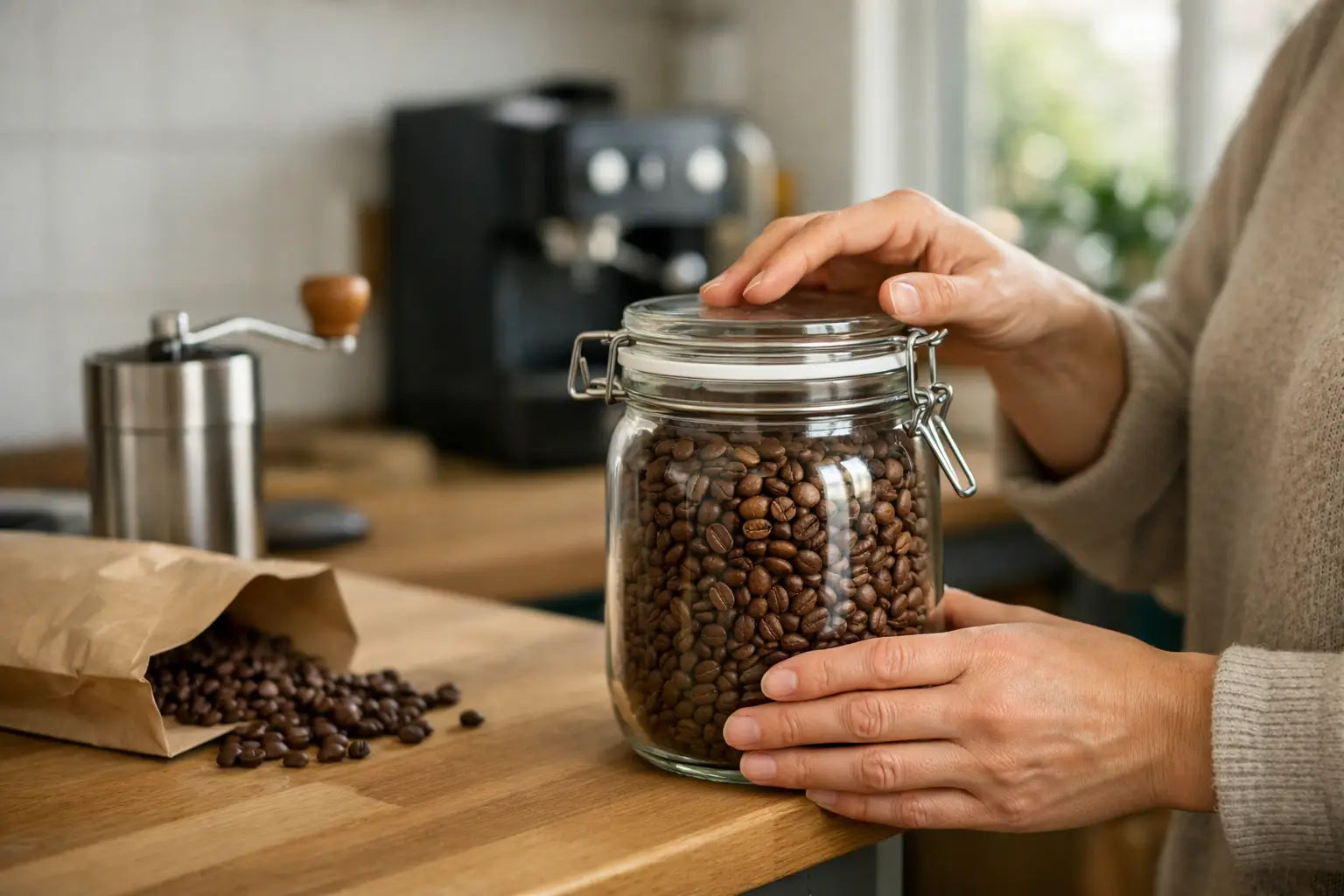
A good bean can taste blander in a few days if it is stored incorrectly. A shame, especially if you consciously choose freshly roasted specialty coffee. How do you store fresh coffee beans so that you can make a full, clear cup every morning? The basics are simpler than many coffee lovers think: protect beans against air, light, heat and moisture. The details then make the difference.
How do you store fresh coffee beans for the best taste?
Coffee beans stay best when you store them cool, dark, dry and well sealed. A kitchen cupboard is usually a better place than the counter next to the espresso machine, the stove or a window. There, temperature changes are smaller and the coffee is not in the light.
The best storage method also depends on how much coffee you have at home and how quickly you drink it. Do you drink a bag within two to three weeks? Then the original packaging is often a great start, provided you close it carefully. If you prefer extra convenience during busy mornings, a properly lockable storage container is a nice solution.
More important than a complicated routine is consistency. Choose one permanent, suitable spot and only scoop out the beans you need. This way, the rest remains protected until the next coffee moment.
Why coffee beans are sensitive to their environment
Freshly roasted coffee contains aromas and flavors that you want to taste in your cup. Once beans have a lot of contact with oxygen, those aromas begin to gradually diminish. That is a natural process, but you can slow it down by not leaving the packaging open for an unnecessarily long time.
Light doesn't do coffee any favors either. Direct sunlight in particular heats the beans and accelerates the deterioration of aroma. A nice glass jar on the windowsill may look good, but it is not the most convenient choice for coffee. It is better to choose an opaque can or store a jar in a closed cupboard.
Heat and moisture are the other two points of attention. Beans absorb odors and moisture from their environment. A place above the stove, next to the kettle or near the dishwasher is therefore less suitable. A storage jar that is not completely dry can also affect the taste. If you wash a can, let it dry completely before adding new beans.
Air: immediately reseal the packaging
The moment when coffee comes into contact with air the most is when you open the bag. You cannot avoid this, but you can limit it. Fold the opening of the bag tightly and close it with the built-in closing strip or a sturdy clip. Do not forcefully squeeze all the air out of the bag as this will damage the packaging. The goal is simple: as little open time as possible and the best possible closing.
Many coffee bags have an aroma or degassing valve. This valve allows gases to escape from the packaging without letting in much air. So feel free to leave the beans in their original bag, especially if it is sturdy and closes well. Placing the bag in an extra storage container can be useful, but is not necessary if you drink it quickly.
Light: a dark place works most quietly
A closed kitchen cupboard, pantry or drawer is ideal. Avoid clear jars that are constantly on the counter. Do you want to use a pot because you want to have quick access to your coffee? Then choose opaque material or place the pot in a cupboard. This way you keep the routine easy without compromising on taste.
Heat and moisture: stable is better than extremely cold
Coffee feels most comfortable at a stable room temperature. So you don't have to keep beans particularly cold. In fact, sharp temperature changes can cause condensation when you open the package. Dry and consistent beats as cold as possible.
Do not store coffee beans in the refrigerator
The refrigerator seems logical: it is cool. However, this is usually not a good idea for beans that you use every day. Moisture and odors are present in a refrigerator, and coffee beans can absorb them. Every time you open and put back a cold package, you increase the risk of condensation.
It is therefore best to store beans in a dark, dry cupboard. This is not only more manageable, but also a lot more practical during a hasty morning or between two video calls.
And what about the freezer? For a small stock that you don't want to use until much later, freezing can be an option under the right conditions. Think of beans that are airtight and packaged in small portions, so that you only have to thaw a portion once. It is usually unnecessary for your daily bag of coffee. Rather, buy a quantity that suits your consumption and store it carefully at room temperature.
Original bag or storage container?
Both can work well. The choice is mainly about your coffee rhythm. The original bag is practical, takes up little space and is designed to protect coffee. If you always close the bag neatly, you won't need much extra.
A storage container is useful if you like to have one fixed place for your beans and want to dose quickly. Make sure there is a good seal and material that does not let light through. A canister with a vacuum system, such as a CoffeeVac, can help to further limit contact with air. This is especially nice if you don't use up a bag very quickly or if your kitchen is often hot.
Do not automatically fill a storage container completely with a large amount of stock. It is often smarter to prepare a smaller quantity for a few days and leave the rest in the tightly closed original bag. This way you don't open your entire stock every time. This is a small action, but it is precisely such habits that keep coffee alive for longer.
Do not grind until just before moving
The best storage solution starts with whole beans. Ground coffee has much more surface area that comes into contact with oxygen and therefore loses smell and taste more quickly. Therefore, only grind what you immediately need for your espresso, filter coffee or cafetière.
That doesn't have to be a complicated coffee ritual. Weigh your portion, grind it and make your coffee immediately. This makes a noticeable difference, especially on working days: more aroma during grinding, more character in your cup and a more consistent taste from day to day.
Don't have a mill? It is better to buy smaller quantities of ground coffee than one large stock. Close the package immediately after use and store it in the same cool, dark and dry place. It remains optimal for less time than whole beans, but with an appropriate amount you get much more out of it.
Buy a quantity that suits your consumption
The best storage container cannot compensate for coffee that has been left open for months. Therefore, think in advance about how many cups you actually make at home. A household that drinks two cups every morning will go through a bag faster than someone who only makes coffee at the weekend.
For most home drinkers it is nice to buy beans that they can use within a few weeks. This way you have enough at home, without reluctantly using up the last beans because the taste becomes less fresh. At Eddy's Coffee, beans are freshly roasted, but even then your choice of storage determines how well that freshness is retained in the kitchen.
Do you have multiple types of beans open, for example a solid espresso for the morning and a lighter coffee for filter? Store them separately and, if necessary, write down the opening date on the bag. Not because coffee suddenly becomes unusable at an exact moment, but because you learn better how quickly your supply runs out and when you start to notice the difference in taste.
Common mistakes when storing coffee
The most common mistake is leaving beans in an open bag. A jar without a good seal also does little to retain aroma. Therefore, close the coffee immediately after taking your portion, even if you want to make a second cup in an hour.
A second mistake is giving coffee a permanent place next to the machine. That's understandable and looks tidy, but that corner is often warmer than you think. The heat from appliances, sunlight and steam from the kitchen all contribute to a fresh taste.
Finally, don't mix old and new beans in the same can. First empty the canister, clean and dry it if necessary, and then fill it with the new bag. This way you know what you're brewing and you prevent older beans from affecting the taste of a fresh supply.
A good cup of coffee doesn't just start when you press the button on your machine. Give your beans a dark, dry place and a good seal, and you will taste that little daily moment exactly as it was meant to be: calm, full of flavor and ready for your day.
Which storage container suits your coffee supply?
The right canister matches the amount you actually use. For a small stock or decaf, 250 grams is manageable; For a full kilo bag, the CoffeeVac 1 kg is useful because the original bag including roasting date and origin can remain in the can. View all sizes in the Coffee cans category.
Standard CoffeeVac or Pump?
The standard CoffeeVac is suitable for daily airtight storage. The CoffeeVac Pump 250 grams adds a manual pump that allows you to remove extra air after closing. The Pump works without batteries and seals airtight even without pumps.
Share:
Huila, Colombia: Discover the Region Behind Colombia Supremo
Coffee from Brazil: Flavour, Body and Brewing