
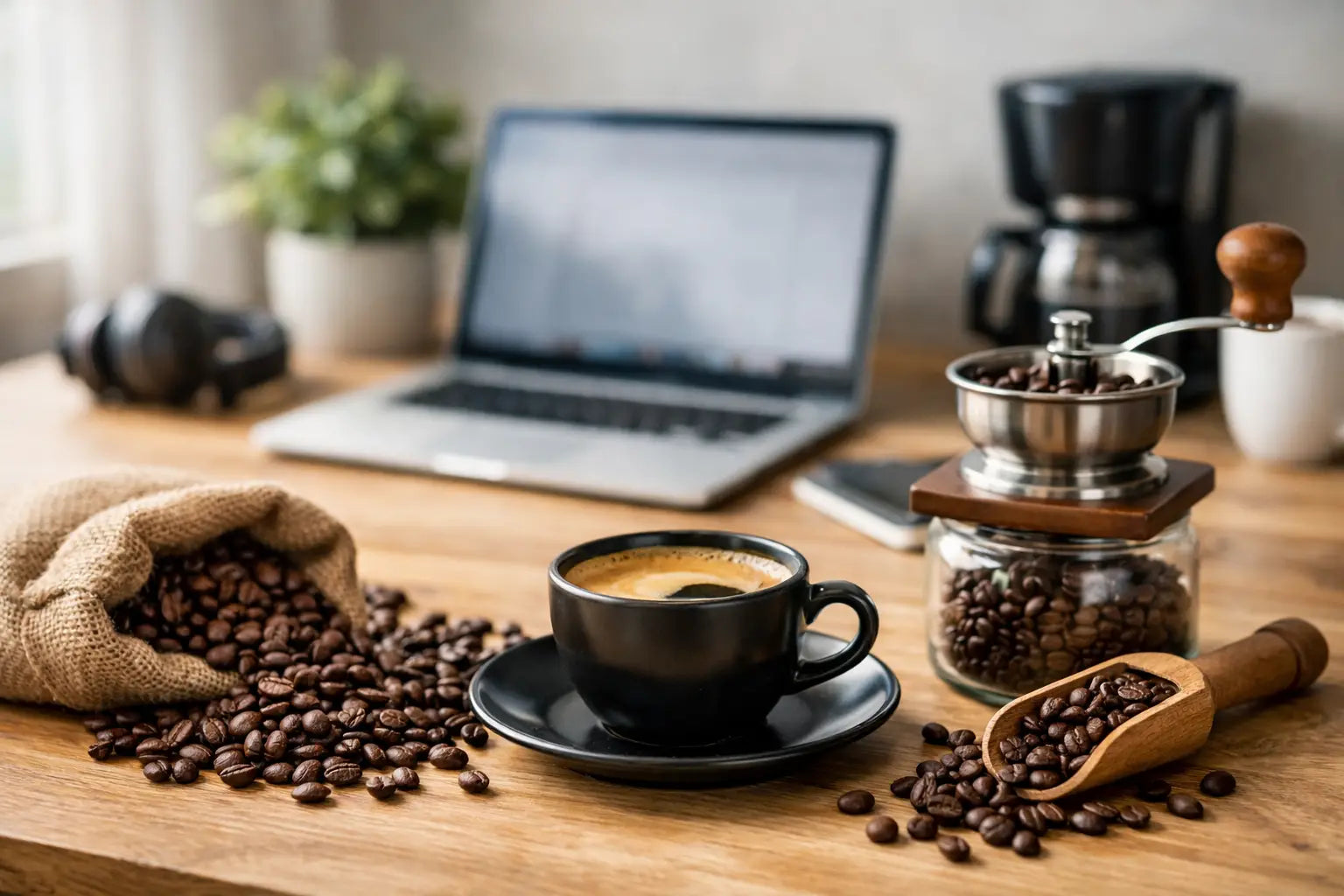
The first call of the day always sounds smarter with good coffee next to your laptop. That is exactly why choosing coffee beans for working from home is not a minor detail but a serious decision. When you work from home, you often drink more than one rushed cup—you have several coffee moments spread throughout the day. You then notice the difference between flat supermarket beans and coffee that was genuinely roasted fresh.
Why coffee beans for working from home need a different approach
Coffee at the office is often about speed and volume. At home, it works differently. You have more control over your brewing method, you drink more consciously and you notice sooner when a bean is too bitter, too sour or simply boring.
There is another factor. During a work-from-home day, you want coffee that fits different moments. A strong espresso to get started calls for something different from a soft lungo during an afternoon focus block. A smart choice is therefore not only about strength but also drinkability. The best coffee beans for working from home are beans you enjoy drinking in several cups without getting tired of them.
What makes a bean suitable for working from home?
Fresh roasting comes first. Not because it is attractive marketing language, but because freshly roasted coffee simply provides more aroma, sweetness and nuance. Old beans lose their liveliness and become stale or flat more quickly. If you work from home and brew every day, you notice the difference immediately.
Balance matters too. Work-from-home coffee does not always need to be extremely distinctive. A very funky natural coffee can be wonderful, but perhaps less suitable when you are already on your third cup at 11 a.m. A balanced specialty coffee often works better: enough character to stay interesting, but clean and rounded enough to drink comfortably all day.
Your brewing method matters as well. For a superautomatic machine, look for a forgiving bean that performs consistently. Espresso from a portafilter machine can be more precise. For filter, V60 or French press, you generally want more clarity and layering. There is therefore no single perfect work-from-home bean. It depends on how you brew, how much you drink and what you enjoy.
Light, medium or dark for a workday at home?
Roast level determines much of the experience. Lightly roasted coffee often shows more origin and freshness, with notes of citrus, stone fruit or flowers. That is lovely if you drink filter coffee and enjoy lively flavours, but not everyone wants it as their first cup of the day.
For many home workers, a medium roast is the safest and often the best choice. It gives sweetness, body and recognisable flavours without becoming bitter. This profile works broadly for espresso, cappuccino, lungo and often the superautomatic machine too.
Dark-roasted beans bring more bitterness, roast character and often a heavier mouthfeel. That can be pleasant if you mainly drink milk drinks or like a classic, powerful cup. The downside is that nuance disappears more quickly. If you drink coffee throughout the day, dark roast can eventually feel heavy or harsh.
The best flavour profiles for coffee beans when working from home
People working from home generally do not want coffee that only impresses with the first sip. You want coffee that remains enjoyable throughout a full working day. In practice, a few flavour directions often come out on top.
Nutty and chocolatey beans are popular because they are accessible, full and comfortable. They give you a reliable cup that needs little explanation. This is often a bullseye in espresso or a superautomatic machine.
Beans with caramel or red-fruit notes are interesting if you want something livelier without making things too challenging. They keep the coffee fresh and bring a little more energy to the cup.
Very fruity or floral coffees are more of an enthusiast’s choice. They are fantastic when you taste consciously, but less obvious as everyday work coffee. That does not mean you should avoid them. It means you should look honestly at your routine. Do you drink attentively, or mainly functionally with quality as the foundation?
How much caffeine do you really need?
Many home workers unconsciously shop for caffeine, even though flavour and brewing strength have at least as much influence on how a cup feels. A heavier-tasting coffee is not automatically higher in caffeine, and a lighter roast is not necessarily weaker.
If you drink several cups per day, balance is important again. It can be smart to choose a fuller, more powerful bean in the morning and something softer or even decaf later in the day. Good decaf is no longer punishment coffee, especially if you want a ritual after lunch without a jittery afternoon.
For working from home, that is often the smartest approach: not constantly stronger, but distributed more intelligently. Your concentration benefits more from consistent energy than from three mugs consumed in survival mode.
Freshness is not a detail; it is half the work
Freshness may play an even larger role in coffee beans for working from home than in other situations. At home you are your own barista, buyer and stock manager at the same time. Buy too much without proper storage and flavour declines quickly. Buy too little and you end up reaching for emergency supermarket coffee.
The best middle ground is to choose an amount you can finish within a few weeks. For many home workers, this is more practical than stocking up without a plan. Then store the beans airtight, in the dark and at room temperature. Not in the fridge. Coffee does not like moisture, temperature swings or the smells of everything around it.
A good storage canister really helps, especially when it keeps air out of the package. It sounds minor, but when you open and close beans every day, oxidation quickly adds up. Freshly roasted beans deserve better than being half rolled up in a kitchen cupboard.
Which bean suits your machine?
For superautomatic machines, medium-roasted beans are often the safest choice. They usually run consistently through the machine, provide enough body and hold up in a cappuccino. Very oily, dark-roasted beans are not always ideal because they can create more residue over time.
With a portafilter machine, you can choose more specifically. If you want espresso with plenty of crema and sweetness, blends or rounded single origins are often strong choices. If you have time to dial in, you can also choose more challenging coffees with greater fruit or intensity.
For filter coffee at home, lighter and more expressive profiles often work well. Especially during long focus blocks, a clean, fresh filter coffee is pleasant because it feels less heavy. You stay alert without every cup feeling like a meal.
One bean for everything or a rotation?
It depends on your routine. If you want convenience, choose one versatile bean that works with your favourite brewing method and has a broadly appealing flavour. It reduces hassle and prevents disappointment. For many home workers, that is the best solution.
But if coffee is also a pleasant interruption to your workday, rotating coffees can be smart. An approachable espresso in the morning and a fresher filter coffee or decaf later in the day gives you more control. Coffee becomes not only fuel but also a good rhythm.
At Eddy’s Coffee, you can see exactly why seriously fresh roasting makes a difference: when beans arrive genuinely fresh, working from home simply becomes more enjoyable and consistent. You need fewer stronger settings, more sugar or milk to prop up a flat coffee.
Common mistakes with coffee beans for working from home
The biggest mistake is buying based on packaging copy rather than freshness and flavour profile. Words such as intense or powerful do not tell you everything. Without a roast date or clear quality signals, you are still guessing.
A second mistake is buying too much at once. A discount looks attractive, but old coffee is expensive coffee. What you save at the checkout is often lost in flavour.
Grind adjustment is underestimated too. Even excellent beans taste mediocre when the grinder is set incorrectly. Too fine quickly creates bitterness; too coarse makes coffee thin and sour. Especially when working from home and routine matters, it pays to give this proper attention once.
How to choose the right coffee practically
Start with your brewing method, not a trendy flavour story. If you mainly brew with a superautomatic or espresso machine, look for a medium-roasted bean with chocolate, nut or caramel notes. If you drink filter coffee, look for beans with more clarity and fruit.
Then consider when you drink coffee. If you drink four cups a day, choose balance over extremes. Be honest about how much effort you want to put in. The perfect bean on paper is worthless if it does not fit your workday.
The best coffee beans for working from home are ultimately beans that perform every day: fresh, consistent, tasty and hassle-free. Not only enjoyable on Sunday morning, but also on a busy Tuesday between two meetings.
A good work-from-home day does not have to start dramatically. Often it is enough for the first cup simply to be right—fresh, well brewed and strong enough to help you start focused.
Share:
How to Choose the Best Coffee Beans for Home
Which Grind Size for Espresso Actually Works?