
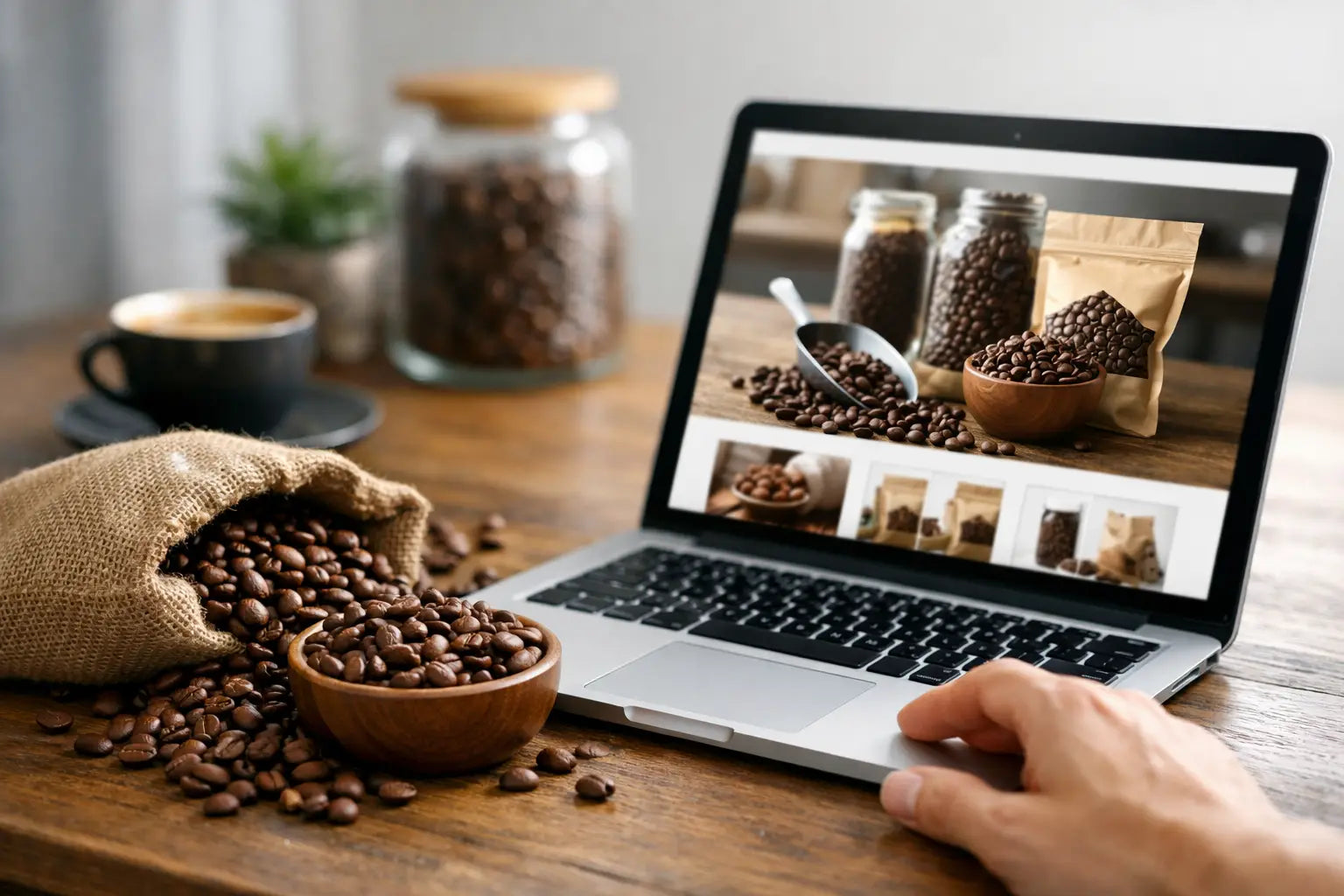
At 3:00 p.m. you notice it immediately in the cup: the espresso tastes flat, the crema collapses quickly and what seemed perfectly fine yesterday now feels just a little off. That is exactly why more and more people buy fresh coffee beans online instead of picking up a random bag from the supermarket. Not because online is automatically more luxurious, but because freshness, choice and reliability are often simply better organised there.
There is one catch to buying online: not every webshop that says “fresh” actually delivers genuinely fresh beans. The difference between great coffee and coffee you look forward to but end up being disappointed by often lies in details that look small on a product page. Roast date, delivery time, origin, roast level and packaging together determine whether you make a safe purchase or end up with a disappointing kilo.
What to look for when buying fresh coffee beans online
The first check is simple: is there a roast date, or only a best-before date? A best-before date tells you very little about flavour. Coffee can remain technically fine for a long time, but that does not mean it will still taste lively. A clear roast date shows that a supplier takes freshness seriously.
Then look at the logistics. Are the beans roasted to order, or have they already been sitting in stock for weeks? With specialty coffee, fresh does not mean “roasted today, drink tomorrow”, but rather finding the right window in which the coffee can first degas and then develop its flavour. A webshop that is transparent about this understands its product. A webshop that remains vague is probably selling convenience rather than quality.
Packaging is not a minor detail either. Coffee beans are affected by oxygen, light, heat and moisture. A good bag with a one-way valve helps preserve aroma, especially during the first period after roasting. A brand that focuses only on attractive packaging without explaining how the coffee is protected is missing an important part of the story.
Not every fresh bean suits your taste
Many people search online for freshness, but end up disappointed because they mainly choose based on intensity or a bold description. That is understandable. Terms such as “powerful”, “full-bodied” and “dark” sound safe. They still do not tell you enough.
A light to medium roast often reveals more of the origin — think fruit, flowers, citrus or elegant sweetness. A darker roast moves more quickly towards chocolate, nuts and bitterness. Neither is automatically better. It depends on what you enjoy and how you brew.
For espresso, a slightly more developed roast often works well because it gives you more body and balance. For filter coffee, you may be very happy with a cleaner, livelier bean. If you use an automatic coffee machine, you generally want beans that are forgiving and not roasted too lightly. That helps prevent sour cups and endless adjustments.
Good webshops help you with clear flavour profiles and brewing advice. Not vague wine-like prose, but language you can actually use. If you read that a coffee has notes of milk chocolate, hazelnut and caramel, you have a reasonable idea of what to expect. If it only says that the coffee is “a unique journey for the senses”, you mainly know that someone preferred marketing to clarity.
How fresh is fresh, really?
This is where things often go wrong. Many people think coffee is at its best on the first day after roasting. It sounds logical, but usually it is not. Freshly roasted coffee still contains a lot of CO2. For espresso in particular, that can make extraction unstable, with too much crema, an inconsistent flow and a messy flavour.
With most specialty coffees, the ideal drinking window is not immediately after roasting, but a few days later. Exactly how many days varies by coffee and brewing method. Espresso often needs a little more resting time than filter coffee. That does not mean fast delivery is unimportant. It does mean that fast delivery only has value if the coffee is roasted and shipped at the right time.
A reliable supplier communicates this honestly. Not just “super fresh”, but also when the coffee is likely to taste its best. This is not information only for coffee nerds. It is practical advice that immediately helps you brew better at home.
Buy fresh coffee beans online without regret
If you want to buy fresh coffee beans online, it is wise not to start with the largest bag when trying a new coffee or roaster. A kilo sounds attractive, especially in terms of price per gram, but if the profile does not suit your machine or taste, you will spend a long time compensating for it.
It is better to start with an amount you can drink within a few weeks. That keeps the coffee lively and gives you room to compare. If you drink several cups a day and already know what you like, buying a larger amount makes sense, especially if you store the beans properly. But for many households, “more for less” eventually becomes more expensive when the last half loses its appeal.
Pay attention to the product information too. Can you see the origin, roast level, flavour notes and advice for espresso or filter? Then you are usually in a better position. If all you see is “100% Arabica premium blend”, you still know very little. Arabica alone is not a guarantee of quality. Specialty coffee stands out through score, selection, roasting and transparency.
The mistake most often made at home: poor storage
You can order perfect beans and still ruin them in your kitchen within ten days. Air is the biggest culprit, followed by light, heat and moisture. The classic mistake is leaving an opened bag next to the coffee machine, exactly where temperature and humidity fluctuate throughout the day.
Store your beans airtight, in a dark place and at room temperature. Not in the fridge. It sounds clever, but condensation and odours from the fridge usually do not improve coffee. A good coffee canister with a vacuum function or minimal air intake helps far more than cold storage.
Also grind only what you need. Once coffee has been ground, it deteriorates quickly. If you invest in fresh beans but buy them pre-ground for convenience, you leave much of the flavour benefit unused. This does not have to become a high-end barista setup. A decent grinder at home already makes a world of difference.
Cheap online is not always good value
Price is of course a factor. Not everyone is looking for an exclusive microlot for Sunday afternoon. But extremely cheap coffee almost always has a reason: lower-quality green coffee, less care during roasting, longer storage or little transparency. Sooner or later, you taste that in the cup.
That does not mean expensive automatically means better. It does mean that a fair price for specialty coffee is often connected to better sourcing, fresher roasting and more control over flavour. Online, you can make that assessment especially well because suppliers have more room to explain what you are buying.
So a smart purchase is not based only on the price per kilo, but on the combination of freshness, flavour expectations, reliability and storage options at home. A slightly more expensive coffee that you genuinely enjoy drinking and store well is often better value than a cheap bag that disappoints halfway through.
When buying online really works better than buying locally
A good local coffee shop remains fantastic. You can smell the coffee, ask questions and sometimes get direct advice based on your machine. Still, online is more practical for many home drinkers — especially if you are busy, do not live near a good roaster or simply want consistent quality without an extra trip.
That is also the strength of a strong specialty webshop. You combine craft with convenience. If the beans are roasted fresh to order, shipped quickly and explained clearly, you do not give up anything in terms of quality. You mainly gain time and predictability.
For many coffee drinkers in the Netherlands and Belgium, that is not a luxury but exactly what makes the difference between improvising and consistently drinking good coffee. And yes, you want to be able to rely on a roaster that keeps its promises. That is also why brands such as Eddy’s Coffee grow: not through complicated language, but through fresh beans, clear information and service you can count on.
How to recognise a webshop that takes coffee seriously
You do not have to be a Q grader to recognise a good supplier. Look for a webshop that is specific. Does it say when the coffee is roasted and delivered? Is it clear which beans suit espresso, filter or an automatic machine? Does it explain how to store the beans and when the coffee tastes its best?
That kind of information may look small, but it says a lot about how a business works. A webshop that truly believes in quality does not hide behind empty superlatives. It shows what you are buying, who it is for and how to get the most from it at home.
That is why the best purchase does not begin with the question of which bean is “the best”. It begins with a more honest question: what do you like to drink, how do you brew at home and how quickly will you use your beans? Once you know that, buying coffee online becomes surprisingly simple — and above all, much tastier.
Share:
Which Grind Size for Espresso Actually Works?
Specialty Coffee vs Supermarket Coffee: What Can You Taste?