
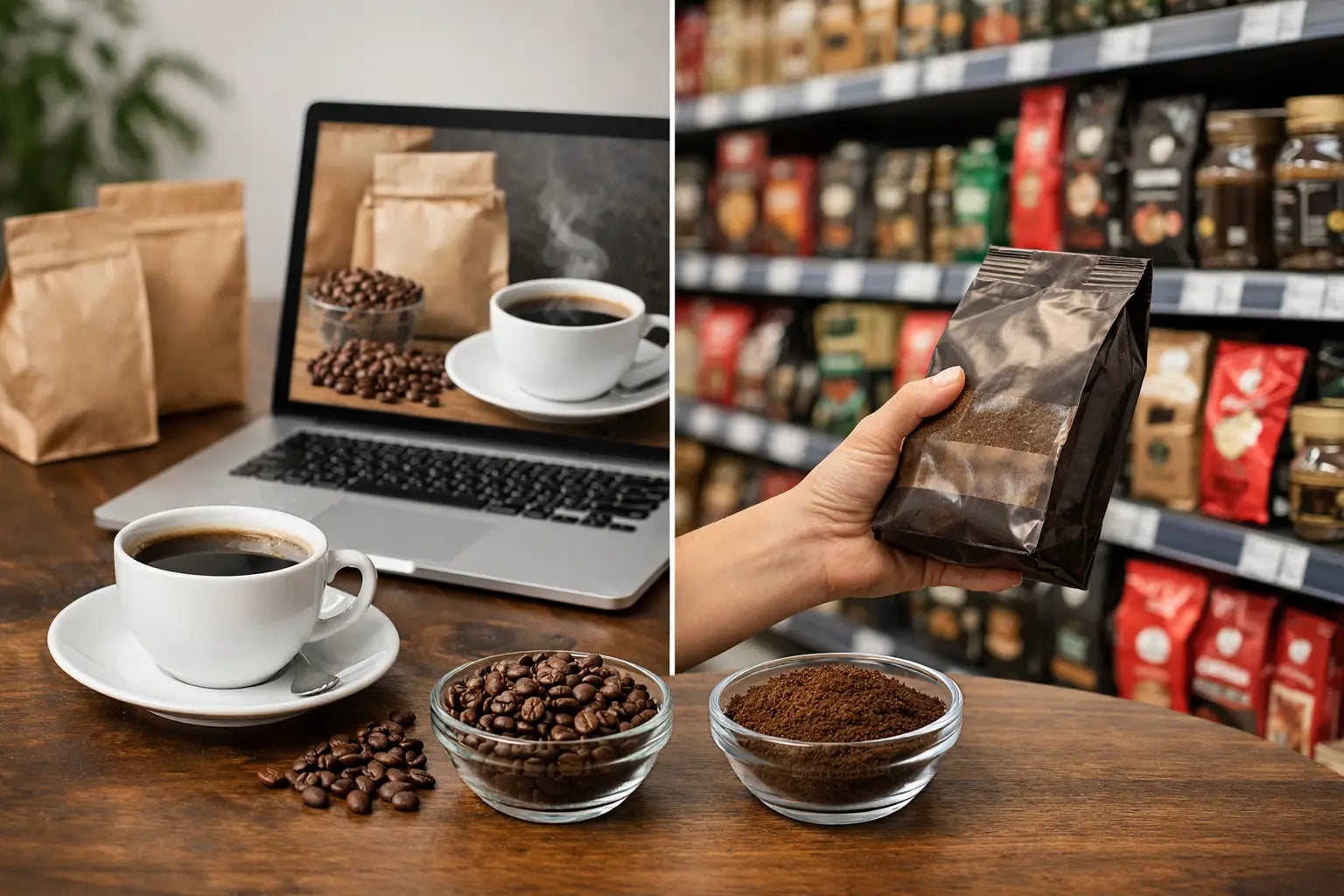
The choice between online coffee and supermarket coffee seems small until you brew your first espresso on Monday morning. One bag gives you a full, sweet cup with an aroma that fills the kitchen. The other tastes flat, bitter or stale, despite neat packaging and a familiar name. The difference is not only price or brand. It starts with the bean, the roast and, above all, how fresh the coffee is when it reaches you.
Supermarket coffee certainly has its uses. You can take it home immediately, know the price and choose from plenty of options. But if you want consistently better coffee at home, you quickly notice that freshly roasted beans ordered online are often the more logical choice. Not because every online roaster is automatically better, but because the model creates room for what coffee needs: care, transparency and speed.
Online coffee or supermarket coffee: the difference starts with freshness
Coffee is not a product that improves while it sits on a shelf for years. After roasting, beans first develop flavour and aroma. Those qualities then gradually fade. The longer coffee waits in a warehouse, distribution centre or supermarket, the greater the chance that you mainly taste the roasted character—and less of the chocolate, nuts, fruitiness or sweetness that makes the bean interesting.
Supermarket packaging often shows only a best-before date. That tells you little about the roast date. Coffee may still be months within that date and yet already be well past its flavour peak. A roast date is much more useful: it tells you when the beans were roasted so you can judge their freshness yourself.
With online coffee from a good roaster, the chain is usually shorter. The coffee is roasted, packed and shipped quickly. That does not mean you should use the beans on the same day. Espresso beans often need a short rest period to brew beautifully. But you do start with an exceptionally fresh foundation instead of coffee whose journey through the supply chain is unknown.
Not every supermarket bean is bad, and not every online bean is great
This is where the nuance lies. There are perfectly decent supermarket beans for a quick, familiar cup of coffee. They can be especially suitable if you use lots of milk, have a simple automatic machine or simply want a consistent flavour without fuss. The supermarket is also convenient when you unexpectedly run out of beans.
Conversely, not every webshop sells high-quality specialty coffee. Beautiful photos, a trendy bag and terms such as premium or artisan coffee are not proof of flavour. Look beyond the marketing. Does the supplier mention a roast date? Is there clear information about origin, flavour profile and roast style? Does it explain which brewing method the coffee suits? These are signs that the product is being taken seriously.
Specialty coffee is not only about an intensely fruity filter coffee that everyone is expected to learn to appreciate. Good specialty coffee can also taste rounded, creamy and chocolatey. The difference is often balance and clarity: less harsh bitterness, more natural sweetness and a finish that lingers without becoming dry or ashy.
Why larger brands source and roast differently
Supermarket coffee is generally made for large volumes, constant availability and a broad audience. That is understandable. A brand must supply thousands of shops and ensure that a consumer in Groningen gets roughly the same flavour as someone in Maastricht. Blends are therefore often composed and roasted to remain stable and recognisable, even when the beans are no longer at their freshest.
An online specialty roaster can buy smaller lots and choose more deliberately how light or dark each coffee should be roasted. The origin gets more space in the flavour. Beans from Colombia, Brazil or Ethiopia, for example, each have their own character depending on variety, processing and harvest. Good roasting does not mean roasting everything away into one dark, bitter flavour.
You notice this at home especially when you drink coffee black, brew espresso or grind your beans fresh. It also makes a difference in cappuccino. Milk softens a lot, but it cannot turn stale or meagre coffee into a good base. A full espresso with notes of cocoa, caramel or hazelnut remains pleasantly present in milk.
What does online coffee really cost?
Price per kilo is often the first objection. Supermarket beans are regularly discounted and can look much cheaper on paper. That is a real advantage, especially if you drink a lot of coffee and are mainly guided by budget. Still, the price per kilo does not tell the whole story.
With freshly roasted coffee, you pay for carefully selected beans, smaller roast batches, fresher logistics and more attention to flavour. If this means you need less coffee for a good cup, dial in more effectively and throw away fewer disappointing brews, the price difference becomes smaller in practice. It remains premium coffee, so it will not always beat the lowest supermarket price. You are choosing a different quality experience.
Also consider how you buy. A larger order often lowers delivery costs per bag and gives you a supply without having to think about new beans every week. Just do not buy so much that you are still brewing from the same opened bag months later. Coffee is for drinking, not storing for a special occasion.
Choose online coffee that suits your machine
There is no single best bean. There is a best bean for your taste, machine and routine. A powerful, traditional espresso can be delicious in an automatic machine with cappuccinos. A lighter, more complex coffee may be better suited to filter brewing or to espresso from a well-adjusted semi-automatic machine.
When ordering online, therefore look at four practical points:
- Roast date: choose coffee for which the roast date is clear.
- Flavour profile: think not only about strength, but about flavours such as chocolate, nuts, caramel or red fruit.
- Brewing method: check that the coffee suits espresso, an automatic machine, filter or cafetière.
- Pack size: choose a size you will finish within a few weeks after opening.
For a safe first step, medium-roasted beans with chocolate and nut notes are often a strong choice. They are approachable, forgiving in many machines and taste good both black and with milk. If you are more adventurous, you can then try a coffee with more fruitiness or a lighter profile.
The mistake that can ruin even fresh beans
An excellent bean quickly loses ground if it is stored incorrectly. Do not leave coffee in an open bag next to a hot coffee machine for weeks. Oxygen, light, heat and moisture are not friends of aroma. Seal the bag properly after use or store the beans in an airtight canister. Also grind just before brewing. Pre-ground coffee is convenient, but aroma disappears from it faster than from whole beans.
Your machine also deserves attention. Old coffee residue in the brew group, a dirty grinder or an incorrect grind size can make a fresh bean taste unnecessarily bitter or sour. When opening a new bag, start with a small grind adjustment. Does the espresso run too quickly and taste thin? Grind a little finer. Does it drip slowly and taste harsh or dry? Grind a little coarser.
Eddy's Coffee roasts to order for people who do not want to settle for a flat, standard cup at home. That does not mean you need a barista course. With fresh beans, a clean machine and a little attention to grind size, you can get surprisingly far.
When the supermarket is actually the smart choice
Sometimes convenience simply matters more. You are on holiday, have run out of coffee or want predictable, affordable coffee for a large office. In that case, a supermarket bag is a perfectly reasonable solution. If you do not yet know which flavours you like, an accessible bag can also help establish your starting point.
But if coffee is a fixed moment in your day—the first cup before work, an espresso after lunch or a cappuccino at the weekend—it is worth improving that routine. Do not blindly order the most expensive bean. Choose a reliable roaster that makes freshness visible and explains flavour clearly. You will probably look at that anonymous bag on the supermarket shelf differently afterwards.
Start with one bag that suits your machine and drink it with attention. The best test is not what the packaging says, but whether you are already looking forward to the next cup.
Share:
How to Order Coffee in the Netherlands: A Guide to Fresh Beans
Coffee Canister vs Original Packaging: Which Keeps Beans Fresher?